Only this pageAll pages
Powered by GitBook
Couldn't generate the PDF for 157 pages, generation stopped at 100.
Extend with 50 more pages.
1 of 100

OPBNOS R2.7

Loading...

Loading...

Loading...

Loading...

Loading...

Loading...

Loading...

Loading...

Loading...

Loading...

Loading...

Loading...

Loading...

Loading...

Loading...

Loading...

Loading...

Loading...

Loading...

Loading...

Loading...

Loading...

Loading...

Loading...

Loading...

Loading...

Loading...

Loading...

Loading...

Loading...

Loading...

Loading...

Loading...

Loading...

Loading...

Loading...

Loading...

Loading...

Loading...

Loading...

Loading...

Loading...

Loading...

Loading...

Loading...

Loading...

Loading...

Loading...

Loading...

Loading...

Loading...

Loading...

Loading...

Loading...

Loading...

Loading...

Loading...

Loading...

Loading...

Loading...

Loading...

Loading...

Loading...

Loading...

Loading...

Loading...

Loading...

Loading...

Loading...

Loading...

Loading...

Loading...

Loading...

Loading...

Loading...

Loading...

Loading...

Loading...

Loading...

Loading...

Loading...

Loading...

Loading...

Loading...

Loading...

Loading...

Loading...

Loading...

Loading...

Loading...

Loading...

Loading...

Loading...

Loading...

Loading...

Loading...

Loading...

Loading...

Loading...

Loading...

Image Management

The switch image is the executable code running on the device. Aviz OPBNOS can be upgraded to the device

  • ONIE to OPBNOS

  • OPBNOS to OPBNOS

The typical upgrade process for the image consists of the following steps:

  1. Load a new firmware image and boot image onto an SFTP, HTTP, SCP, or TFTP server on your network.

  2. Transfer the new images to the switch

  3. Specify the new image as the one to be loaded the next time a switch reload occurs

  4. Reload the switch

Open Packet Broker

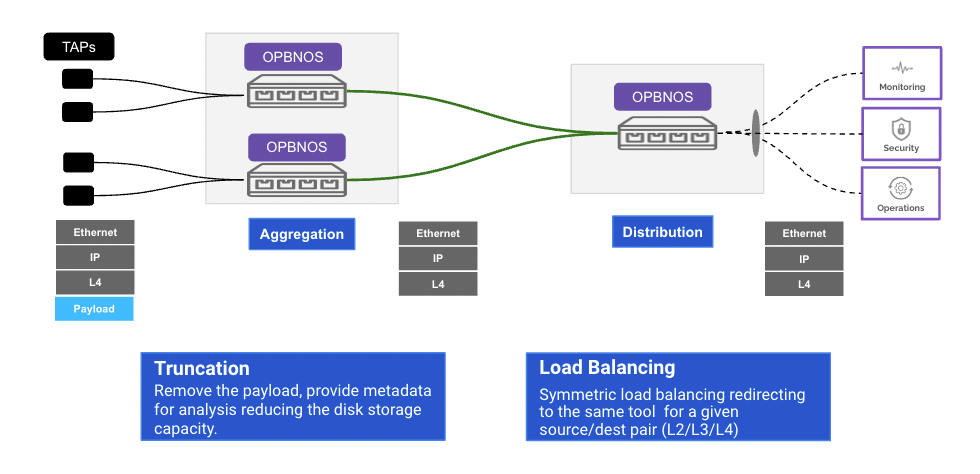
The OPBNOS solution is a set of containerized applications built and runs on top of the open-source SONiC NOS. Aviz's unique architecture reduces complexity and cost while providing a highly scalable, flexible and affordable solution to aggregate, filter and load balance network traffic from hardware or virtual TAPs. With this software-defined solution, you can instantly access all your network ports at line speed for visibility across your entire environment in high performance and a secure manner ideal for network security, analytics and compliance requirements.

OPBNOS

Traditional NPB solutions rely on proprietary appliances to provide aggregation and filtering of network traffic captured via hardware TAPs, which comes with significant cost, complexity and high-touch maintenance.

By leveraging modern programmable ASICs, our solution enables a software-defined, stateless packet broker, known as a “Network TAP” to intercept, process and forward network traffic for visibility and security compliance. The captured network traffic data is then fed to the OPBNOS.

It provides line rate traffic forwarding using switching ASIC by configuring flow paths between two ports. Legacy FPGA aggregator appliances are also supported as an aggregator in this solution. By leveraging the OPBNOS solution, enterprises can easily scale up or down to meet the ever-changing demands of network visibility and security tools.

Guides: Jump right in

Explore these guides to set up and work with the Open Packet Broker.

Use Cases

Explore these use cases to understand the configuration in a context

Limitations

ASIC Limitations:

  • Multiple flows can not have the same network port

  • In VLAN-aware mode, VLAN is a mandatory match qualifier for the flow rule for matching tagged packets

  • Pop-VLAN is supported on flow rules which have VAN id as a qualifier

  • Flow rule VLAN qualifier is not supported in VLAN-Unaware mode

  • For VxLAN, NVIDIA supports only one source VTEP per system but supports multiple destination VTEP

  • For VxLAN, multiple VNI cannot be mapped to the same Destination VTEP

  • GTP, UDF and Generic Header Filtering configurations and rules are not supported for the NVIDIA SN2100 switch

  • Ingress-VLAN is not suported on EC-AS7326 and EC-AS7726 platforms

  • Software Limitations:

    • Port-Channel can not be configured as a network port

    • A Maximum of 4 active SSH sessions are supported

    • Tunnel attributes cannot be updated and will require deleting the existing tunnel and reconfiguring

    • Override qualifiers are not supported for the VxLAN feature

    • GTP rule configuration is to be done using a string (i.e. double quotes)

    • GTP global configuration must be enabled before configuring the GTP rule

    • A proper license is required before configuring a feature

    SSH connection should be disconnected gracefully using the “quit” command once the usage is completed

    Getting Started
    CLI Configuration Guide
    Aviz FlowVision Graphical User Interface Guide
    REST API Guide
    Use Cases

    Licensing

    Aviz OPB NOS supports 3 license types listed below

    License
    Features
    Platforms

    Basic

    • Layer 3/4 (IPv4 and IPv6) Filtering

    • Layer 2 (VLAN and Ethertype) Filtering

    • VLAN Actions (Ingress and Egress)

    • Redirection (Ports, Static LAG)

    Broadcom (TD3, TD2X, TH)

    EC5812, EC7712, EC7726, EC7816, EC7326

    DELL

    S5248F-ON, S5232F-ON

    Nvidia (Spectrum 1,2,3)

    SN2010, SN2100, SN2201, SN2700, SN3420, SN3700, SN3800, SN4600C, SN4700

    Advanced - DataCenter

    (Includes Basic)

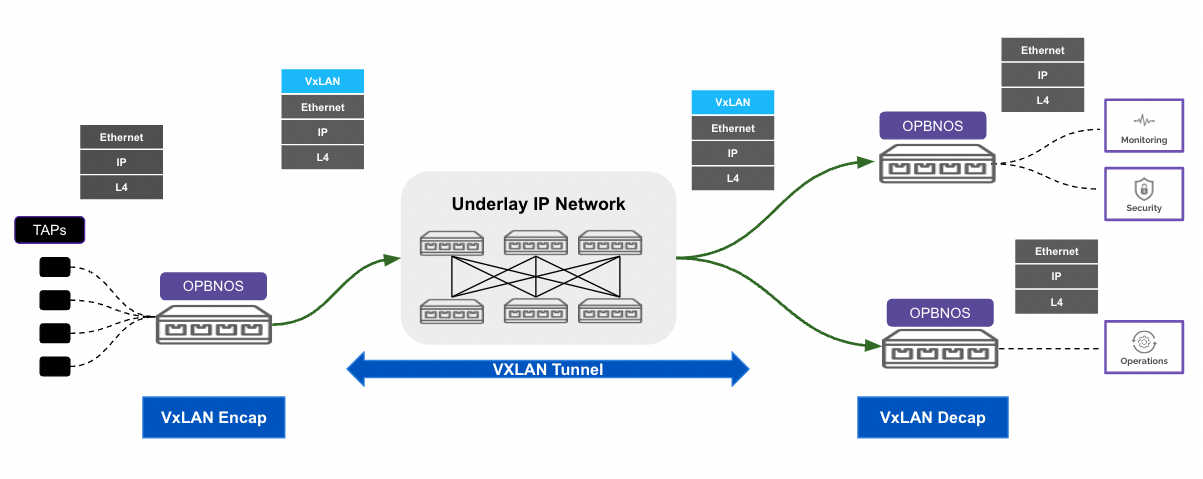
    • VXLAN Encap and Decap*

    • Generic Header Filtering (MPLS, L2GRE, VXLAN, IP-n-IP)*

    • User-Defined Offset Filtering*

    • Match-Expression Filtering*

    Nvidia (Spectrum 2,3)

    SN3420, SN3700, SN3800, SN4600C, SN4700

    *Features unique to Aviz OPB NOS

    What's New?

    Release 2.7.4

    • IPv6 Reachability Check

    Release 2.7.3

    • support for Edgecore AS7816-64X

    Release 2.7.0

    • New Platform: Dell S5248F-ON & Dell S5232F-ON

    • command

    Release 2.6.0

    • Unified show running-config

    • Mellanox SDK Upgrade for Resolving SCTP Traffic Drop Issue

    • Memory leak fixes for Broadcom Platform

    Release 2.5.0

    • New Platform: EdgeCore AS7816-64X, AS7326-56X and AS7726-32X (Broadcom)

    • Release 2.1

    • Support

    • support

    Release 2.4.0

    • Role-Based Access Control(RBAC) for user management

    • Support support on the Broadcom platform

    • Added support for

    • Added support for SNMP and

    Release 2.3.0

    • New Platform: EdgeCore 7712 (Broadcom)

    • to User Interface (CLI)

    • support for BCM Platforms

    • link support for BCM Platforms

    CLI Changes and Enhancements:

    2.2.0 or earlier OPBNOS
    2.3.0 OPBNOS
    Description

    Release 2.2.0

    Features

    Note - Features like UDF and Generic header filtering are delivered for NVIDIA Spectrum-2 and Spectrum-3 devices.

    Release 2.1.0

    • Minor Changes in CLI commands as per our unique framework, the OPB-NOS CLI commands are modified. See below the table for keyword changes and commands affected. The CLI command changes do not affect any control or data plane functionality of OPBNOS.

    • Image upgrade to 2.1.0 from the lower version via OPB-NOS CLI, will have configuration loss related to the “old” keywords. The Suggested recommendation is to upgrade the OPBNOS using ONIE and manually re-configure the device for existing deployments.

    2.0.0 or earlier OPBNOS
    2.1.0 OPBNOS
    Commands Modified

    Features
    Description

    Known Issue:

    BugID
    Description

    Release 2.0.0

    Features

    Known Issue:

    BugID
    Description

    Release 1.3.1

    Features

    Release 1.2.0

    Features

    Known Issue:

    BugID
    Description

    Release 1.0.0

    Configuring License

    When the OPBNOS boots UP, it prompts the user for a License key that can be requested by contacting . More information on Licensing can be found .

    Verify the currently installed license:

    Use the 'License' command to change the license(if required):

    The license can be upgraded without requiring a reinstallation or reset.

    Hybrid Port for multiple lookups

  • Port and Flow Statistics Management: NTP, SSH, Timezone, SYSLOG, LLDP, TACACS+, ZTP, SNMPv1/v2 Get, Traps, ISCLI, REST API (HTTPs - selfsigned), sFlow, RADIUS

  • OPB Fabric Manager (FlowVision) Appliance

  • VxLAN Stripping

  • Truncation

  • Advanced - 5G

    (Includes

    Advanced DC)

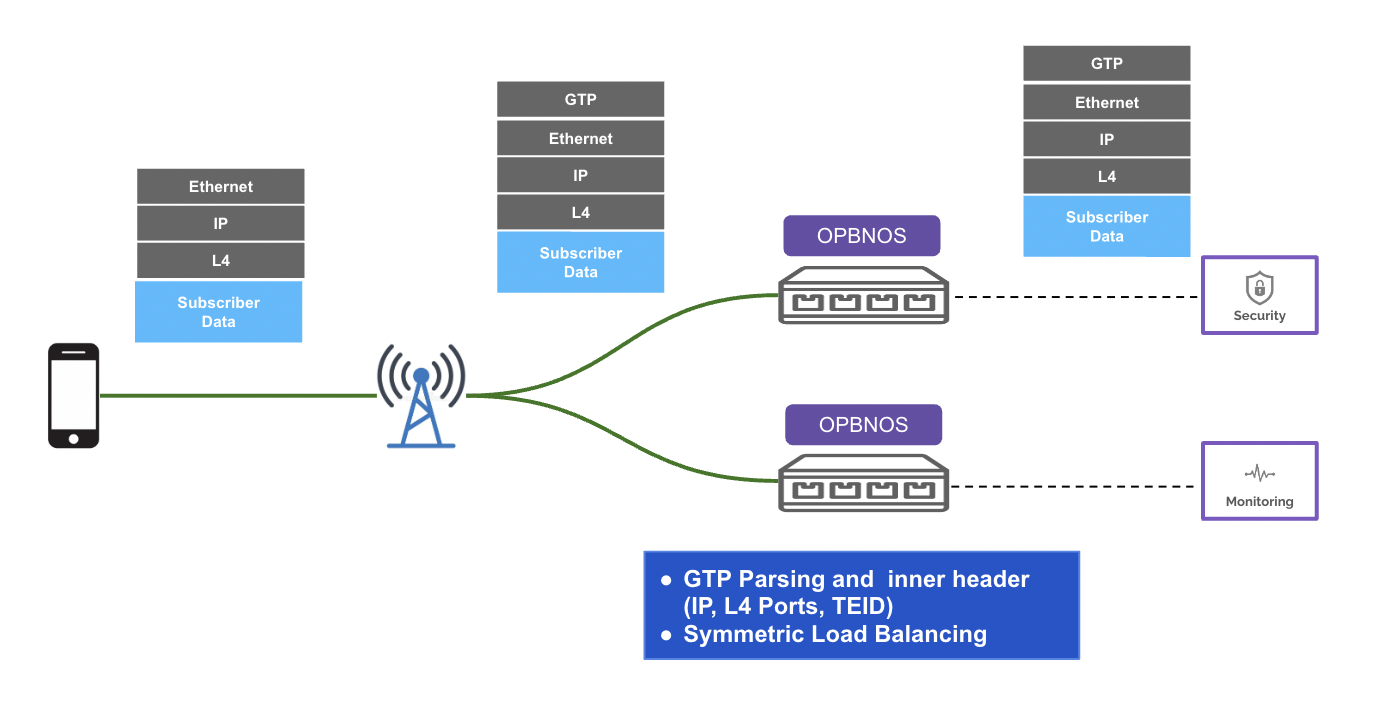
    • GTP Parsing

    • Symmetric Load balancing based on Inner IP(v4/v6) header

    • GTP Filtering - Inner IP header, Tunnel IDs

    Nvidia (Spectrum 2,3)

    SN3420, SN3700, SN3800, SN4600C, SN4700

    Trial (30 days)

    • All features (Basic, Advanced-DC, Advanced-5G)

    All

    Getting Started

    This section provides information about how to install/upgrade the OPBNOS and information on the SONiC shell.

    LicensingLimitationsImage ManagementSupported PlatformsScalability
    opb-nos login: admin
    Password: 
    Linux opb-nos 5.10.0-18-2-amd64 #1 SMP Debian 5.10.140-1 (2022-09-02) x86_64
    You are on
      ___  ____  _____  _   _  ___   ____
     / _ \|  _ \|  _  \| \ | |/ _ \ / ___|
    | | | | |_| |_|_|_/|  \| | | | |\___ \
    | |_| |  __/| |_| \| |\  | |_| | ___) |
     \___/|_|   |_____/|_| \_|\___/ |____/
                          Powered by AVIZ Networks
    
    -- Software for Open Networking in the Cloud --
    
    Version: 20230714.2.5.0
    
    Unauthorized access and/or use are prohibited.
    All access and/or use are subject to monitoring.
    
    Help:    www.aviznetworks.com
    
    Device Serial Number : MT2040X05753
    Enter the License Key: ffa08***************f6ec544
    pbnoscli# show license 
    =================================================
    License Key:  ffa08********************f6ec544
    License Type: BASIC
    =================================================
    pbnoscli# 
    Aviz Support
    here
    pbnoscli# configure terminal 
    pbnoscli(config)# license 
     <licensekey>             
    pbnoscli(config)# license db9b0********************b66f12
    Current user: root
    pbnoscli# 
    
    //Verify the License Key
    pbnoscli# show license 
    =================================================
    License Key:  db9b0********************b66f12
    License Type: ADV-T
    =================================================
    pbnoscli# 

    LAG-Hash algorithm changes for better load-balancing and the ability to change the seed value

  • ZTP enhancements

  • RestAPI Strengthening

  • TACACS, NTP, Clockzone related issues fixed

  • SNMP traps support for Disk Utilization

  • SNMP Trap control for PSU/FAN

  • Enhanced Traffic Counters for Port-channel, and Flow

  • GTP Filtering based on IP version (NVIDIA Only)

  • show interface counters rate

    CLI added to show interface counter rate

    NA

    show port-channel rate <port-channelid>

    CLI added to show port-channel rate

    NA

    show flow counters all rate

    CLI added to show traffic rate through a flow

    NA

    show interface counters discard-details

    CLI added to show interface discard counters

    NA

    {no} ingress-vlan <value>

    Ingress-VLAN feature added to Broadcom platforms

    NA

    {no} transmit-only

    Interface transmit-only feature added to Broadcom platforms

    NA

    {no} snmp-server trap fan-util disable

    CLI added to support on/off feature for SNMP trap for FAN

    NA

    {no} snmp-server trap psu-util disable

    CLI added to support on/off feature for SNMP trap for PSU

    NA

    {no} snmp-server trap disk-util threshold <percentage>

    CLI added to support disk related SNMP traps

    port-channel

    show port-group information >> show port-channel information show port-group rate >> show port-channel rate port-group 1 ports <ports> >> port-channel 1 ports <ports>

    from

    network-ports

    from <ports> >> network-ports <ports>

    to

    tool-ports

    to <ports> >> tool-ports <ports>

    tunnel alias <tun-id>

    tunnel <tunl-id>

    tunnel alias >> tunnel

    show vxlan tunnel alias >> show vxlan tunnel

    11. [Encap/Decap]

    Ethernet0, Ethernet4..

    Ethernet1/1, Ethernet2/1

    Interface CLI mapped to Front Panel ports. Example - Interface ethernet Ethernet0 >> Interface ethernet Ethernet1/1

    NA

    GTP qualifier - Match all inner IP version

    New qualifier added to support match all IPv4/IPv6 for inner header. Example - rule 1 permit gtp "match-all-ipv4". rule 2 permit gtp "match-all-ipv6"

    show interface counters rate detailed EthernetXXX

    show interface counters detailed EthernetX/X

    CLI modified to provide more clarity

    User Defined Filter(UDF)

    Generic Header Filtering

    attach <ifname>

    interface <ifname>

    tunnel tun1

    attach Ethernet0 >>>> interface Ethernet0

    map alias

    flow

    show map alias >> show flow show map summary >> show flow summary show map counters >> show flow counters map alias <name> >>> flow <name>

    hybrid

    loopback-mode

    hybrid >> loopback-mode no hybrid >> no loopback-mode

    sFLOW

    sFlow is a multi-vendor, packet sampling technology used to monitor network devices

    platforms

    NVIDIA SN2010, NVIDIA SN2100,

    NVIDIA SN4700

    PBNOS-440

    Additional match qualifiers for IPv6 rules

    PBNOS-412

    All interface status(down/up) should be the same when FEC is set as none

    PBNOS-354

    Unable to quit CLI from telnet/ssh with exit or quit commands

    PBNOS-350

    CLI auto-completion not working while configuring flow interfaces

    PBNOS-348

    CLI: “show platform” LED status has some inconsistencies on the NVIDIA platform driver

    1.SNMP multi-server support for traps

    2. SNMP authFailure Trap support (generate traps on SNMP community string mis-match)

    3. SNMP trap for FAN and PSU status

    4. SNMP trap for CPU and memory utilization using mteTriggers

    5. Licensing commands

    6. Show interface counters rate

    7. Show interface breakout

    8. Show port-channel rate

    9. GTP

    PBNOS-203

    Show an error message while creating multiple maps using the same from and To ports in the UI

    PBNOS-123

    Delete a map through CLI->modifications not reflected in UI

    1. Added support for the below features,

    a. Hostname configuration

    b. SYSLOG severity

    c. LLDP receive/transmit configuration

    d. shutdown/no shutdown for the management interface

    e. Show platform enhancements for "fan, temperature, psustatus, pcieinfo"

    2. IPv6 match all support for flow rules

    3. Generate hardware dump for NVIDIA devices

    4. REST API support for CPU/Memory utilization and SYSLOG export

    5. SNMP trap support for link up/down events and entConfigChange.

    6. Enabled Symmetric hashing.

    RX only support

    PBNOS-5

    IPv6 rules are not working intermittently with the new SDK upgrade

    VxLAN Stripping
    Receive-Only (Rx-Only)
    Packet Time Stamping
    Copy
    VxLAN enhancements
    FlowVision
    RADIUS
    FlowVision On-Box
    Ingress-Vlan
    SNMPv3
    Contact
    Front Panel Port mapping
    Ingress VLAN
    Transmit-Only (Tx-Only)
    Base License
    Rx-only

    NA

    port-group

    10.

    Location

    Installing OPBNOS from USB Drive

    To install OPBNOS from USB Drive, Please follow the below steps:

    • Login using the console port and reboot the switch

    • Enter ONIE mode

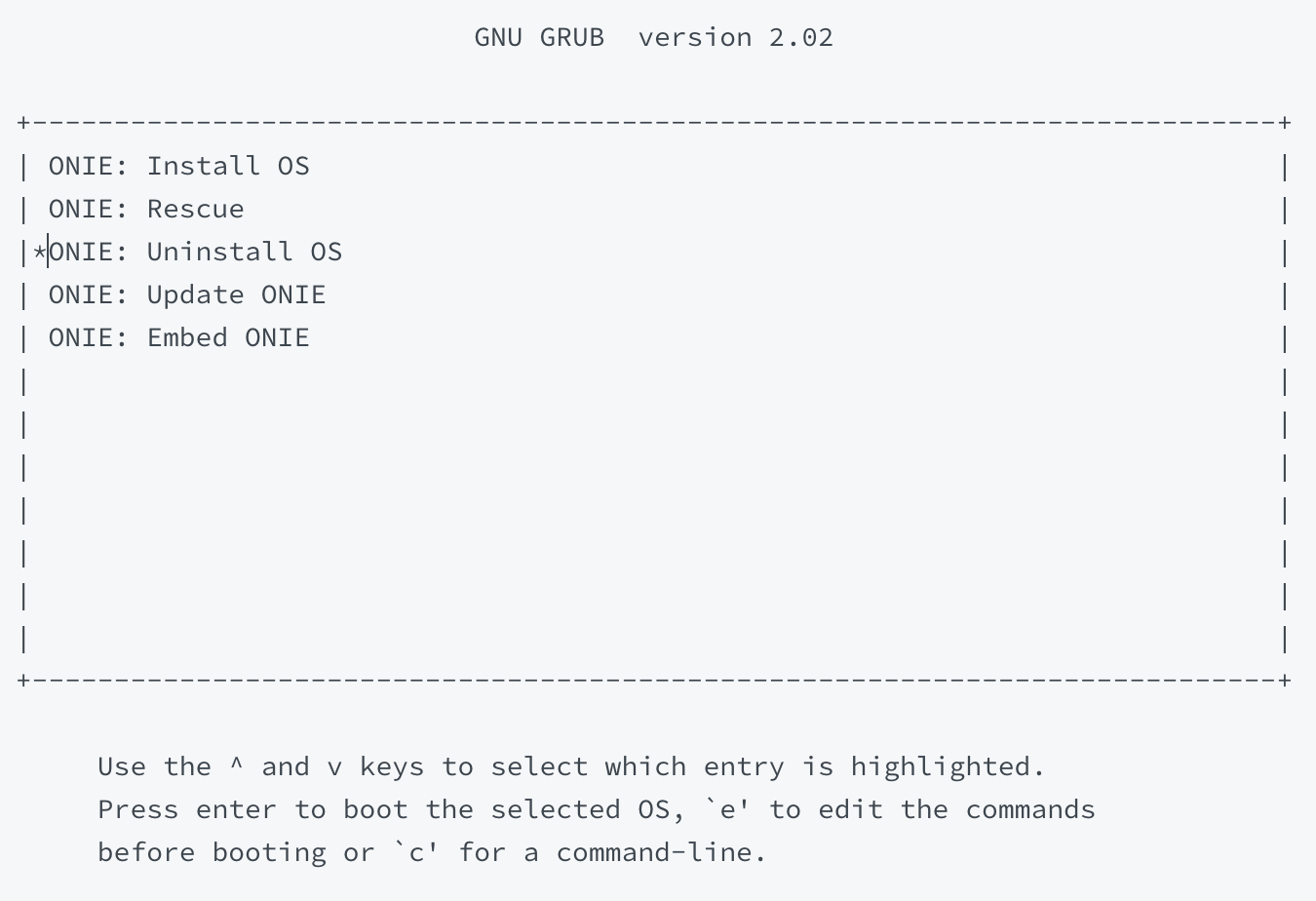
    • Select 'ONIE: Uninstall OS' to clean up installed images

    • The Switch will reboot and boot into 'ONIE: Install OS' mode, run the below command to stop auto-discovery

    • Enter the following command to create a USB mount location on the system

    • Enter the following command to mount the USB. The vfat option is used for FAT32 formatted drives

    • Install the software from the USB drive, where /mnt/media specifies the path where the USB partition is mounted

    Supported Platforms

    List of switches along with their speeds and supported licenses:

    Vendor
    SKU
    Port Speed
    Port Config
    License

    Dell

    100GbE

    32xQSFP28 + 2xSFP+

    Basic

    Scalability

    Description
    SN4600
    SN2010

    maximum networks ports allowed in a flow

    63

    • 21 (for a single flow)

    • 10 (for 2 flows)

    maximum flow

    63

    2

    maximum rule per flow allowed

    4000

    Description
    Broadcom

    Installing OPBNOS from ONIE

    To install OPBNOS from ONIE, please follow the below steps:

    • Login using the console port and reboot the switch

    • Enter ONIE mode

    ONIE
    • Select 'ONIE: Uninstall OS' to clean up installed images

    This step takes a few minutes and reboot the switch after cleanup is complete

    • The Switch will reboot and boot into 'ONIE: Install OS' mode, run the below command to stop auto-discovery

    The 'onie-discovery-stop' command is deprecated and will be removed in 2019.02.

    If you are using the latest version of ONIE, Use 'onie-stop' instead.

    • Assign 'eth0' with a management-IP to copy image from remote server

    • If server is present on different network using below command to add a default route

    • Image can be installed using HTTP or SCP:

      • SCP -

    • HTTP -

      • start HTTP-server on image directory, on a linux server below command can be used to achieve this

    • On the switch console use the below command to install the image using HTTP, This will download and install the OPBNOS

    400

    overall maximum rule

    8000

    400

    Maximum number of rules

    768

    Dell

    S5248F-ON

    25GbE

    48xSFP28 + 2xQSFP28-DD + 4xQSFP28

    Basic

    Edgecore

    AS5812-54X

    10GbE

    48x10GbE + 6x40GbE

    Basic

    Edgecore

    AS7326-56X

    25GbE

    48x25GbE + 8x100GbE

    Basic

    Edgecore

    AS7726-32X

    100GbE

    32x100GbE

    Basic

    Edgecore

    AS7712-32X

    100GbE

    32x100GbE

    Basic

    Edgecore

    AS7816-64X

    100GbE

    64x100GbE

    Basic

    NVIDIA

    SN2201

    1GbE

    48x1GbE + 4x100GbE

    Basic

    NVIDIA

    SN2010

    25GbE

    18x25GbE + 4x100GbE

    Basic

    NVIDIA

    SN3420

    25GbE

    48x25GbE + 12x100GbE

    Basic, Adv-DC, Adv-5G

    NVIDIA

    SN2100

    100GbE

    16x100GbE

    Basic

    NVIDIA

    SN2700

    100GbE

    32x100GbE

    Basic

    NVIDIA

    SN3700C

    100GbE

    32x100GbE

    Basic, Adv-DC, Adv-5G

    NVIDIA

    SN3800

    100GbE

    64x100GbE

    Basic, Adv-DC, Adv-5G

    NVIDIA

    SN4600C

    100GbE

    64x100GbE

    Basic, Adv-DC, Adv-5G

    NVIDIA

    SN3700

    200GbE

    32x200GbE

    Basic, Adv-DC, Adv-5G

    NVIDIA

    SN4600

    200GbE

    64x200GbE

    Basic, Adv-DC, Adv-5G

    NVIDIA

    SN4700

    400GbE

    32x400GbE

    Basic, Adv-DC, Adv-5G

    S5232F-ON

    CLI Configuration Guide

    This CLI Configuration Guide is designed to provide you with instructions and guidance on configuring and managing the Open Packet Broker using the command line interface.

    To explore specific topics and access more detailed information, please use the left side column as a navigation tool in the guide. By selecting a particular section from the left side column, you will be able to delve deeper into that specific topic.

    Configuring Hostname

    You can set the hostname using the below command:

    pbnoscli# configure terminal 
    pbnoscli(config)# hostname Switch-1
    Switch-1(config)#

    save config after changing hostname using 'save' command

    Switch-1# show running-config 
    configure terminal
    hostname Switch-1
    !
    Switch-1# 
    ONIE:/ # onie-discovery-stop 
    ONIE:/ # mkdir /mnt/media
    ONIE:/ # mount -t vfat /mnt/media
    Example - ONIE:/ # mount -t vfat /dev/sdb1 /mnt/media
    ONIE-Uninstaller
    TimeZone Support
    VxLAN

    Downloads

    Please refer to the following links for downloading OPBNOS and FlowVision:

    • OPBNOS for Edgecore Broadcom - https://support.aviznetworks.com/hc/en-us/articles/14686290310797-EdgeCore-Broadcom

    • OPBNOS for Nvidia - https://support.aviznetworks.com/hc/en-us/articles/14587053512973-NVIDIA

    • FlowVision - https://support.aviznetworks.com/hc/en-us/articles/17752422217869-FlowVision

    NOTE: You are required to sign-up on for getting access to the download page.

    ONIE:/ # onie-nos-install /mnt/media/opbnos.bin
    ONIE:/ # onie-discovery-stop 
    ONIE:/ # ifconfig eth0 <mgmt-ip> netmask <netmask> up
    //Example - ifconfig eth0 10.4.4.72 netmask 255.255.254.0 up
    ONIE:/ # route add default gw <gw-ip>
    //Example - route add default gw 10.4.4.1 
    //Copy image - 
    ONIE:/ # scp <user>@<server-ip>:/<dir>/opb-nos.bin opbnos.bin
    //Example - scp aviz@10.2.2.10:/images/opb/opb-nos.bin opbnos.bin 
    
    //Install copied image -
    ONIE:/ # onie-nos-install <image-name.bin>
    //Example - onie-nos-install opbnos.bin
    aviz@10.2.2.10:/images/opb$ python3 -m http.server 8030
    ONIE:/ # onie-nos-install http://<IP>:<port>/<opb-nos.bin>
    //Example - onie-nos-install http://10.2.2.10:8030/opb-nos-20220714.2.1.1.bin
    https://support.aviznetworks.com/hc/en-us

    Removing available images

    You can remove unused or old images from the device to optimize disk utilization using the "cleanup-images" and "remove-image" commands.

    Reference

    Command

    remove-image < image_name>

    Description

    Remove specific image from the switch

    CLI Example

    Reference

    Parameters

    ImageName - Can be obtained from "show

    boot"

    Mode

    EXEC

    Command

    cleanup-images

    Description

    Remove all available images from the switch

    Parameters

    ImageName - Can be obtained from "show

    boot"

    Mode

    EXEC

    pbnoscli# remove-image <image-name>
    //Example - remove-image SONiC-OS-2.1.1_RELEASE.0-dirty-20220718.065117
    pbnoscli#cleanup-images

    Rebooting the Switch

    You can reload/reboot the switch using the below command:

    pbnoscli# save   
      save                  Copy Running configuration to Startup configuration
    pbnoscli# save 
    Saving Configuration
    
    pbnoscli# reboot 
    Check if running config is saved
    Do you want to reboot the device [y/n]: y

    Configuring RADIUS

    Configuring RADIUS

    ​RADIUS is commonly used in enterprise and service provider networks to authenticate and authorize users before granting them access to network services.

    In SONiC NOS, RADIUS is supported to achieve a crucial role in securing and managing network access by providing a centralized authentication, authorization, and accounting framework. SONiC switch performs a Client - network access server (NAS) role.

    RADIUS is not supported on these platforms: EdgeCore AS5812 & EdgeCore AS7712

    Global Level:

    Reference

    Example

    ​​You can verify the configuration by using the command(s) below:

    Server Level

    Reference

    Example

    You can verify the configuration by using the command(s) below:

    Command

    [no] radius [auth-type <<chap|pap|mschapv2> default pap>] [nasip ] [key ] [source-ip ] [retransmit ] [timeout ]

    Description

    Configure RADIUS

    Parameters

    auth-type, nasip, key, source-ip, retransmit, timeout

    Mode

    CONFIG

    Command

    [no] radius-server host key [auth-type <chap|pap|mschapv2> default pap] [auth-port <range[1:65535] default 1812>] [priority <integer default 1>] source-intf [retransmit ] [timeout ]

    Description

    Configure RADIUS

    Parameters

    auth-type, auth-port, priority,source-interface, retransmit, timeout

    Mode

    CONFIG

    pbnoscli(config)# radius 
      <cr>
      auth-type             Authentication type, default pap
      key                   Add key
      nasip                 NAS IP address
      retransmit            Number of retries, default 3
      source-ip             source ip address
      timeout               Transmission timeout interval <1-60>, default 5
    pbnoscli(config)# radius timeout 60
    pbnoscli(config)# radius source-ip 10.4.4.52
    pbnoscli(config)# radius key testing123
    pbnoscli(config)# end
    pbnoscli# show radius 
    RADIUS global auth_type pap            
    RADIUS global passkey *****          
    RADIUS global timeout 5              
    RADIUS global nasip <EMPTY_STRING> (Default)
    RADIUS global source-ip 10.4.4.52      
    RADIUS global retransmit 3              
    ===========================================================================================================================================
    IP              Auth_type       Passkey         Auth-port       Priority        source-intf     retransmit      Timeout        
    ===========================================================================================================================================
    10.4.4.11       pap             N/A             1812            1               N/A             3               5               
    pbnoscli#
    pbnoscli# configure terminal 
    pbnoscli(config)# radius 
      host                  Add host
    pbnoscli(config)# radius-server host 
      <ipaddr>              A.B.C.D
      <ip6addr>             A:B::C:D
    pbnoscli(config)# radius-server host 10.4.4.11  
    pbnoscli# show radius 10.4.4.11
    RADIUS global auth_type pap            
    RADIUS global passkey *****          
    RADIUS global timeout 5              
    RADIUS global nasip <EMPTY_STRING> (Default)
    RADIUS global source-ip 10.4.4.52      
    RADIUS global retransmit 3              
    ===========================================================================================================================================
    IP              Auth_type       Passkey         Auth-port       Priority        source-intf     retransmit      Timeout        
    ===========================================================================================================================================
    10.4.4.11       pap             N/A             1812            1               N/A             3               5               
    pbnoscli# 

    On-Box FlowVision

    FlowVision offers a user-friendly graphical interface (GUI) that allows users to configure and monitor the OPBNOS switch.

    By enabling the on-box FlowVision feature on the switch, users can access the GUI through the management IP. This enables them to efficiently manage, monitor, and configure the OPBNOS using the intuitive GUI.

    The GUI of FlowVision utilizes TCP port 443 & GUI will be reachable at https://<MGMT-IP>/

    Users can follow the FlowVision GUI Guide to manage the device using GUI.

    This feature is specific to individual switches and cannot be used to manage multiple switches

    Enabling On-Box FlowVision will prevent the Switch from being added to a remote FlowVision Controller.

    More information is available .

    Reference

    Example

    Configuring Username

    You can configure the username based on the role(RBAC) using the below command:

    Reference

    Configuring AAA

    AAA stands for Authentication, Authorization and Accounting. These protocols were defined by the Internet Engineering Task Force and are intended to provide an Authentication, Authorization, and Accounting (AAA) framework for applications, such as network access or IP mobility in both local and roaming situations.

    TACACS uses (either TCP or UDP) port 49 by default. TACACS allows a client to accept a username and password and send a query to a TACACS authentication server, sometimes called a TACACS daemon or simply TACACSD. It would determine whether to accept or deny the authentication request and send a response back. In this way, the process of making the decision is "opened up" and the algorithms and data used to make the decision are under the complete control of the TACACS daemon.

    RADIUS, which stands for Remote Authentication Dial-In User Service, is a network protocol commonly used for centralized authentication, authorization, and accounting (AAA) management. Similar to TACACS, RADIUS is designed to allow clients to authenticate and request services from a centralized server, referred to as a RADIUS server or RADIUS daemon.

    Configuring AAAConfiguring TACACSConfiguring RADIUS

    Command

    [no] flowvision enable

    Description

    enable/disable the flowvision tool

    Parameters

    NONE

    Mode

    CONFIG

    here

    username

    Mode

    CONFIG

    Example

    You can verify the configuration by using the command(s) below:

    Command

    [no] username <user_name> password <user_password> role [network-operator/network-admin]

    Description

    username configuration

    Parameters

    pbnoscli# configure terminal 
    pbnoscli(config)# username 
     <user_name>  
    pbnoscli(config)# username test 
      password              Create user password
    pbnoscli(config)# username test password 
      <user_pwd>            Enter password
    pbnoscli(config)# username test password pass@123 role 
      network-admin         Admin
      network-operator      Operator
    pbnoscli(config)# username test password pass@123 role network-admin 
    pbnoscli#
    
    pbnoscli(config)# no username test 
    pbnoscli(config)#
    pbnoscli# configure terminal
    pbnoscli(config)# flowvision 
      enable                enable/disable the flowvision tool
    pbnoscli(config)# flowvision enable 
    pbnoscli(config)# 
    pbnoscli# show users 
    ==================================
    Users           Role                            
    ==================================
    root            network-admin                   
    test            network-admin                   
    *admin          network-admin                   
    pbnoscli#
    pbnoscli# show running-config 
    configure terminal
    !
    interface mgmt
    ip address 10.4.4.52/24 gateway 10.4.4.1
    !
    username test role network-admin
    !
    pbnoscli# 

    Configuring Management Interface

    The Management Interface is an external port (non-ASIC) on the switch that allows you to perform switch management tasks. It is a layer 3 interface and it cannot be configured as a layer 2 interface. The management interface cannot forward traffic.

    To configure the management interface, use the following command:

    pbnoscli# configure terminal 
    pbnoscli(config)# interface mgmt 
    pbnoscli(config-if)# ip address <ip/mask> gateway <ip>
    pbnoscli(config-if)# 

    When you run the aforementioned command, the system enters the Interface Configuration Mode for the management port. By default, the management interface is created by the switch and it cannot be removed.

    Example

    pbnoscli# configure terminal 
    pbnoscli(config)# interface mgmt 
    pbnoscli(config-if)# ip address 10.4.4.53/23 gateway 10.4.4.1
    pbnoscli(config-if)# 

    You can verify the configuration by using the command(s) below:

    pbnoscli# show ip management 
    eth0: flags=4163<UP,BROADCAST,RUNNING,MULTICAST>  mtu 1500
            inet 10.4.4.53  netmask 255.255.254.0  broadcast 10.4.5.255
            inet6 fe80::1e34:daff:fe62:28f4  prefixlen 64  scopeid 0x20<link>
            ether 1c:34:da:62:28:f4  txqueuelen 1000  (Ethernet)
            RX packets 11605  bytes 792951 (774.3 KiB)
            RX errors 0  dropped 0  overruns 0  frame 0
            TX packets 2309  bytes 1076201 (1.0 MiB)
            TX errors 0  dropped 0 overruns 0  carrier 0  collisions 0
            device memory 0xdfc00000-dfc1ffff  
    pbnoscli# 
    pbnoscli# show running-config 
    configure terminal
    interface mgmt
    ip address 10.4.4.53/23 gateway 10.4.4.1
    !
    pbnoscli#

    Configure Packet Timestamping

    Timestamping packets is crucial in networking, Accurately recording time references for packets as they travel through the network. This technology aids in performance monitoring, latency analysis, network troubleshooting, and system synchronization. Precise timestamps help pinpoint delays, identify network bottlenecks, optimize routing, and ensure adherence to service-level agreements.

    Timestamps are also crucial for coordinating distributed systems by maintaining a consistent time reference across geographically dispersed components. To do this, Specialized hardware or software captures and records these timestamps. Protocols like Precision Time Protocol (PTP) or Network Time Protocol (NTP), facilitate high-precision synchronization.

    Timestamping feature is needed for below major use-cases:

    1. Detecting the congestion point on the path of a flow

    2. Path Tracing

    3. Real-time performance monitoring

    4. Arrival sequence validation

    This feature is only supported on Broadcom TD3 platforms, specifically EC7326, and EC7726.

    Enable Timestamping Globally

    You can configure the Timestamping glo using the following command:

    Reference

    Example

    Enable Timestamp Per-Interface

    To Configure Timestamping per interface, use the below command:

    Reference

    Example

    Interface Management

    Configuring Management Interface
    Configuring Physical Interface

    Link Layer Discovery Protocol (LLDP)

    Link Layer Discovery Protocol (LLDP) is an IEEE 802.1AB-2009 that defines messages, encapsulated in Ethernet frames for the purpose of giving devices a means of announcing basic device information to other devices on the LAN (Local Area Network) through periodic retransmissions out each port every 30 seconds by default.

    This implementation of LLDP is compatible with the IEEE 802.1AB-2005 standard. LLDP uses Layer 2 (the data link layer), and allows network management applications to extend their awareness of the network by discovering devices that are direct neighbors of already known devices.

    With LLDP, the switch can advertise the presence of its ports, their major capabilities, and their current status to adjacent LLDP neighbours. LLDP transmissions occur on ports at regular intervals or whenever there is a relevant change to their status. The switch can also receive LLDP information advertised from adjacent LLDP-capable network devices.

    The following topics provide more information on configuring LLDP:

    Enabling LLDPDisplaying LLDP Neighbors

    Command

    [no] timestamping [enable ]

    Description

    OPB Packet Timestamping

    Parameters

    enable or disable

    Mode

    CONFIG

    Command

    [no] timestamp {enable} stage {ingress | egress} source-id <23-bit value>

    Description

    Timestamp configuration

    Parameters

    enable/disable, stage, source-id

    Mode

    INTERFACE

    pbnoscli# configure terminal
    pbnoscli(config)# timestamping
      enable                enable/disable the OPB Packet Timestamping
    pbnoscli(config)# timestamping enable
    pbnoscli(config)#
    
    #Disable#
    pbnoscli# configure terminal
    pbnoscli(config)# timestamping
      enable                enable/disable the OPB Packet Timestamping
    pbnoscli(config)#no timestamping enable
    pbnoscli(config)#
    pbnoscli# show running-config
    configure terminal
    !
    timestamping enable
    !
    !
    pbnoscli#
    pbnoscli# configure terminal
    pbnoscli(config)# interface ethernet Ethernet1/1
    pbnoscli(config-if)# timestamp
      enable                Enable timestamp
    pbnoscli(config-if)# timestamp enable 
    pbnoscli(config-if)# timestamp enable stage
      egress                Egress
      ingress               Ingress
    pbnoscli(config-if)# timestamp enable stage egress
      source-id             Specify source id
    pbnoscli(config-if)# timestamp enable stage egress source-id 0x8233
    pbnoscli(config-if)#end
    pbnoscli#
    
    
    #Disable#
    pbnoscli(config-if)# no timestamp enable stage egress source-id 0x8233
    pbnoscli# show running-config
    configure terminal
    interface ethernet Ethernet1/1
    mtu 9100
    speed 25000
    timestamp enable stage egress source-id 0x8233
    !
    timestamping enable
    !
    !
    pbnoscli#

    Displaying LLDP Neighbors

    You can use the below commands to verify LLDP information:

    Reference

    Command

    show lldp neighbors

    Description

    Display LLDP neighbors

    Example

    To display the LLDP neighbor's information in detail, use the following command:

    Reference

    Example

    Configuring Interface Description

    Use 'description' to set custom interface level description

    Reference

    Command

    description <string>

    no description

    Description

    Description configuration

    Example

    You can verify the configuration by using the command(s) below:

    Configuring Physical Interface

    Physical Interfaces are switch front panel ethernet ports which are ASIC ports. The physical ports are created by default and cannot be deleted.

    To change or update the physical port configuration, use the following command:

    pbnoscli# configure terminal 
    pbnoscli(config)# interface ethernet Ethernet0
    pbnoscli(config-if)# 
      !                         Exit from the current prompt
      autoneg                   Auto-Negotiation
      description               Add description
      egress-tagging            Add egress tagging
      end                       Exit to exec prompt
      exit                      Exit from the current prompt
      forward-error-correction  Interface FEC configuration
      ingress-vlan              Add ingress vlan (range 500...4094)
      lldp                      LLDP configuration
      loopback-mode             Activate loopback mode
      mode                      Interface vlan awareness
      mtu                       Interface MTU configuration
      no                        no form
      sflow                     Sflow configuration
      show                      Show commands
      shutdown                  Disable interface
      speed                     Interface speed configuration
      top                       Exit to the configuration prompt
      truncate                  Truncate the packet
      type                      Add type
    pbnoscli(config-if)# 

    When you run the aforementioned command, the system enters the Interface Configuration mode for the specified physical port.

    To change the physical port Admin status, use the following command:

    Reference

    You can verify the configuration by using the command(s) below:

    Configuring AAA

    TACACS Failthrough:

    When using fail-through, if the primary TACACS server fails to respond within a specified timeout period, the authentication request is automatically forwarded to the next authentication method configured, such as a local database or a different authentication server.

    If we disable fail-through, the system fails to authenticate with a reachable TACACS+ server the system does not attempt to authenticate with the next TACACS+ server.

    TACACS Fallback:

    The fallback is mainly intended to provide an alternative way to authenticate users when there’s an issue with the primary authentication server or method, not to give users multiple attempts to authenticate with different methods.

    Fallback operates at the AAA (Authentication, Authorization, and Accounting) level, allowing the network device or system to switch to the secondary TACACS server when the primary server is not available.

    In summary, failthrough refers to the process of falling back to an alternative authentication method if the primary TACACS server fails to respond, while fallback involves switching to a backup TACACS server when the primary server is unavailable for AAA services.

    Configuring AAA

    You can configure the Authentication, Authorization and Accounting (AAA) using the following command:

    Reference

    Example

    You can verify the configuration by using the command(s) below:

    Enabling LLDP

    You can enable or disable LLDP using the below command:

    Reference

    Command

    lldp { disabled | rx-and-tx | rx-only | tx-only }

    Description

    Enable/Disable LLDP receive and transmit

    CLI Example

    You can verify the configuration by using the command(s) below:

    Parameters

    None

    Mode

    EXEC

    Command

    show lldp neighbors detail

    Description

    Display LLDP neighbors in detail

    Parameters

    None

    Mode

    EXEC

    Parameters

    string - 50 characters maximum

    Mode

    INTERFACE

    pbnoscli# configure terminal 
    pbnoscli(config)# interface ethernet Ethernet4/1
    pbnoscli(config-if)# descript    
      description           Add description
    pbnoscli(config-if)# description "interface description"

    Command

    [no] shutdown

    Description

    Administratively enable or disable interface

    Parameters

    None

    Mode

    INTERFACE

    pbnoscli# show queue counters Ethernet2/1 
            PORT    TxQ    Counter/pkts    Counter/bytes    Drop/pkts    Drop/bytes
    ------------  -----  --------------  ---------------  -----------  ------------
    Ethernet2/1     UC0               0                0            0           N/A
    Ethernet2/1     UC1               0                0            0           N/A
    Ethernet2/1     UC2               0                0            0           N/A
    Ethernet2/1     UC3               0                0            0           N/A
    Ethernet2/1     UC4               0                0            0           N/A
    Ethernet2/1     UC5               0                0            0           N/A
    Ethernet2/1     UC6               0                0            0           N/A
    Ethernet2/1     UC7            1348           325748            0           N/A
    Ethernet2/1     MC8             N/A              N/A          N/A           N/A
    Ethernet2/1     MC9             N/A              N/A          N/A           N/A
    Ethernet2/1    MC10             N/A              N/A          N/A           N/A
    Ethernet2/1    MC11             N/A              N/A          N/A           N/A
    Ethernet2/1    MC12             N/A              N/A          N/A           N/A
    Ethernet2/1    MC13             N/A              N/A          N/A           N/A
    Ethernet2/1    MC14             N/A              N/A          N/A           N/A
    Ethernet2/1    MC15             N/A              N/A          N/A           N/A
    pbnoscli# 

    Command

    [no] aaa authentication (failthrough disable | fallback disable |login tacacs)

    Description

    AAA configuration

    Parameters

    None

    Mode

    CONFIG

    Parameters

    disabled Disable LLDP

    rx-and-tx Enable Rx and Tx

    rx-only Enable Rx-Only

    tx-only Enable Tx-Only

    Mode

    INTERFACE

    pbnoscli# configure terminal
    pbnoscli(config)# interface ethernet Ethernet1/1
    pbnoscli(config-if)# lldp 
      disabled              Disable LLDP
      rx-and-tx             Enable Rx and Tx
      rx-only               Enable Rx-Only
      tx-only               Enable Tx-Only
    pbnoscli(config-if)# lldp rx-and-tx 
    pbnoscli(config-if)# 
    pbnoscli# show lldp neighbors
    Capability codes: (R) Router, (B) Bridge, (O) Other
    LocalPort    RemoteDevice    RemotePortID    Capability    RemotePortDescr
    -----------  --------------  --------------  ------------  -----------------
    Ethernet1/1  sonic           etp1            BR            Ethernet0
    Ethernet2/1  sonic           etp2            BR            Ethernet4
    Ethernet3/1  sonic           etp3            BR            Ethernet8
    Ethernet13/1 sonic           hundredGigE13   BR            Ethernet48
    Ethernet14/1 sonic           hundredGigE14   BR            Ethernet52
    Ethernet15/1 sonic           hundredGigE15   BR            Ethernet56
    eth0         HP2848          12              B             12
    --------------------------------------------------
    Total entries displayed:  7
    pbnoscli#  
    pbnoscli# show lldp neighbors detail
    -------------------------------------------------------------------------------
    LLDP neighbors:
    -------------------------------------------------------------------------------
    Interface:    eth0, via: LLDP, RID: 1, Time: 0 day, 10:12:31
      Chassis:     
        ChassisID:    mac 00:0e:7f:01:2f:00
        SysName:      HP2848
        SysDescr:     ProCurve J4904A Switch 2848, revision I.10.105, ROM I.08.07 (/sw/code/build/mako)
        Capability:   Bridge, on
        Capability:   Router, off
      Port:        
        PortID:       local 12
        PortDescr:    12
        TTL:          120
    -------------------------------------------------------------------------------
    <...>
    -------------------------------------------------------------------------------
    Interface:    Ethernet15/1, via: LLDP, RID: 3, Time: 0 day, 10:12:20
      Chassis:     
        ChassisID:    mac 80:a2:35:57:49:a7
        SysName:      sonic
        SysDescr:     SONiC Software Version: SONiC.master.0-dirty-20230123.005620 - HwSku: Accton-AS7712-32X - Distribution: Debian 10.13 - Kernel: 4.19.0-12-2-amd64
        MgmtIP:       10.4.4.56
        Capability:   Bridge, on
        Capability:   Router, on
        Capability:   Wlan, off
        Capability:   Station, off
      Port:        
        PortID:       local hundredGigE15
        PortDescr:    Ethernet56
        TTL:          120
    -------------------------------------------------------------------------------
    pbnoscli# 
    pbnoscli# show lldp neighbors detail interface Ethernet2/1
    -------------------------------------------------------------------------------
    LLDP neighbors:
    -------------------------------------------------------------------------------
    Interface:    Ethernet2/1, via: LLDP, RID: 2, Time: 0 day, 10:13:33
      Chassis:     
        ChassisID:    mac 04:3f:72:da:74:ee
        SysName:      sonic
        SysDescr:     SONiC Software Version: SONiC.master.0-8202018d - HwSku: ACS-MSN3700C - Distribution: Debian 11.6 - Kernel: 5.10.0-8-2-amd64
        MgmtIP:       10.4.4.52
        Capability:   Bridge, on
        Capability:   Router, on
        Capability:   Wlan, off
        Capability:   Station, off
      Port:        
        PortID:       local etp2
        PortDescr:    Ethernet4
        TTL:          120
    -------------------------------------------------------------------------------
    pbnoscli# 
    pbnoscli# show interface npb Ethernet4/1
    
    ===================================
    Interface : Ethernet4/1       
    ===================================
    Description    : interface description
    Mode           : vlan-aware      
    Ingress-vlan   : 6               
    Egress-tagging : disable         
    Truncate       : 64              
    
    pbnoscli#
    pbnoscli# show running-config 
    configure terminal
    !
    interface ethernet Ethernet4/1
    description interface description
    !
    interface mgmt
    ip address 10.4.4.53/23 gateway 10.4.4.1
    !
    pbnoscli#
    pbnoscli# show interface status
    ================================================================================================
    Port            Name                            Oper    Admin   Vlan    Speed   MTU     AutoNeg 
    ================================================================================================
    Ethernet1/1     etp1                            up      up      trunk   100000  9100    N/A     
    Ethernet2/1     etp2                            up      up      trunk   100000  9100    N/A     
    Ethernet3/1     etp3                            up      up      trunk   100000  9100    N/A     
    Ethernet4/1     etp4                            down    up      trunk   100000  9100    N/A     
    Ethernet5/1     etp5                            down    up      trunk   100000  9100    N/A     
    Ethernet6/1     etp6                            down    up      trunk   100000  9100    N/A     
    Ethernet7/1     etp7                            down    up      trunk   100000  9100    N/A     
    Ethernet8/1     etp8                            down    up      trunk   100000  9100    N/A     
    Ethernet9/1     etp9                            down    up      trunk   100000  9100    N/A     
    Ethernet10/1    etp10                           down    up      trunk   100000  9100    N/A     
    Ethernet11/1    etp11                           down    up      trunk   100000  9100    N/A     
    Ethernet12/1    etp12                           down    up      trunk   100000  9100    N/A     
    Ethernet13/1    etp13                           up      up      trunk   100000  9100    N/A     
    Ethernet14/1    etp14                           up      up      trunk   100000  9100    N/A     
    <...>
    Ethernet61/1    etp61                           down    up      trunk   100000  9100    N/A     
    Ethernet62/1    etp62                           down    up      trunk   100000  9100    N/A     
    Ethernet63/1    etp63                           up      up      routed  100000  9100    N/A     
    Ethernet64/1    etp64                           up      up      routed  100000  9100    N/A     
    pbnoscli#  
    pbnoscli# show interface summary 
    ============================================================================================================================
    Interface       Lanes             Speed   MTU     FEC     Alias           Vlan    Oper    Admin   Type              Asym PFC
    ============================================================================================================================
    Ethernet1/1     0,1,2,3           100G    9100    none    etp1            trunk   up      up      QSFP28 or later   N/A     
    Ethernet2/1     8,9,10,11         100G    9100    none    etp2            trunk   up      up      QSFP28 or later   N/A     
    Ethernet3/1     16,17,18,19       100G    9100    none    etp3            trunk   up      up      QSFP28 or later   N/A     
    Ethernet4/1     24,25,26,27       100G    9100    none    etp4            trunk   down    up      N/A               N/A     
    Ethernet5/1     32,33,34,35       100G    9100    none    etp5            trunk   down    up      QSFP28 or later   N/A     
    Ethernet6/1     40,41,42,43       100G    9100    none    etp6            trunk   down    up      QSFP28 or later   N/A     
    Ethernet7/1     48,49,50,51       100G    9100    none    etp7            trunk   down    up      QSFP28 or later   N/A     
    Ethernet8/1     56,57,58,59       100G    9100    none    etp8            trunk   down    up      N/A               N/A     
    Ethernet9/1     64,65,66,67       100G    9100    none    etp9            trunk   down    up      N/A               N/A     
    Ethernet10/1    72,73,74,75       100G    9100    none    etp10           trunk   down    up      N/A               N/A     
    Ethernet11/1    80,81,82,83       100G    9100    none    etp11           trunk   down    up      N/A               N/A     
    Ethernet12/1    88,89,90,91       100G    9100    none    etp12           trunk   down    up      N/A               N/A     
    Ethernet13/1    96,97,98,99       100G    9100    none    etp13           trunk   up      up      QSFP28 or later   N/A     
    Ethernet14/1    104,105,106,107   100G    9100    none    etp14           trunk   up      up      QSFP28 or later   N/A     
    <...>
    Ethernet60/1    472,473,474,475   100G    9100    none    etp60           trunk   down    up      N/A               N/A     
    Ethernet61/1    480,481,482,483   100G    9100    none    etp61           trunk   down    up      N/A               N/A     
    Ethernet62/1    488,489,490,491   100G    9100    none    etp62           trunk   down    up      N/A               N/A     
    Ethernet63/1    496,497,498,499   100G    9100    rs      etp63           routed  up      up      QSFP28 or later   N/A     
    Ethernet64/1    504,505,506,507   100G    9100    rs      etp64           routed  up      up      QSFP28 or later   N/A     
    pbnoscli# 
    pbnoscli# show queue counters         
            PORT    TxQ    Counter/pkts    Counter/bytes    Drop/pkts    Drop/bytes
    ------------  -----  --------------  ---------------  -----------  ------------
    Ethernet1/1     UC0               0                0            0           N/A
    Ethernet1/1     UC1               0                0            0           N/A
    Ethernet1/1     UC2               0                0            0           N/A
    Ethernet1/1     UC3               0                0            0           N/A
    Ethernet1/1     UC4               0                0            0           N/A
    Ethernet1/1     UC5               0                0            0           N/A
    Ethernet1/1     UC6               0                0            0           N/A
    Ethernet1/1     UC7            1344           324624            0           N/A
    Ethernet1/1     MC8             N/A              N/A          N/A           N/A
    Ethernet1/1     MC9             N/A              N/A          N/A           N/A
    Ethernet1/1    MC10             N/A              N/A          N/A           N/A
    Ethernet1/1    MC11             N/A              N/A          N/A           N/A
    Ethernet1/1    MC12             N/A              N/A          N/A           N/A
    Ethernet1/1    MC13             N/A              N/A          N/A           N/A
    Ethernet1/1    MC14             N/A              N/A          N/A           N/A
    Ethernet1/1    MC15             N/A              N/A          N/A           N/A
    
    <...>
    
            PORT    TxQ    Counter/pkts    Counter/bytes    Drop/pkts    Drop/bytes
    ------------  -----  --------------  ---------------  -----------  ------------
    Ethernet64/1    UC0          200000         14800000            0           N/A
    Ethernet64/1    UC1               0                0            0           N/A
    Ethernet64/1    UC2               0                0            0           N/A
    Ethernet64/1    UC3               0                0            0           N/A
    Ethernet64/1    UC4               0                0            0           N/A
    Ethernet64/1    UC5               0                0            0           N/A
    Ethernet64/1    UC6               0                0            0           N/A
    Ethernet64/1    UC7            1223           313620            0           N/A
    Ethernet64/1    MC8             N/A              N/A          N/A           N/A
    Ethernet64/1    MC9             N/A              N/A          N/A           N/A
    Ethernet64/1   MC10             N/A              N/A          N/A           N/A
    Ethernet64/1   MC11             N/A              N/A          N/A           N/A
    Ethernet64/1   MC12             N/A              N/A          N/A           N/A
    Ethernet64/1   MC13             N/A              N/A          N/A           N/A
    Ethernet64/1   MC14             N/A              N/A          N/A           N/A
    Ethernet64/1   MC15             N/A              N/A          N/A           N/A 
    pbnoscli# configure terminal 
    pbnoscli(config)# aaa authentication 
      failthrough           Configure failthrough, default : enable
      fallback              Configure fallback, default : enable
      login                 Configure login, default : local
    pbnoscli(config)# aaa authentication failthrough disable
    pbnoscli(config)# aaa authentication fallback disable
    pbnoscli(config)# aaa authentication login tacacs
    pbnoscli(config)#
    pbnoscli# show aaa authentication 
    ================================
    Type            Value          
    ================================
    Failthrough        Disabled          
    Fallback           Disabled    
    login              tacacs   
    pbnoscli#
    pbnoscli# show running-config 
    configure terminal
    aaa authentication failthrough disable
    aaa authentication fallback disable
    aaa authentication login tacacs+
    interface mgmt
    ip address 10.4.4.52/24 gateway 10.4.4.1
    !
    pbnoscli# 
    pbnoscli# sh running-config 
    configure terminal
    interface ethernet Ethernet1/1
    lldp rx-and-tx
    !
    interface ethernet Ethernet2/1
    lldp rx-only
    !
    interface ethernet Ethernet3/1
    lldp disabled
    !
    interface mgmt
    ip address 10.4.4.52/24 gateway 10.4.4.1
    !
    pbnoscli# 

    Configuring Maximum Transition Unit

    Maximum transmission unit (MTU) defines the largest size of the packet that can be transmitted as a single entity through the port. The size of the MTU dictates the amount of data that can be transmitted in bytes over a network.

    Reference

    Command

    mtu <mtu val>

    Description

    Example

    You can verify the configuration by using the command(s) below:

    Configuring Auto Negotiation

    Autonegotiation is a signalling mechanism in which two devices connected over Ethernet can choose common transmission parameters such as speed, duplex, mode and flow control.

    In this process, the connected device first shares its capabilities regarding these parameters and then chooses the highest performance mode that both support.

    Reference

    Command

    [no] autoneg disable

    Example

    You can verify the configuration by using the command(s) below:

    Configuring Interface Type

    You can configure the interface type based on the connection point. Here, “network” corresponds to the network (TAPs) and “tool” corresponds to analytics tools.

    Reference

    Command

    type (network | tool)

    no type

    Description

    Type Configuration

    Example

    You can verify the configuration by using the command(s) below:

    Configuring VLAN Modes

    VLAN modes in OPB provide administrators to match flow based on the VLAN tag in the packet and redirect to the tool ports

    OPB supports two VLAN modes;

    • VLAN-aware mode will match traffic based on both configured ingress-VLAN and VLAN configured in flow rules

    • VLAN-unaware mode will allow all VLAN traffic and does not follow the ingress-VLAN configuration

    By default, the port is in VLAN-aware mode and will accept traffic tagged with VLAN 'n+2', where 'n' is the port number i.e. Eth2+2 = VLAN 4

    Reference

    This feature is only supported on the NVIDIA platforms and is applicable only for network ports.

    Example

    You can verify the configuration by using the command(s) below:

    Configure MTU in bytes

    Parameters

    Mtu value (MAX: 9100)

    Mode

    INTERFACE

    pbnoscli# configure terminal 
    pbnoscli(config)# interface ethernet Ethernet1/1
    pbnoscli(config-if)# mtu 
      <mtuval>              Mtu value (1..9100)
    pbnoscli(config-if)# mtu 1600
    pbnoscli(config-if)# 
    pbnoscli# show running-config 
    configure terminal
    !
    interface ethernet Ethernet1/1
    mtu 1600
    forward-error-correction rs
    !
    interface ethernet Ethernet4/1
    description interface description
    !
    interface mgmt
    ip address 10.4.4.53/23 gateway 10.4.4.1
    !
    pbnoscli# 

    Description

    Enable/disable auto negotiation

    Parameters

    None

    Mode

    INTERFACE

    pbnoscli# configure terminal 
    pbnoscli(config)# interface ethernet Ethernet1/1
    pbnoscli(config-if)# autoneg 
      disable               Disable Auto-Negotiation
    pbnoscli(config-if)# autoneg disable
    pbnoscli(config-if)#  
    
    //to enable again
    pbnoscli(config-if)# no autoneg disable 
    pbnoscli(config-if)# 

    Parameters

    None

    Mode

    INTERFACE

    pbnoscli# configure terminal 
    pbnoscli(config)# interface ethernet Ethernet1/1
    pbnoscli(config-if)# type 
      network               Network
      tool                  Tool
    pbnoscli(config-if)#type network

    Command

    mode vlan-aware

    mode vlan-unaware

    Description

    vlan-aware: used for matching packets based on VLAN id

    Parameters

    None

    Mode

    INTERFACE

    pbnoscli# show interface summary 
    ============================================================================================================================
    Interface       Lanes             Speed   MTU     FEC     Alias           Vlan    Oper    Admin   Type              Asym PFC
    ============================================================================================================================
    Ethernet1/1     0,1,2,3           100G    1500    rs      etp1            trunk   up      up      QSFP28 or later   N/A     
    Ethernet2/1     8,9,10,11         100G    9100    none    etp2            trunk   up      up      QSFP28 or later   N/A     
    Ethernet3/1     16,17,18,19       100G    9100    none    etp3            trunk   up      up      QSFP28 or later   N/A     
    Ethernet4/1     24,25,26,27       100G    9100    none    etp4            trunk   down    up      N/A               N/A     
    Ethernet5/1     32,33,34,35       100G    9100    none    etp5            trunk   down    up      QSFP28 or later   N/A     
    Ethernet6/1     40,41,42,43       100G    9100    none    etp6            trunk   down    up      QSFP28 or later   N/A     
    Ethernet7/1     48,49,50,51       100G    9100    none    etp7            trunk   down    up      QSFP28 or later   N/A     
    Ethernet8/1     56,57,58,59       100G    9100    none    etp8            trunk   down    up      N/A               N/A     
    Ethernet9/1     64,65,66,67       100G    9100    none    etp9            trunk   down    up      N/A               N/A     
    Ethernet10/1    72,73,74,75       100G    9100    none    etp10           trunk   down    up      N/A               N/A     
    Ethernet11/1    80,81,82,83       100G    9100    none    etp11           trunk   down    up      N/A               N/A     
    Ethernet12/1    88,89,90,91       100G    9100    none    etp12           trunk   down    up      N/A               N/A     
    Ethernet13/1    96,97,98,99       100G    9100    none    etp13           trunk   up      up      QSFP28 or later   N/A     
    Ethernet14/1    104,105,106,107   100G    9100    none    etp14           trunk   up      up      QSFP28 or later   N/A  
    <...>
    Ethernet60/1    472,473,474,475   100G    9100    none    etp60           trunk   down    up      N/A               N/A     
    Ethernet61/1    480,481,482,483   100G    9100    none    etp61           trunk   down    up      N/A               N/A     
    Ethernet62/1    488,489,490,491   100G    9100    none    etp62           trunk   down    up      N/A               N/A     
    Ethernet63/1    496,497,498,499   100G    9100    rs      etp63           routed  up      up      QSFP28 or later   N/A     
    Ethernet64/1    504,505,506,507   100G    9100    rs      etp64           routed  up      up      QSFP28 or later   N/A     
    pbnoscli#
    pbnoscli# show interface status 
    ================================================================================================
    Port            Name                            Oper    Admin   Vlan    Speed   MTU     AutoNeg 
    ================================================================================================
    Ethernet1/1     etp1                            up      up      trunk   100000  9100    off     
    Ethernet2/1     etp2                            up      up      trunk   100000  9100    N/A     
    Ethernet3/1     etp3                            up      up      trunk   100000  9100    N/A     
    Ethernet4/1     etp4                            down    up      trunk   100000  9100    N/A     
    Ethernet5/1     etp5                            down    up      trunk   100000  9100    N/A     
    Ethernet6/1     etp6                            down    up      trunk   100000  9100    N/A     
    Ethernet7/1     etp7                            down    up      trunk   100000  9100    N/A     
    Ethernet8/1     etp8                            down    up      trunk   100000  9100    N/A     
    Ethernet9/1     etp9                            down    up      trunk   100000  9100    N/A     
    Ethernet10/1    etp10                           down    up      trunk   100000  9100    N/A     
    Ethernet11/1    etp11                           down    up      trunk   100000  9100    N/A     
    Ethernet12/1    etp12                           down    up      trunk   100000  9100    N/A     
    Ethernet13/1    etp13                           up      up      trunk   100000  9100    N/A     
    Ethernet14/1    etp14                           up      up      trunk   100000  9100    N/A     
    <...>
    Ethernet60/1    etp60                           down    up      trunk   100000  9100    N/A     
    Ethernet61/1    etp61                           down    up      trunk   100000  9100    N/A     
    Ethernet62/1    etp62                           down    up      trunk   100000  9100    N/A     
    Ethernet63/1    etp63                           up      up      routed  100000  9100    N/A     
    Ethernet64/1    etp64                           up      up      routed  100000  9100    N/A     
    pbnoscli#   
    pbnoscli# show running-config 
    configure terminal
    !
    interface ethernet Ethernet1/1
    autoneg disable
    !
    interface ethernet Ethernet4
    description interface description
    !
    interface mgmt
    ip address 10.4.4.53/23 gateway 10.4.4.1
    !
    pbnoscli# 
    pbnoscli# show interface npb Ethernet1/1
    
    ===================================
    Interface : Ethernet1/1       
    ===================================
    Type           : network         
    Mode           : vlan-aware      
    Ingress-vlan   : 2               
    Egress-tagging : disable         
    
    pbnoscli# 
    pbnoscli# show running-config 
    configure terminal
    !
    interface ethernet Ethernet1/1
    mtu 1600
    forward-error-correction rs
    type network
    !
    interface mgmt
    ip address 10.4.4.53/23 gateway 10.4.4.1
    !
    pbnoscli#
    pbnoscli# configure terminal
    pbnoscli(config)# interface ethernet Ethernet16/1
    pbnoscli(config-if)# mode vlan-
      vlan-aware            dot1_q mode
      vlan-unaware          q_inq mode
    pbnoscli(config-if)# mode vlan-aware 
    pbnoscli(config-if)# 
    pbnoscli# show interface npb Ethernet16/1
    
    ===================================
    Interface : Ethernet16/1      
    ===================================
    Mode           : vlan-aware      
    Ingress-vlan   : 18              
    Egress-tagging : disable         
    
    pbnoscli# 
    pbnoscli# show running-config 
    configure terminal
    !
    interface ethernet Ethernet16/1
    mode vlan-aware
    !
    interface mgmt
    ip address 10.4.4.53/23 gateway 10.4.4.1
    !
    pbnoscli# 

    Configuring FEC

    Forward error correction (FEC) is an error correction technique to detect and correct a limited number of errors in transmitted data without the need for retransmission.

    In this method, the sender sends a redundant error-correcting code along with the data frame. The receiver performs necessary checks based on the additional redundant bits. If it finds that the data is free from errors, it executes the error-correcting code that generates the actual frame. It then removes the redundant bits before passing the message to the upper layers.

    Reference

    Command

    Example

    You can verify the configuration by using the command(s) below:

    Configuring Loopback Mode

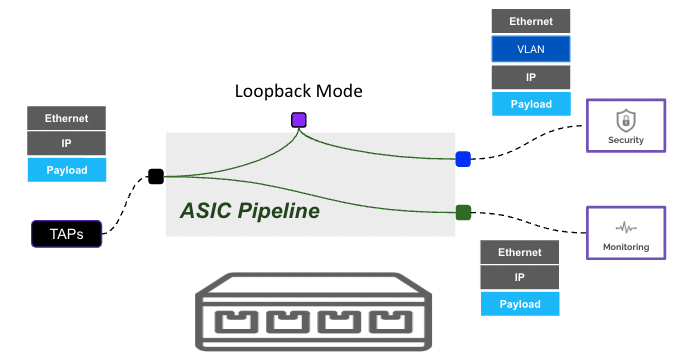
    Loopback-mode means that a physical port can become network-port (ingress) and tool-port(egress) to which flow rules can be applied. A loopback-mode port is operated in loopback mode and avoids customers connecting a physical cable to make it operate in Loopback mode.

    As soon as a port is configured as a loopback-mode port, it is internally changed to a loopback mode state. This means that the link is UP with or without cables being inserted. Traffic flows out of a loopback-mode port (Tx direction) and loops back to it (Rx direction).

    loopback-mode ports can provide the following flexibility:

    • Support for multiple lookups on the same packet. For example, decapsulate the tunnel and look up based on the inner header.

    • Multiple egress actions on the same traffic. For example (shown here) send to tool as-is and add VLAN tag.

    The following command is used to configure the interface to work as both network-port and tool-port. When enabled on an interface, it acts like a mac loopback which loops back the egress packets back to the device on the same port.

    Reference

    Example

    You can verify the configuration by using the command(s) below:

    Configuring Port Speed

    Port speed refers to the maximum amount of data that the line card transmits through a port at any given second.

    Reference

    Command

    speed {1000 | 10000 | 25000 | 40000 | 100000}

    Description

    Configure speed in Mbps

    Example

    You can verify the configuration by using the command(s) below:

    forward-error-correction {rs | fs | none}

    Description

    Configure forward error correction method

    Parameters

    None

    Mode

    INTERFACE

    pbnoscli# configure terminal 
    pbnoscli(config)# interface ethernet Ethernet1/1
    pbnoscli(config-if)# forward-error-correction 
      fs                    Firecode Forward Error Correction
      none                  None
      rs                    Reed Solomon Forward Error Correction
    pbnoscli(config-if)# forward-error-correction rs

    Parameters

    1000 1G

    10000 10G

    25000 25G

    40000 40G

    100000 100G

    Mode

    INTERFACE

    pbnoscli# configure terminal
    pbnoscli(config)# interface ethernet Ethernet4/1
    pbnoscli(config-if)# speed 
      1000                  1G
      10000                 10G
      100000                100G
      25000                 25G
      40000                 40G
    pbnoscli(config-if)# speed 1000
    pbnoscli(config-if)# 
    pbnoscli# show interface summary 
    ============================================================================================================================
    Interface       Lanes             Speed   MTU     FEC     Alias           Vlan    Oper    Admin   Type              Asym PFC
    ============================================================================================================================
    Ethernet1/1     0,1,2,3           100G    9100    rs      etp1            trunk   up      up      QSFP28 or later   N/A     
    Ethernet2/1     8,9,10,11         100G    9100    none    etp2            trunk   up      up      QSFP28 or later   N/A     
    Ethernet3/1     16,17,18,19       100G    9100    none    etp3            trunk   up      up      QSFP28 or later   N/A     
    Ethernet4/1     24,25,26,27       100G    9100    rs      etp4            trunk   down    up      N/A               N/A     
    Ethernet5/1     32,33,34,35       100G    9100    none    etp5            trunk   down    up      QSFP28 or later   N/A     
    Ethernet6/1     40,41,42,43       100G    9100    none    etp6            trunk   down    up      QSFP28 or later   N/A     
    Ethernet7/1     48,49,50,51       100G    9100    none    etp7            trunk   down    up      QSFP28 or later   N/A     
    Ethernet8/1     56,57,58,59       100G    9100    none    etp8            trunk   down    up      N/A               N/A     
    Ethernet9/1     64,65,66,67       100G    9100    none    etp9            trunk   down    up      N/A               N/A     
    Ethernet10/1    72,73,74,75       100G    9100    none    etp10           trunk   down    up      N/A               N/A     
    Ethernet11/1    80,81,82,83       100G    9100    none    etp11           trunk   down    up      N/A               N/A     
    Ethernet12/1    88,89,90,91       100G    9100    none    etp12           trunk   down    up      N/A               N/A     
    Ethernet13/1    96,97,98,99       100G    9100    none    etp13           trunk   up      up      QSFP28 or later   N/A     
    Ethernet14/1    104,105,106,107   100G    9100    none    etp14           trunk   up      up      QSFP28 or later   N/A     
    <...>
    Ethernet60/1    472,473,474,475   100G    9100    none    etp60           trunk   down    up      N/A               N/A     
    Ethernet61/1    480,481,482,483   100G    9100    none    etp61           trunk   down    up      N/A               N/A     
    Ethernet62/1    488,489,490,491   100G    9100    none    etp62           trunk   down    up      N/A               N/A     
    Ethernet63/1    496,497,498,499   100G    9100    rs      etp63           routed  up      up      QSFP28 or later   N/A     
    Ethernet64/1    504,505,506,507   100G    9100    rs      etp64           routed  up      up      QSFP28 or later   N/A     
    pbnoscli#
    pbnoscli# show running-config 
    configure terminal
    !
    interface ethernet Ethernet1/1
    forward-error-correction rs
    !
    interface ethernet Ethernet4/1
    forward-error-correction fs
    !
    interface mgmt
    ip address 10.4.4.53/23 gateway 10.4.4.1
    !
    pbnoscli# 
    pbnoscli# show interface summary 
    ============================================================================================================================
    Interface       Lanes             Speed   MTU     FEC     Alias           Vlan    Oper    Admin   Type              Asym PFC
    ============================================================================================================================
    Ethernet1/1     0,1,2,3           100G    1500    rs      etp1            trunk   up      up      QSFP28 or later   N/A     
    Ethernet2/1     8,9,10,11         100G    9100    none    etp2            trunk   up      up      QSFP28 or later   N/A     
    Ethernet3/1     16,17,18,19       100G    9100    none    etp3            trunk   up      up      QSFP28 or later   N/A     
    Ethernet4/1     24,25,26,27       1G      9100    fs      etp4            trunk   down    up      N/A               N/A     
    Ethernet5/1     32,33,34,35       100G    9100    none    etp5            trunk   down    up      QSFP28 or later   N/A     
    Ethernet6/1     40,41,42,43       100G    9100    none    etp6            trunk   down    up      QSFP28 or later   N/A     
    Ethernet7/1     48,49,50,51       100G    9100    none    etp7            trunk   down    up      QSFP28 or later   N/A     
    Ethernet8/1     56,57,58,59       100G    9100    none    etp8            trunk   down    up      N/A               N/A     
    Ethernet9/1     64,65,66,67       100G    9100    none    etp9            trunk   down    up      N/A               N/A     
    Ethernet10/1    72,73,74,75       100G    9100    none    etp10           trunk   down    up      N/A               N/A     
    Ethernet11/1    80,81,82,83       100G    9100    none    etp11           trunk   down    up      N/A               N/A     
    Ethernet12/1    88,89,90,91       100G    9100    none    etp12           trunk   down    up      N/A               N/A     
    Ethernet13/1    96,97,98,99       100G    9100    none    etp13           trunk   up      up      QSFP28 or later   N/A     
    Ethernet14/1    104,105,106,107   100G    9100    none    etp14           trunk   up      up      QSFP28 or later   N/A     
    <...>
    Ethernet60/1    472,473,474,475   100G    9100    none    etp60           trunk   down    up      N/A               N/A     
    Ethernet61/1    480,481,482,483   100G    9100    none    etp61           trunk   down    up      N/A               N/A     
    Ethernet62/1    488,489,490,491   100G    9100    none    etp62           trunk   down    up      N/A               N/A     
    Ethernet63/1    496,497,498,499   100G    9100    rs      etp63           routed  up      up      QSFP28 or later   N/A     
    Ethernet64/1    504,505,506,507   100G    9100    rs      etp64           routed  up      up      QSFP28 or later   N/A     
    pbnoscli#
    pbnoscli# show running-config 
    configure terminal
    !
    interface ethernet Ethernet1/1
    forward-error-correction rs
    !
    interface ethernet Ethernet4/1
    speed 1000
    forward-error-correction fs
    !
    interface mgmt
    ip address 10.4.4.53/23 gateway 10.4.4.1
    !
    pbnoscli# 

    Command

    loopback-mode no loopback-mode

    Description

    Activation loopback mode

    Parameters

    None

    Mode

    INTERFACE

    Loopback Mode Port

    Configuring Ingress VLAN

    You can use the Ingress VLAN functionality to assign dedicated identification tags (VLAN Tags) and thereby creating a mapping between the network port and tool ports. Traffic received on network ports can be added with an additional VLAN tag and sent towards the tools for identifying the Network Port. Ingress VLAN is configured in the interface configuration of the network port.

    Reference

    Command

    [no] ingress-vlan <value>

    Description

    • This feature should only be configured on Network ports

    Example

    You can verify the configuration by using the command(s) below:

    Configuring Rx-only

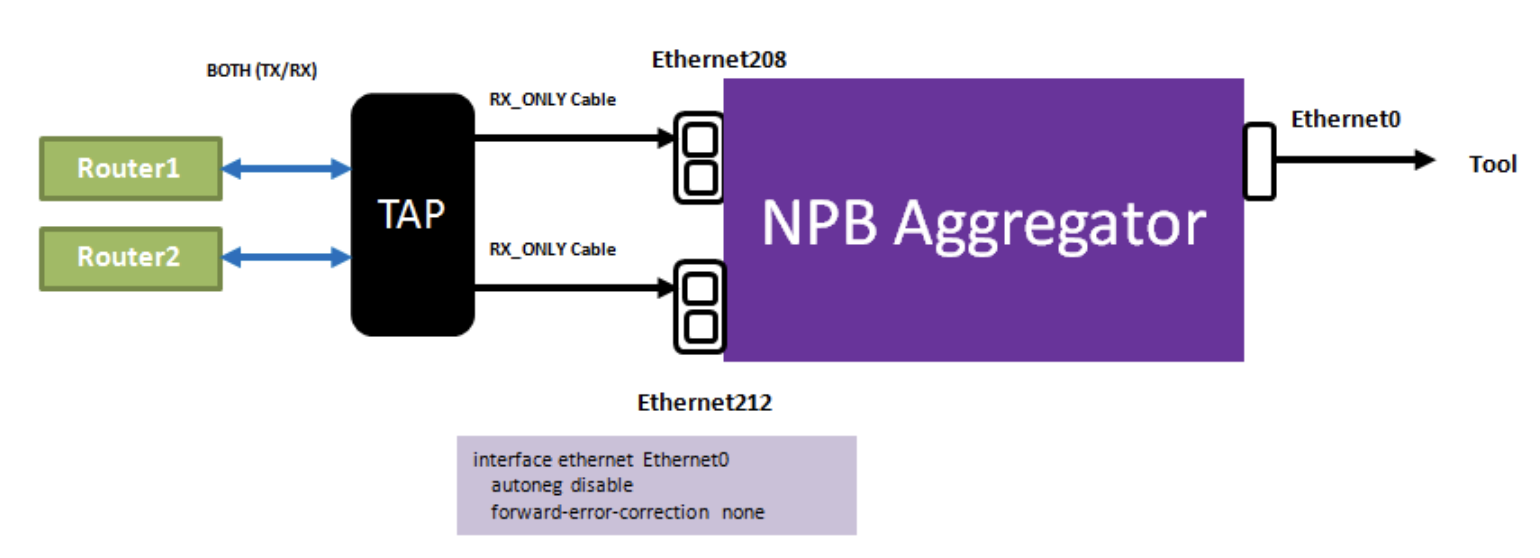
    You can use the Rx-only functionality to have only a Receive link on the network ports for BiDi SFPs

    This feature is only supported on Edgecore AS7816-64X

    Reference

    pbnoscli# configure terminal 
    pbnoscli(config)# interface ethernet Ethernet4/1
    pbnoscli(config-if)# loopback      
      loopback-mode         Activate loopback mode
    pbnoscli(config-if)# loopback-mode 
    pbnoscli(config-if)# 
    pbnoscli# show interface npb Ethernet4/1
    ===================================
    Interface : Ethernet4/1      
    ===================================
    Mode           : vlan-aware      
    Ingress-vlan   : 6              
    Egress-tagging : disable         
    Loopback-mode  : enable          
    
    pbnoscli# 
    pbnoscli# show running-config 
    configure terminal
    !
    interface ethernet Ethernet4/1
    speed 1000
    description interface description
    mode vlan-aware
    loopback-mode
    !
    interface mgmt
    ip address 10.4.4.53/23 gateway 10.4.4.1
    !
    pbnoscli# 

    Ingress-vlan configuration

    Parameters

    value within 500 to 4094

    Mode

    INTERFACE

    pbnoscli# configure terminal 
    pbnoscli(config)# interface ethernet Ethernet8/1
    pbnoscli(config-if)# ingress-     
      ingress-vlan          Add ingress vlan (range 500...4094)
    pbnoscli(config-if)# ingress-vlan 501
    pbnoscli(config-if)# 
    pbnoscli# show interface npb Ethernet8/1
    
    ===================================
    Interface : Ethernet8/1       
    ===================================
    Type           : network         
    Mode           : vlan-aware      
    Ingress-vlan   : 501             
    Egress-tagging : disable         
    
    pbnoscli# 
    pbnoscli# show running-config 
    configure terminal
    !
    interface ethernet Ethernet8/1
    ingress-vlan 501
    mode vlan-aware
    type network
    !
    interface mgmt
    ip address 10.4.4.53/23 gateway 10.4.4.1
    !
    pbnoscli# 

    Command

    {no} receive-only

    Description

    rx-only configuration

    Parameters

    None

    Mode

    INTERFACE

    Example

    You can verify the configuration by using the command(s) below:

    Tx-Only
    pbnoscli# configure terminal 
    pbnoscli(config)# interface ethernet Ethernet4/1                  
    pbnoscli(config-if)# receive-only
    pbnoscli(config-if)# end

    Configuring Tx-only

    Tx-Only

    You can use the Tx-only functionality to have only a Transmit link on the tool ports

    This feature is only supported on Broadcom platforms

    Reference

    Example

    You can verify the configuration by using the command(s) below:

    Configuring Egress Tagging

    You can use the egress tagging functionality to add a VLAN tag to the packet transmitted from the tool port.

    Reference

    Command

    {no} egress-tagging enable

    Description

    Egress-tagging configuration

    This feature should only be configured on Tool ports

    Example

    You can verify the configuration by using the command(s) below:

    Configuring Packet Slicing

    You can use packet truncation, which is a unique capability available only on NVIDIA platforms, to truncate the packets which are sent to the tool. This helps tools reduce the storage capacity needed for saving packets for future analysis. It truncates the packet for the given offset.

    This feature is only supported on the NVIDIA platforms

    Configuring PortChannel

    You can use the port-channel command to create groups of tool ports and provide traffic load-balancing. By default, symmetric hashing is enabled for IPv4 and IPv6 traffic, redirecting the source-destination pair to the same tool-connected port.

    Reference

    pbnoscli# show interface npb Ethernet4/1
    ===================================
    Interface : Ethernet4/1
    ===================================
    Ingress-vlan   : 18
    Egress-tagging : disable
    Receive-only  : enable
    
    pbnoscli#
    pbnoscli# show running-config 
    configure terminal
    interface ethernet Ethernet4/1
    receive-only
    !
    interface mgmt
    ip address 10.4.4.53/23 gateway 10.4.4.1
    !
    pbnoscli# 

    Parameters

    None

    Mode

    INTERFACE

    pbnoscli# configure terminal 
    pbnoscli(config)# interface ethernet Ethernet4/1
    pbnoscli(config-if)# egress-        
      egress-tagging        Add egress tagging
    pbnoscli(config-if)# egress-tagging enable 
    pbnoscli(config-if)# 

    Parameters

    channelid - within 1 to 16 portname - valid interface names delimited by (,) string - a maximum of 50 characters, within double quotes

    Mode

    CONFIG

    PortChannel can only be configured as a Tool port in a flow

    Example

    You can verify the configuration by using the command(s) below:

    Command

    port-channel <channelid>ports<portname>[description<string>] no port-channel <channelid>ports

    Description

    Port-channel configuration

    pbnoscli# configure terminal  
    pbnoscli(config)# port-channel 1 
      ports                 Add physical ports to port channel
    pbnoscli(config)# port-channel 1 ports 
      <portname>            Add ports (Add multiple ports comma delimited)
    pbnoscli(config)# port-channel 1 ports Ethernet63/1,Ethernet64/1
    pbnoscli(config)# 
    
    pbnoscli(config)# no port-channel 1 ports 
    pbnoscli(config)# 
    pbnoscli# show interface npb Ethernet4/1
    
    ===================================
    Interface : Ethernet4/1       
    ===================================
    Type           : tool            
    Mode           : vlan-aware      
    Ingress-vlan   : 6               
    Egress-tagging : enable          
    Loopback-mode  : disable         
    
    pbnoscli# 
    pbnoscli# show running-config 
    configure terminal
    !
    interface ethernet Ethernet4/1
    type tool
    egress-tagging enable
    mode vlan-aware
    !
    interface mgmt
    ip address 10.4.4.53/23 gateway 10.4.4.1
    !
    pbnoscli# 
    pbnoscli# show port-channel information 
    ===================================
    Name         : port-channel1
    Member ports : Ethernet63/1[up] Ethernet64/1[up] 
    
    ===================================
    pbnoscli# 
    
    pbnoscli# show port-channel rate
    =====================================================
    Port-channel Rate Counter
    =====================================================
    
    	Port-Channel                  :1
    	Member Port                   :Ethernet1/1[up],Ethernet2/1[up],Ethernet3/1[up],Ethernet4/1[down],Ethernet5/1[down]
    	PACKETS RECEIVED              :0
    	PACKETS RECEIVED BPS          :51.25 B/s
    	PACKETS RECEIVED PPS          :0.20 P/s
    	RECEIVED UTIL                 :0.00 %
    	RECEIVED ERROR PACKETS        :0
    	RECEIVED DISCARDED PACKETS    :0
    	RECEIVED OVERSIZE PACKETS     :0
    	PACKETS TRANSMITTED           :0
    	PACKETS TRANSMITTED BPS       :20.51 B/s
    	PACKETS TRANSMITTED PPS       :0.09 P/s
    	TRANSMITTED UTIL              :0.00 %
    	TRANSMITTED ERROR PACKETS     :0
    	TRANSMITTED DISCARDED PACKETS :0
    	TRANSMITTED OVERSIZE PACKETS  :0
    
    pbnoscli#
    pbnoscli# show running-config
    configure terminal
    port-channel 1 ports Ethernet63/1,Ethernet64/1
    !
    interface mgmt
    ip address 10.4.4.53/23 gateway 10.4.4.1
    !
    pbnoscli#
    The packet will be truncated beginning at the Ethernet header

    Reference

    Command

    truncate <offset value>

    no truncate

    Description

    Truncate packets after offset

    Parameters

    Offset-value – multiple of 4 within 48 to 4088

    Mode

    INTERFACE

    Example

    You can verify the configuration by using the command(s) below:

    Truncation and Load Balancing

    Command

    {no} transmit-only

    Description

    Tx-only configuration

    Parameters

    None

    Mode

    INTERFACE

    pbnoscli# configure terminal 
    pbnoscli(config)# interface ethernet Ethernet4/1                  
    pbnoscli(config-if)# tr            
      transmit-only         Activate tx-only mode
    pbnoscli(config-if)# transmit-only 
    pbnoscli(config-if)# end

    Configuring LAG Hash

    LAG-Hash is used to describe the load-balancing algorithm used for distributing traffic across the links within a port channel. This algorithm plays a crucial role in determining the distribution of traffic evenly among the member links of the port channel.

    OPBNOS uses the CRC2 for NVIDIA ASIC and CRC32_LO for Broadcom ASIC for load-balancing traffic across a port channel.

    Reference

    Configuring An-clause

    You can use the an-clause functionality to enable support for 1G Electrical SFP

    This feature is only supported on Broadcom platforms

    Reference

    Configuring Network Ports

    Network ports are the source port(s) that can be specified in a flow for matching and filtering on one or more ingress traffic ports.

    Reference

    Configuring Flows

    You can configure flows with rules to replicate and filter traffic between the network and tool ports.

    Flow can be used to create a traffic stream between the network port and tool port, The traffic can be filtered by configuring rule(s) to permit/deny matching traffic.

    Reference

    Configuring Flows and Rules

    This section provides information about configuring flows and rules.

    pbnoscli# configure terminal 
    pbnoscli(config)# interface ethernet Ethernet4/1
    pbnoscli(config-if)# trunc    
      truncate              Truncate the packet
    pbnoscli(config-if)# truncate 64
    pbnoscli# show interface npb Ethernet4/1
    
    ===================================
    Interface : Ethernet4/1       
    ===================================
    Mode           : vlan-aware      
    Ingress-vlan   : 6               
    Egress-tagging : disable         
    Truncate       : 64              
    
    pbnoscli# 
    pbnoscli# sh running-config 
    configure terminal
    !
    interface ethernet Ethernet4/1
    truncate 64
    !
    interface mgmt
    ip address 10.4.4.53/23 gateway 10.4.4.1
    !
    pbnoscli# 
    pbnoscli# show interface npb Ethernet4/1
    ===================================
    Interface : Ethernet4/1
    ===================================
    Ingress-vlan   : 18
    Egress-tagging : disable
    Transmit-only  : enable
    
    pbnoscli#
    pbnoscli# show running-config 
    configure terminal
    interface ethernet Ethernet4/1
    transmit-only
    !
    interface mgmt
    ip address 10.4.4.53/23 gateway 10.4.4.1
    !
    pbnoscli# 
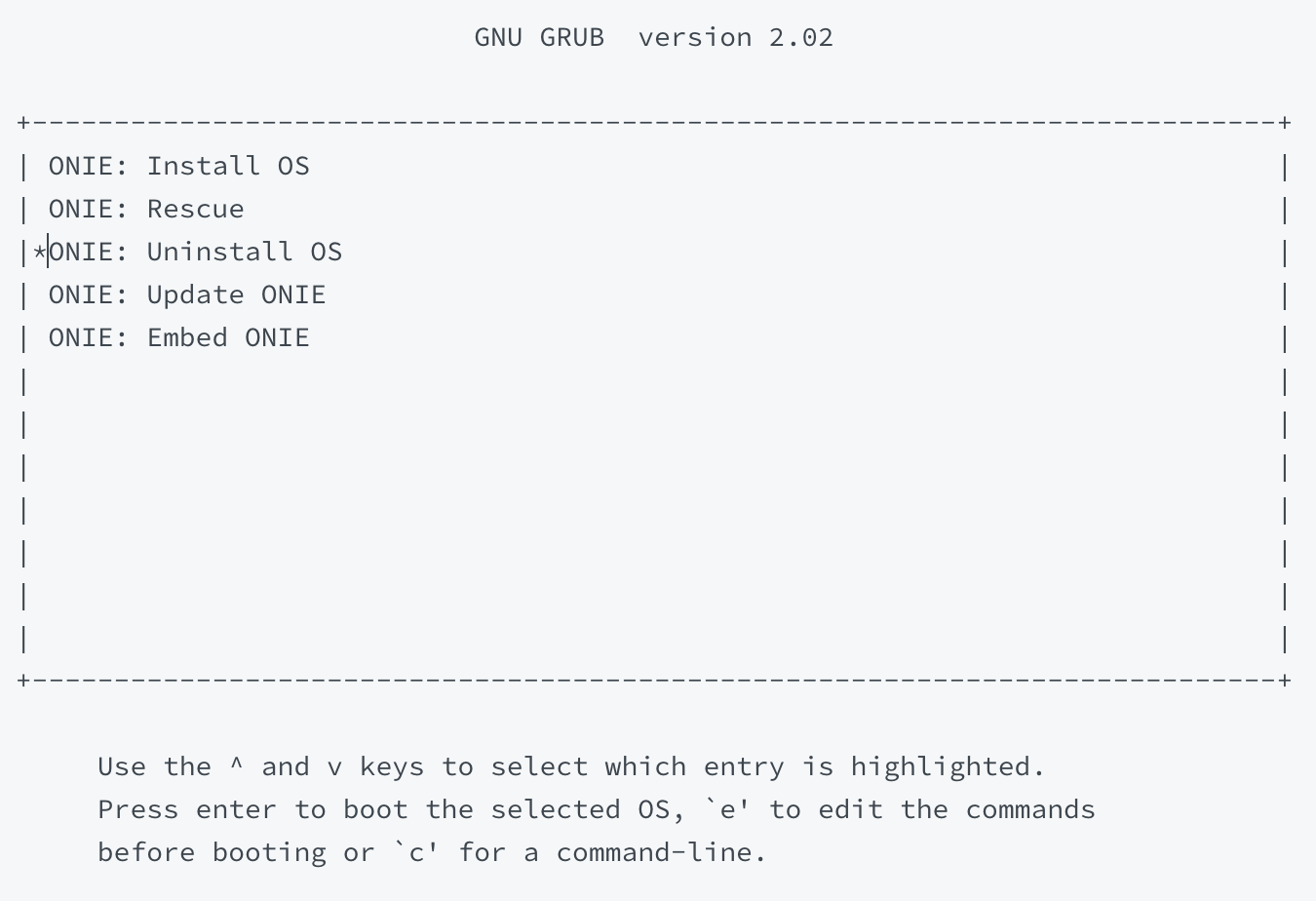
    Configuring Flows
    Configuring Flow Description
    Configuring Flow Rules (NVIDIA)
    Configuring Flow Override Action(s)
    Display Flow Information

    Description

    seed value 0 - 4294967295

    Parameters

    integer seed value

    Mode

    CONFIG

    You can verify the configuration by using the command(s) below:

    Command

    lag-hash seed <int seed_value>

    pbnoscli# configure terminal 
    pbnoscli(config)# lag-hash 
      seed                  seed configuration
    pbnoscli(config)# lag-hash seed 
      <seed_val>            seed value 0..4294967295
    pbnoscli(config)# lag-hash seed 429496723
    pbnoscli(config)# 
    pbnoscli# show lag-hash config 
    ===================================================
    LAG Hash Parameters
    ===================================================
    Hash Algorithm : CRC2
    Symmetric Hash : Enabled
    SEED Value     : 429496723
    pbnoscli# 

    Command

    {no} an-clause cl37

    Description

    Auto-Negotiation clause

    Parameters

    cl37

    Mode

    INTERFACE

    Example

    
    pbnoscli# configure terminal 
    pbnoscli(config)# interface ethernet Ethernet2/1
    pbnoscli(config-if)# an
      an-clause             Auto-Negotiation clause
    pbnoscli(config-if)# an-clause cl37
    pbnoscli(config-if)# end

    Parameters

    network-ports—valid interfaces, delimited by (,)

    Mode

    FLOW

    CLI Example

    You can verify the configuration by using the command(s) below:

    Command

    network-ports <network-ports>

    Description

    Configure network or TAP ports

    pbnoscli# configure terminal 
    pbnoscli(config)# flow flow01
    pbnoscli(config-flow-flow01)# network-               
      network-ports         Configure network or TAP ports
    pbnoscli(config-flow-flow01)# network-ports Ethernet1/1,Ethernet2/1
    pbnoscli(config-flow-flow01)# 

    Create/Delete Flow

    Parameters

    Flow-name—maximum of 10 characters

    Interface

    CONFIG

    Example

    Command

    [no] flow <flow-name>

    Description

    pbnoscli# configure terminal 
    pbnoscli(config)# flow flow01
    pbnoscli(config-flow-flow01)# 
      !                     Exit from the current prompt
      description           Configure description for flow
      enable                Enable the flow
      end                   Exit to exec prompt
      exit                  Exit from the current prompt
      network-ports         Configure network or TAP ports
      no                    no form
      pop-vlan              Pop Vlan Tag
      push-vlan-tag         Push VLAN tag
      rule                  Configure rule
      show                  Show commands
      tool-ports            Configure network tool or analyzer ports
      top                   Exit to the configuration prompt
    pbnoscli(config-flow-flow01)# exit
    
    //to delete a flow
    pbnoscli(config)# no flow flow01
    pbnoscli(config)
    pbnoscli# show running-config 
    configure terminal
    interface ethernet Ethernet2/1
    an-clause cl37
    !
    interface mgmt
    ip address 10.4.4.53/23 gateway 10.4.4.1
    !
    pbnoscli# 
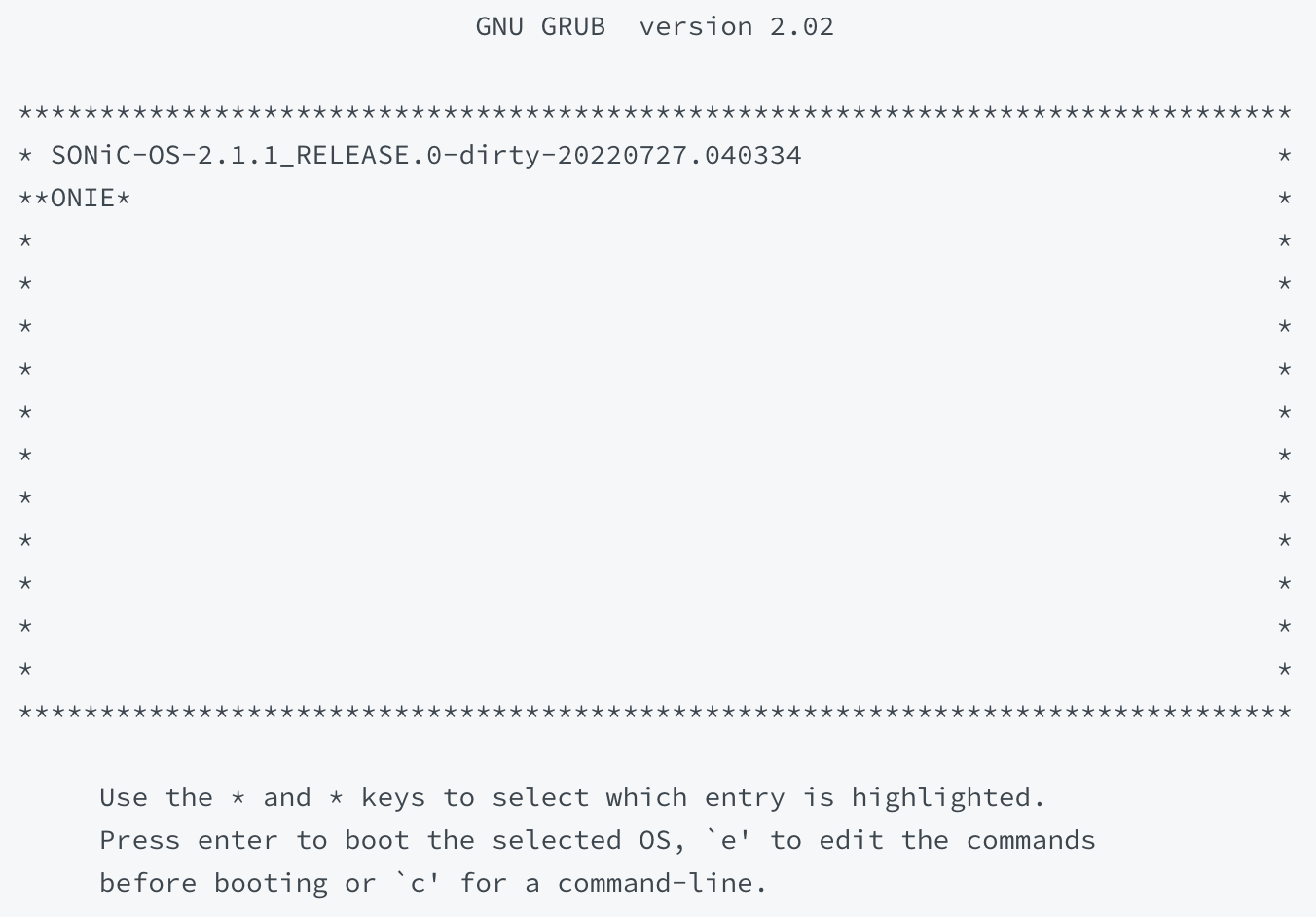
    pbnoscli# show flow flow01
    
    ===================================
    Flow : flow01 (CLI)
    ===================================
    Status       : enable          
    Network-Port : Ethernet1/1,Ethernet2/1
    pbnoscli# 
    pbnoscli# show running-config 
    configure terminal
    !
    interface ethernet Ethernet1/1
    forward-error-correction rs
    type network
    !
    interface ethernet Ethernet2/1
    forward-error-correction rs
    type network
    !
    interface mgmt
    ip address 10.4.4.53/23 gateway 10.4.4.1
    !
    flow flow01
    network-ports Ethernet0,Ethernet4
    !
    pbnoscli# 

    Configuring Tool Ports

    You can specify the destination(s) for packets matching the flow. The supported destinations are as follows:

    • port-id(s): matching traffic redirected to one or more tool ports

    • port-channel: matching traffic redirected to multiple tool ports with symmetric load balancing

    Reference

    Example

    You can verify the configuration by using the command(s) below:

    Command

    tool-ports <tool-ports>

    Description

    Configure network tool or analyzer ports

    Parameters

    tool-ports—valid interfaces, delimited by (,)

    Mode

    FLOW

    pbnoscli# configure terminal 
    pbnoscli(config)# flow flow01
    pbnoscli(config-flow-flow01)# network-ports Ethernet1/1,Ethernet2/1
    pbnoscli(config-flow-flow01)# tool-      
      tool-ports            Configure network tool or analyzer ports
    pbnoscli(config-flow-flow01)# tool-ports port-channel1,Ethernet8/1
    pbnoscli(config-flow-flow01)#
    pbnoscli# show flow flow01
    
    ===================================
    Flow : flow01 (CLI)
    ===================================
    Status       : enable          
    Network-Port : Ethernet1/1,Ethernet2/1
    Tool-Port    : port-channel1,Ethernet8/1
    pbnoscli# 
    pbnoscli# show running-config 
    configure terminal
    port-channel 1 ports Ethernet63/1,Ethernet64/1
    !
    interface ethernet Ethernet1/1
    forward-error-correction rs
    type network
    !
    interface ethernet Ethernet2/1
    forward-error-correction rs
    type network
    !
    interface mgmt
    ip address 10.4.4.53/23 gateway 10.4.4.1
    !
    flow flow01
    network-ports Ethernet1/1,Ethernet2/1
    tool-ports port-channel1,Ethernet8/1
    !
    pbnoscli# 

    Configuring Flow Description

    You can specify the description of the flow. The description can contain upto 48 characters long and is case-sensitive.

    Reference

    Command

    description <string>

    Description

    Description configuration

    Example

    You can verify the configuration by using the command(s) below:

    Parameters

    string—maximum 50 characters, within double quotes.

    Interface

    FLOW

    pbnoscli# configure terminal 
    pbnoscli(config)# flow flow01
    pbnoscli(config-flow-flow01)# descript    
      description           Configure description for flow
    pbnoscli(config-flow-flow01)# description "--Flow Description--"
    pbnoscli(config-flow-flow01)# 
    
    //to remove flow description
    pbnoscli(config-flow-flow01)# no description
    pbnoscli(config-flow-flow01)# 
    pbnoscli# show flow flow01
    
    ===================================
    Flow : flow01 (CLI)
    ===================================
    Status       : enable          
    Description  : --Flow Description--
    pbnoscli# 
    pbnoscli# show running-config
    configure terminal
    !
    interface mgmt
    ip address 10.4.4.53/23 gateway 10.4.4.1
    !
    flow flow01
    description "--Flow Description--"
    !
    pbnoscli# 

    Configuring Flow Rules (NVIDIA)

    NVIDIA ASIC

    You can configure a rule with certain qualifiers to aggregate and filter traffic from network port(s) to tool port(s) for monitoring.

    Before configuring flow rules, Network and Tool ports must be configured

    Reference

    Example

    You can verify the configuration by using the command(s) below:

    Command

    rule <ruleid> (deny | permit ) [description <cstring>] ([ethertype <etype>] [vlan <vid>] [src-ip (<ipv4> | <ipv6 > src-netmask <ipv6 >)] [dest-ip (<ipv4> | <ipv6 > dest-netmask <ipv6 >)] [protocol (tcp | udp | <ptype >)] [l4portsrc <sport>] [l4portdst <dport>] [tosval <sval >] [dscp <dval>] [ttl <tval>] [tcpctl <flags > tcpctlmask <tcpmask >] | match_all [ipv6]) [counters (enable | disable)]

    no rule <ruleid>

    Description

    Rule configuration

    Parameters

    • ruleid: It should be in the range 1 to 6000

    • description: max 50 characters

    • ethertype: hexadecimal value prefix with 0x. max 4 characters.

    • vlan: VLAN id 2 to 4094

    • src-ip: source IP address

    • dest-ip: Destination IP address

    • protocol: L3 Protocol

    • l4portsrc: L4 source port for TCP or UDP

    • l4portdst: L4 source port for TCP or UDP

    • tossval: Type of Service

    • dscp: Differentiated services code point.

    • ttl: Time-to-live

    • tcpctl: TCP control flags

    Mode

    FLOW

    pbnoscli# configure terminal 
    pbnoscli(config)# flow flow01
    pbnoscli(config-flow-flow01)# 
      !                     Exit from the current prompt
      description           Configure description for flow
      enable                Enable the flow
      end                   Exit to exec prompt
      exit                  Exit from the current prompt
      network-ports         Configure network or TAP ports
      no                    no form
      pop-vlan              Pop Vlan Tag
      push-vlan-tag         Push VLAN tag
      rule                  Configure rule
      show                  Show commands
      tool-ports            Configure network tool or analyzer ports
      top                   Exit to the configuration prompt
    pbnoscli(config-flow-flow01)# rule 1 
      action                Add rule specific action
      deny                  Deny traffic
      permit                Permit traffic
    pbnoscli(config-flow-flow01)# rule 1 permit 
      <cr>
      counters              Enable counters
      description           Add description within double quotes
      dest-ip               Destination IP address
      dscp                  Differentiated services code point
      ethertype             ethernet type, 0x800, 0x8100
      gtp                   GTP Tunneling
      l4portdst             L4 destination port
      l4portsrc             L4 source port
      match-all             Match all
      protocol              IP protocol
      qualifiers            Flow Rule Qualifiers
      src-ip                Source IP address
      tcpctl                TCP Control Flags
      tosval                Type of Service
      ttl                   Time-to-live
      vlan                  Vlan Identifier
    pbnoscli(config-flow-flow01)# rule 1 permit src-ip 10.10.0.0/24 dest-ip 20.0.20.0/24 counters enable 
    
    //to remove a rule
    pbnoscli(config-flow-flow01)# no rule 1
    pbnoscli(config-flow-flow01)#
    pbnoscli# show flow summary 
    Flow-Name       Rule-Id        Status      Counter-Value
    =========================================================
    flow01          1             Active          1675               
    pbnoscli# 
    
    pbnoscli# show flow flow01
    
    ===================================
    Flow : flow01 (CLI)
    ===================================
    Status       : enable          
    Network-Port : Ethernet1/1,Ethernet2/1
    Tool-Port    : port-channel1,Ethernet8/1
    
    Rule : 1               
    ++++++++++++++++++++++++++++++++++
    Action                   : permit          
    Source IP                : 2401::1         
    Source Mask              : f::f            
    Destination IP           : 2401::2         
    Destination Mask         : f::f            
    Counters                 : enable          
    pbnoscli# 
    \\Configuring IPv4 rules
    pbnoscli# show running-config 
    configure terminal
    port-channel 1 ports Ethernet63/1,Ethernet64/1
    !
    interface ethernet Ethernet1/1
    forward-error-correction rs
    type network
    !
    interface ethernet Ethernet2/1
    forward-error-correction rs
    type network
    !
    interface mgmt
    ip address 10.4.4.53/23 gateway 10.4.4.1
    !
    flow flow01
    description "--Flow Description--"
    network-ports Ethernet1/1,Ethernet2/1
    tool-ports port-channel1,Ethernet8/1
    rule 1 permit src-ip 10.10.0.0/24 dest-ip 20.0.20.0/24 counters enable
    !
    pbnoscli# 
    \\Configuring IPv6 rules
    pbnoscli# show running-config 
    configure terminal
    port-channel 1 ports Ethernet63/1,Ethernet64/1
    !
    interface ethernet Ethernet1/1
    forward-error-correction rs
    type network
    !
    interface ethernet Ethernet2/1
    forward-error-correction rs
    type network
    !
    interface mgmt
    ip address 10.4.4.53/23 gateway 10.4.4.1
    !
    flow flow01
    description "--Flow Description--"
    network-ports Ethernet1/1,Ethernet2/1
    tool-ports port-channel1,Ethernet8/1
    rule 1 permit src-ip 2401::1 src-netmask f::f dest-ip 2401::2 dest-netmask f::f counters enable
    !
    pbnoscli# 

    Configuring Flow Match Expression Rules

    Using this command, users can configure a rule using an expression string for both inner and outer headers in encapsulated packets.

    Before configuring flow rules, Network and Tool ports must be configured

    This feature is supported only on NVIDIA spectrum-2/3 platforms

    Reference

    Expression qualifiers -

    ethertype - L2 Ethertype, vlan - Vlan header value, src-ip - Source IP prefix, src-netmask - Source IP mask, dest-ip- Destination IP prefix, dest-netmask- Destination IP mask, protocol - Protocol type, l4portsrc- Transport layer source port, l4portdst - Transport layer destination port, tosval - Type of Service value, dscp - Differentiated services field value, ttl - Packet TTL, tcpctl - TCP control value, tcpctlmask - TCP control mask, teid - Encapsulation tunnel ID, inner-sip - Inner IP Source Address, inner-dip - Inner IP Destination Address, inner-protocol - Inner Header Protocol, inner_l4srcport - Inner Header UDP Source Port, inner_l4destport - Inner Header UDP Destination Port

    Example

    You can verify the configuration by using the command(s) below:

    Command

    rule ((deny | permit) [description ] [match-expression ] [counters (enable | disable )]

    no rule <ruleid>

    Description

    Rule configuration

    Parameters

    • ruleid: It should be in the range 1 to 6000

    • description: max 50 characters. match

    • expression: qualifiers can be added to this string

    • counters: can be enabled or disabled

    Mode

    FLOW

    pbnoscli# configure terminal 
    pbnoscli(config)# flow flow01
    pbnoscli(config-flow-flow01)# 
      !                     Exit from the current prompt
      description           Configure description for flow
      enable                Enable the flow
      end                   Exit to exec prompt
      exit                  Exit from the current prompt
      network-ports         Configure network or TAP ports
      no                    no form
      pop-vlan              Pop Vlan Tag
      push-vlan-tag         Push VLAN tag
      rule                  Configure rule
      show                  Show commands
      tool-ports            Configure network tool or analyzer ports
      top                   Exit to the configuration prompt
    pbnoscli(config-flow-flow01)# rule 1 permit description "Match Expression" 
      <cr>
      counters              Enable counters
      dest-ip               Destination IP address
      dscp                  Differentiated services code point
      ethertype             ethernet type, 0x800, 0x8100
      gtp                   GTP Tunneling
      l4portdst             L4 destination port
      l4portsrc             L4 source port
      match-all             Match all
      match-expression      Flow Rule Qualifiers
      protocol              IP protocol
      src-ip                Source IP address
      tcpctl                TCP Control Flags (maximum value is 0x3f)
      tosval                Type of Service
      ttl                   Time-to-live
      udf-data              User Defined Data
      vlan                  Vlan Identifier
    pbnoscli(config-flow-flow01)# rule 1 permit description "Match Expression" 
    pbnoscli(config-flow-flow01)# $Match Expression" match-expression 
      <matchexpression>     Example qualifiers: ethertype, vlan, src-ip, src-netmask, 
                                                dest-ip, dest-netmask, protocol, l4portsrc,
                                                l4portdst, tosval, dscp, ttl, tcpctl, tcpctlmask,
                                                teid, inner-sip, inner-dip, inner-protocol, 
                                                inner_l4srcport, inner_l4destport
    pbnoscli(config-flow-flow01)# $Match Expression" match-expression "vlan 100 src-ip 1.1.1.1/32 dest-ip 2.2.2.2/32 protocol udp inner-sip 10.10.10.1/32 inner-dip 20.20.20.2/32" counters enable
    pbnoscli(config-flow-flow01)# end
    pbnoscli# show flow all
    ===================================
    Flow : flow01 (CLI)
    ===================================
    Status       : enable          
    Network-Port : Ethernet1/1,Ethernet2/1
    Tool-Port    : port-channel1,Ethernet8/1
    
    Rule : 1               
    ++++++++++++++++++++++++++++++++++
    Vlan                     : 100             
    Source IP                : 1.1.1.1         
    Source Mask              : 255.255.255.255 
    Destination IP           : 2.2.2.2         
    Destination Mask         : 255.255.255.255 
    Protocol                 : udp             
    Inner Source IP          : 10.10.10.1      
    Inner Source Mask        : 255.255.255.255 
    Inner Destination IP     : 20.20.20.2      
    Inner Destination Mask   : 255.255.255.255 
    Action                   : permit          
    Description              : Match Expression
    Counters                 : enable          
    pbnoscli# 
    
    pbnoscli# show flow counters all
    Flow-Name       Rule-Id        ASIC-Stat-Id   Counter-Value
    =============================================================
    flow01          DropRule        40960           42156085        
    flow01          1               57344           455049065       
    pbnoscli#
    pbnoscli# show running-config 
    configure terminal
    !
    interface ethernet Ethernet1/1
    forward-error-correction rs
    type network
    !
    interface ethernet Ethernet2/1
    forward-error-correction rs
    type tool
    !
    interface mgmt
    ip address 10.4.4.53/23 gateway 10.4.4.1
    !
    port-channel 1 ports Ethernet63/1,Ethernet64/1
    flow flow01
    network-ports Ethernet16
    tool-ports Ethernet20
    rule 1 permit description "Match Expression" match-expression "vlan 100 src-ip 1.1.1.1/32 dest-ip 2.2.2.2/32 protocol udp inner-sip 10.10.10.1/32 inner-dip 20.20.20.2/32" counters enable
    !
    pbnoscli# 

    Configuring IPv6 Reachability Check

    Before sending the VXLAN encapsulated packets to the OPBNOS switch, the peer node can check the IPv6 reachability to the switch using the ping command. Here, we can configure multiple vlan and SVI configurations with multiple IPv6 to each vlan. Each IPv6 would be reachable(ping check) from the peer node. It ensures proper handling of VXLAN and ICMP packets through flow-based rules.

    This feature is supported only on the Nvidia platforms

    Configuration steps on the OPB switch

    1. Create VLAN

    2. SVI Configuration (Configure IPv6 to Switched Virtual Interface with VLAN)

    3. VLAN Membership (Static)

    4. VXLAN Encapsulation and Packet Handling

    When the peer device checks for OPBNOS reachability, certain types of packets, including ARP, ICMP, and ICMPv6, need to be processed along with the VXLAN packet that needs to be forwarded. But to achieve this PING related packets are lifted to the CPU.

    There are two types of traffic discussed:

    1. ICMP/ICMPv6 Traffic for Reachability: The CPU should always process this traffic.

    2. VXLAN Data Traffic from the Peer: This traffic should always be handled in the data path or hardware.

    However, when a flow is configured to match all IP traffic, ICMP/ICMPv6 packets are also matched and forwarded to tool ports, which causes the ping to fail. To address this, we added a flow provision to send only ICMP/ICMPv6 packets to the CPU for ping handling, while the rest of the data traffic is handled and forwarded by the hardware.

    Example

    If the vxlan packet is not destined to OPBNOS, add another rule and set dest-mac from the tunnel Source MAC

    Example

    EtherType and Protocol Numbers to Distinguish ARP, ICMP, and ICMPv6:

    • ARP: EtherType 0x0806

    • IPv4 Ping (ICMP): Protocol Number 1

    Configuration and ping check on the Peer Node

    1. Configure IPv6 on interfaces(not associated with VLAN)

    2. Ping to the IPv6 address configured on the OPBNOS switch

    Configuring GTP Flow

    GTP

    Enable GTP Parsing

    Reference

    Example

    GTP Rule Match For Inner Headers

    Using the following commands, you can configure a rule with GTP packet qualifiers to monitor the packets.

    • Before configuring rules, network and tool ports must be configured.

    • GTP must be enabled in config mode.

    GTP and UDF can not be configured together on a device

    Reference

    Example

    To verify flow, use the following command:

    Configuring VXLAN Flow

    Limitations

    1. Modification to the Tunnel config or Tunnel-related Flow is not supported. However, you can delete the existing configuration and create a new one as needed.

    Configuring Push/Pop VLAN

    VLAN aware mode provides OPB administrators with the ability to match and modify packets in the flow before forwarding them to the tool port(s).

    You can configure the OPBNOS to modify the flow as below:

    • Push VLAN - Push a new VLAN Tag onto the egress traffic.

    • Pop VLAN - Pop(remove) the VLAN Tag from the egress traffic.

    Configuring Flow Override Action(s)

    You can configure a rule to override the configured flow action for egress ports to and/or VLAN. You can also override tool port(s) for egress traffic.

    override-action is per-rule and will require override-action for every rule in the flow

    Reference

    Clear Flow Counters

    You can use the following command to clear all ASIC Flow counters:

    Reference

    Configuring SNMP

    Simple Network Management Protocol (SNMP) is an Internet Standard protocol for collecting and organizing information about managed devices on IP networks and for modifying that information to change device behaviour.

    SNMP is widely used in network management for network monitoring. SNMP exposes management data in the form of variables on the managed systems organized in a Management Information Base (MIB) which describes the system status and configuration. These variables can then be remotely queried (and, in some circumstances, manipulated) by managing applications.

    Configure SNMP community
    Configuring SNMP Trap
    Configuring SNMP Threshold
    Configuring SNMP User
    Configuring SNMP Location
    Configuring SNMP Contact

    Command

    rule 1 action

    override-pop-vlan Override action to pop the VLAN override-push-vlan-tag Override action to push VLAN Tag override-to Override to configure a rule specific network tool or analyzer ports

    Description

    Rule actions

    Parameters

    ● ruleid: It should be in the range 1 to 6000 ● override-to: override egress ports ● override-push-vlan: override MAP push VLAN ● override-pop-vlan: override pop VLAN

    Mode

    FLOW

    Example

    You can verify the configuration by using the command(s) below:

    push
    pop

    None

    Mode

    EXEC

    Example

    Command

    clear flow counters (all | <flow-name> [rule <ruleid> ])

    Description

    Clear command

    Parameters

    pbnoscli# clear flow counters all 
    pbnoscli# 
    pbnoscli# clear flow counters flow01
    pbnoscli# 
    pbnoscli# show flow counters all
    Flow-Name       Rule-Id        ASIC-Stat-Id   Counter-Value
    =============================================================
    flow01          DropRule        32768           0               
    flow01          1               40960           0               
    pbnoscli# 
    pbnoscli# configure terminal 
    pbnoscli(config)# flow flow01
    pbnoscli(config-flow-flow01)# network-ports Ethernet4
    pbnoscli(config-flow-flow01)# tool-ports Ethernet8
    pbnoscli(config-flow-flow01)# rule 1 
      action                Add rule specific action
      deny                  Deny traffic
      permit                Permit traffic
    pbnoscli(config-flow-flow01)# rule 1 action 
      <cr>
      override-pop-vlan       Override action to pop the VLAN
      override-push-vlan-tag  Override action to push VLAN Tag
      override-to             Override to configure a rule specific network tool or analyzer ports
    pbnoscli(config-flow-flow01)# rule 1 action override-to Ethernet12
    pbnoscli# show flow all
    
    ===================================
    Flow : flow01 (CLI)
    ===================================
    Status       : enable          
    Network-Port : Ethernet4/1       
    Tool-Port    : Ethernet8/1       
    
    Rule : 1               
    ++++++++++++++++++++++++++++++++++
    Action                   : permit          
    Source IP                : 10.10.0.0       
    Source Mask              : 255.255.255.0   
    Destination IP           : 20.0.20.0       
    Destination Mask         : 255.255.255.0   
    Counters                 : enable          
    Override To        : Ethernet12/1      
    pbnoscli# 
    pbnoscli# show running-config 
    configure terminal
    !
    interface ethernet Ethernet1/1
    forward-error-correction rs
    type network
    !
    interface ethernet Ethernet4/1
    forward-error-correction rs
    type network
    !
    interface ethernet Ethernet8/1
    forward-error-correction rs
    type tool
    !
    interface ethernet Ethernet12/1
    forward-error-correction rs
    type tool
    !
    interface mgmt
    ip address 10.4.4.53/23 gateway 10.4.4.1
    !
    flow flow01
    network-ports Ethernet1/1,Ethernet4/1
    tool-ports Ethernet8/1
    rule 1 permit src-ip 10.10.0.0/24 dest-ip 20.0.20.0/24 counters enable
    rule 1 action override-to Ethernet12/1
    !
    pbnoscli# 
    IPv6 Ping (ICMPv6): Protocol Number 58
    Flow with Tunnel interface cannot have an 'override-to' action in the rule configuration
  • Configure Tunnel Flow only after the VxLAN tunnel is operationally 'UP' in the "show vxlan tunnel all/<tunnel-id>" output

  • Only 1 rule can be configured in tunnel-related flow

  • The current release doesn't support VxLAN tunnel over a LAG interface

  • For remote VxLAN-VTEP(Different subnet), the below order has to be followed for configuration

  • Tunnel Configuration

    Reference

    Command

    tunnel <tunnelname> no tunnel <tunnelname>

    Description

    Create tunnel

    Parameters

    Tunnelname

    Mode

    CONFIG

    Example

    Tunnel Attributes

    Using this command, you can configure the attributes of the tunnel. Gateway is provisioned only when the nodes are not directly connected

    Note: Updation of the tunnel is not supported. The tunnel must be deleted and re-configured for any change

    Reference

    Command

    [no] tunnel <tunnel-name>

    Description

    Create tunnel

    Parameters

    interface: Configure tunnel ports

    source-ip : Source IP address destination-ip : Destination IP address

    gateway : Gateway IPv4 Address

    vni : VXLAN network identifier[ range: 4096 - 16777215]

    source-port : Tunnel Source Port vlan-tagging : Tunnel VLAN Tagging

    Mode

    TUNNEL

    Example

    Flow based Encap Configuration

    You can set the rules for the VxLAN Encap using flow. Here the tool port must be the tunnel name created using tunnel config command.

    Reference

    Command

    flow flowname

    network-ports Ethernet4/1

    tool-ports tunnel1

    rule 1 permit match all

    Description

    Add flow

    Parameters

    description Configure description for flow enable Enable the flow

    end Exit to Exec Prompt

    exit Exit from the Current Prompt from Configure network or TAP ports

    no no form

    rule Configure rule

    to Configure network tool or analyzer ports

    Mode

    FLOW

    Example

    Flow-Based Decap Configuration

    You can set the rules for the VxLAN Decap using flow.. Here the Network port must be the tunnel name created using tunnel config command.

    Reference

    Command

    flow flowname

    network-ports tunnel1

    tool-ports Ethernet10/1

    rule 1 permit match all

    Description

    Add flow

    Parameters

    description Configure description for flow enable Enable the flow

    end Exit to Exec Prompt

    exit Exit from the Current Prompt from Configure network or TAP ports

    no no form

    rule Configure rule

    to Configure network tool or analyzer ports

    Mode

    FLOW

    Example

    Show VXLAN Tunnel Command

    You can display the Vxlan tunnel configurations using this command.

    Reference

    Command

    vxlan ("VxLAN Tunnel") tunnel ("Tunnel Information") (all ("Displays all VXLAN Tunnel configuration") | ("Displays specific VXLAN Tunnel configuration") <tunnelid:string length[10]> ("Tunnel Name")),

    Description

    Displays VXLAN tunnel

    Example

    VxLAN

    This feature is only supported on the NVIDIA platforms

    Push/Pop VLAN

    Reference

    Command

    push-vlan-tag <vid>

    Description

    push VLAN to traffic matching the rules configured in the map

    Parameters

    vlanid—within 1 to 4094

    Mode

    flow

    Example

    You can verify the configuration by using the command(s) below:

    Reference

    Command

    pop-vlan

    Description

    pop Vlan Tag from ingress packets received

    Parameters

    disable/enable

    Mode

    flow

    Example

    You can verify the configuration by using the command(s) below:

    Command

    gtp no gtp

    Description

    Global GTP Parsing

    Parameters

    None

    Mode

    EXEC

    Command

    rule <ruleid> ( permit ) [description <cstring>] [gtp <gtpexpression> ] [counters (enable | disable)]

    no rule <ruleid>

    Description

    Rule Configuration

    Parameters

    ruleid: It should be in the range 1 to 6000 description: max 50 characters.

    gtp Example qualifiers: teid - Tunnel ID, match-all-ipv4 - Match all inner IPv4, match-all-ipv6 - Match all inner IPv6 ,inner-sip - Inner IP Source Address, inner-dip - Inner IP Destination Address, inner-protocol - Inner Header Protocol, inner_l4srcport - Inner Header UDP Source Port, inner_l4destport - Inner Header UDP Destination Port

    Mode

    FLOW

    Configure SNMP community

    You can configure the SNMP Community string using the below command:

    Reference

    pbnoscli# configure terminal 
    pbnoscli(config)# vlan <vlan-id>
    pbnoscli(config)# end
    pbnoscli# save
    pbnoscli# configure terminal
    pbnoscli(config)# interface vlan <vlan-id> //associated with one VLAN only
    pbnoscli(config-if)# ip add <ipv6-address/64>
    pbnoscli(config-if)# ip add <ipv6-address/64>
    ..
    ..
    pbnoscli(config-if)# end
    pbnoscli#save
    pbnoscli# configure terminal
    pbnoscli(config-if)# interface ethernet <Ethernet Name>
    pbnoscli(config-if)# switchport vlan <vlan-id>
    pbnoscli(config-if)# end
    pbnoscli# save
    pbnoscli# configure terminal
    pbnoscli(config)# flow flow1
    pbnoscli(config-flow-flow1)# network-ports Ethernet2/1
    pbnoscli(config-flow-flow1)# tool-ports Ethernet32/1 
    pbnoscli(config-flow-flow1)# rule 10 permit ethertype 0x0806 counters enable 
    pbnoscli(config-flow-flow1)# rule 10 action override-to cpu 
    pbnoscli(config-flow-flow1)# rule 20 permit protocol 1 counters enable 
    pbnoscli(config-flow-flow1)# rule 20 action override-to cpu 
    pbnoscli(config-flow-flow1)# rule 30 permit protocol 58 counters enable 
    pbnoscli(config-flow-flow1)# rule 30 action override-to cpu 
    pbnoscli(config-flow-flow1)# rule 40 permit match-all ipv6 counters enable
    pbnoscli(config-flow-flow1)# end
    pbnoscli# save
    rule 50 action overwrite dest-mac 1c:34:da:24:de:00 dest-port 4789
    // sonic command
    sudo config interface ip add <Ethernet Name> <ipv6-address/64>
    ping <ipv6-address>
    tunnel tunnel1
    interface <interface>
    source-ip <src-ip>       
    gateway <gateway-ip>
    destination-ip <dest-ip>
    vni <vni-id>
    vlan-tagging disable
    pbnoscli(config)# tunnel tunnel1
    pbnoscli(config)# no tunnel tunnel1
    pbnoscli(config)# tunnel tunnel1
    pbnoscli(config-tunnel-tunnel1)# interface Ethernet4/1
    pbnoscli(config-tunnel-tunnel1)# source-ip 1.1.1.1
    pbnoscli(config-tunnel-tunnel1)# destination-ip 2.2.2.2
    pbnoscli(config-tunnel-tunnel1)# source-port 10
    pbnoscli(config-tunnel-tunnel1)# vlan-tagging enable
    pbnoscli(config-tunnel-tunnel1)# vni 4096
    pbnoscli(config-tunnel-tunnel1)#
    
    pbnoscli(config)# flow flow1
    pbnoscli(config-flow-flow1)# network-ports Ethernet4/1
    pbnoscli(config-flow-flow1)# tool-ports tunnel1
    pbnoscli(config-flow-flow1)# rule 1 permit match-all
    pbnoscli(config-flow-flow1)# end
    pbnoscli#
    pbnoscli(config)# flow flow1
    pbnoscli(config-flow-flow1)# network-ports tunnel1
    pbnoscli(config-flow-flow1)# tool-ports Ethernet10/1
    pbnoscli(config-flow-flow1)# rule 1 permit match-all
    pbnoscli(config-flow-flow1)# end
    pbnoscli#
    pbnoscli# show vxlan tunnel all
    
    ===============================================
    VXLAN Tunnel - tunnel
    ===============================================
    
    ===============================================
    VXLAN Tunnel - tunnel1
    ===============================================
    Tunnel Port       : Ethernet4/1
    Source IP         : 1.1.1.1
    Destination IP    : 2.2.2.2
    Source MAC        : 1c:34:da:23:77:00
    VN-ID             : 1335637472
    pbnoscli#
    pbnoscli# configure terminal
    pbnoscli(config)# flow flow01
    pbnoscli(config-flow-flow01)# push-vlan-tag 
      <pushvlanid>          Add VLAN tag (1...4094)
    pbnoscli(config-flow-flow01)# push-vlan-tag 1002
    pbnoscli(config-flow-flow01)# 
    
    //to remove push tag
    pbnoscli(config-flow-flow01)# no push-vlan-tag 
    pbnoscli(config-flow-flow01)# 
    pbnoscli# show flow flow01
    
    ===================================
    Flow : flow01 (CLI)
    ===================================
    Status       : enable          
    Network-Port : Ethernet1/1,Ethernet2/1
    Tool-Port    : Ethernet8/1       
    Push vlan     : enable          
    pbnoscli# 
    pbnoscli# show running-config 
    configure terminal
    !
    interface ethernet Ethernet1/1
    forward-error-correction rs
    type network
    !
    interface ethernet Ethernet2/1
    forward-error-correction rs
    type network
    !
    interface ethernet Ethernet8/1
    forward-error-correction rs
    type tool
    !
    interface mgmt
    ip address 10.4.4.53/23 gateway 10.4.4.1
    !
    flow flow01
    network-ports Ethernet1/1,Ethernet2/1
    tool-ports Ethernet8/1
    push-vlan-tag 1002
    !
    pbnoscli# 
    pbnoscli# configure terminal 
    pbnoscli(config)# flow flow01             
    pbnoscli(config-flow-flow01)# pop-vlan 
      disable               Disable Vlan stripping
      enable                Enable Vlan stripping
    pbnoscli(config-flow-flow01)# pop-vlan enable 
    pbnoscli(config-flow-flow01)#  
    
    //to disable pop-vlan
    pbnoscli(config-flow-flow01)# pop-vlan disable 
    pbnoscli(config-flow-flow01)# 
    pbnoscli# show flow flow01
    
    ===================================
    Flow : flow01 (CLI)
    ===================================
    Status       : enable          
    Network-Port : Ethernet1/1,Ethernet2/1
    Tool-Port    : Ethernet8/1       
    Pop vlan     : enable          
    pbnoscli# 
    pbnoscli# show running-config 
    configure terminal
    !
    interface ethernet Ethernet1/1
    forward-error-correction rs
    type network
    !
    interface ethernet Ethernet2/1
    forward-error-correction rs
    type network
    !
    interface ethernet Ethernet8/1
    forward-error-correction rs
    type tool
    !
    interface mgmt
    ip address 10.4.4.53/23 gateway 10.4.4.1
    !
    flow flow01
    network-ports Ethernet1/1,Ethernet4/1
    tool-ports Ethernet8/1
    pop-vlan enable
    !
    pbnoscli# 
    //enabling GTP
    pbnoscli(config)# gtp 
    
    //disabling GTP
    pbnoscli(config)# no gtp  
    pbnoscli# configure terminal 
    pbnoscli(config)# flow flow01
    pbnoscli(config-flow-flow01)# network-ports Ethernet1/1
    pbnoscli(config-flow-flow01)# tool-ports Ethernet4/1
    pbnoscli(config-flow-flow01)# rule 1 permit gtp "teid 0x11112222 inner-sip 10.10.10.10/24 inner-dip 20.20.20.20/24 inner_protocol tcp inner_l4srcport 2152 inner_l4destport 2153" counters enable
    pbnoscli(config-flow-flow01)# rule 2 permit gtp "teid 0x11112222 inner-sip 1001:11::1 inner-smask ffff:: inner-dip 2002:22::2 inner-dmask f::f inner_protocol tcp inner_l4srcport 2152 inner_l4destport 2153" counters enable
    pbnoscli(config-flow-flow01)#
    pbnoscli# show flow summary 
    Flow-Name       Rule-Id        Status      Counter-Value
    =========================================================
    flow01          2             Active          3574             
    flow01          1             Active          1123               
    pbnoscli# 
    
    pbnoscli# show flow all
    ===================================
    Flow : flow01 (CLI)
    ===================================
    Status       : enable          
    Network-Port : Ethernet1/1     
    Tool-Port    : Ethernet4/1     
    
    Rule : 1               
    ++++++++++++++++++++++++++++++++++
    TEID                     : 0x11112222      
    Inner Source IP          : 10.10.10.10     
    Inner Source Mask        : 255.255.255.0   
    Inner Destination IP     : 20.20.20.20     
    Inner Destination Mask   : 255.255.255.0   
    Inner Protocol           : tcp             
    Inner Source l4port      : 2152            
    Inner Destination l4port : 2153            
    Action                   : permit          
    Counters                 : enable          
    
    Rule : 2               
    ++++++++++++++++++++++++++++++++++
    Inner Source IP          : 1001:11::1      
    Inner Source Mask        : ffff::          
    Inner Destination IP     : 2002:22::2      
    Inner Destination Mask   : f::f            
    Inner Protocol           : tcp             
    Inner Source l4port      : 2152            
    Inner Destination l4port : 2153            
    Action                   : permit          
    pbnoscli# 
    pbnoscli# show running-config
    configure terminal
    gtp
    interface ethernet Ethernet120
    forward-error-correction rs
    type network
    !
    interface ethernet Ethernet124
    forward-error-correction rs
    type tool
    !
    interface mgmt
    ip address 10.4.4.52/24 gateway 10.4.4.1
    !
    flow flow01
    network-ports Ethernet1/1
    tool-ports Ethernet4/1
    rule 1 permit gtp "teid 0x11112222 inner-sip 10.10.10.10/24 inner-dip 20.20.20.20/24 inner_protocol tcp inner_l4srcport 2152 inner_l4destport 2153" counters enable
    rule 2 permit gtp ""teid 0x11112222 inner-sip 1001:11::1 inner-smask ffff:: inner-dip 2002:22::2 inner-dmask f::f inner_protocol tcp inner_l4srcport 2152 inner_l4destport 2153"
    !
    pbnoscli#

    SNMP community string

    Mode

    CONFIG

    Example

    You can verify the configuration by using the command(s) below:

    Command

    [no] snmp-server community <string>

    Description

    SNMP community configuration

    Parameters

    pbnoscli# configure terminal
    pbnoscli(config)# snmp-server 
      community             Community string authentication
      contact               Configure SNMP contact
      location              Configure SNMP location
      trap                  Trap configuration
      user                  SNMP user
    pbnoscli(config)# snmp-server community 
     <comm>                
    pbnoscli(config)# snmp-server community public
    pbnoscli(config)# 
    pbnoscli# show snmp-community
    ===================================================
    Community    
    ===================================================
    public (Read-only)
    pbnoscli# 
    pbnoscli# show running-config 
    configure terminal
    !
    interface mgmt
    ip address 10.4.4.52/24 gateway 10.4.4.1
    !
    snmp-server community public
    !
    pbnoscli# 

    Configuring VXLAN Stripping

    Configure this feature to strip all incoming IPv4/IPv6 VxLAN traffic.

    This feature is supported only on NVIDIA spectrum-2/3 platforms

    Restrictions

    • The source-IP in tunnel configuration & dest-IP in flow rule configuration should be the same for VxLAN stripping to work.

    • The dest-mac in the flow rule configuration should be the system-mac of the switch, this can be retrieved using the "show platform syseeprom" command.

    • The strip-vxlan interface in the tunnel configuration should be a configured as .

    • A physical loopback is required between egress-interface from the tunnel and the tool port as Egress interface for Inner Tagged Vlan.

    Flow-based IP-Swap Configuration

    Use the below command to configure the flow to swap the MAC & the IP address of incoming traffic:

    Reference

    Example

    A Physical loop is required from the tunnel1-egress_interface (Ethernet41/1) to Tool port to (Ethernet42/1) egress interface for Tagged inner Vlan .

    Tunnel Configuration

    Reference

    Example

    Tunnel Attributes

    Use the below command to configure the tunnel attributes:

    Tunnel attributes cannot be modified directly. To make changes, delete the existing tunnel and configure a new one.

    Reference

    Example

    Flow-Based Egress Configuration

    Use the below command to configure the flow to egress the stripped traffic

    Reference

    Example

    Show VXLAN Tunnel Command

    You can display the Vxlan tunnel configurations using this command.

    Reference

    Example

    Configuring SNMP Threshold

    You can configure the SNMP Threshold using the below command:

    Reference

    Command

    [no] snmp-server trap <cpu-util/mem-util> threshold <%>

    Description

    SNMP trap threshold configuration

    Example

    You can verify the configuration by using the command(s) below:

    Configuring SYSLOG

    syslog is a standard for message logging, it's the mechanism through which messages generated by different containers are reported by the switch. These messages are reported in log files, or they can be sent to a remote syslog server.

    Logging messages provide operational information about software components, including the status of the application, error reports, and detailed debugging data.

    It's recommended not to set up more than 8 SYSLOG servers.

    SYSLOG Servers

    You can configure the logging of messages to a remote dedicated syslog server using the below command:

    Reference

    Example

    SYSLOG Severity configuration (Local and Remote)

    You can configure the logging of messages to a remote dedicated syslog server. Syslog message whose priority is equal and higher than the configured numerical value (i.e. If the severity level "warning(4)" is set, syslog messages with severity levels of emergency(0), alert(1), critical(2), error(3), and warning(4) will be logged).

    Reference

    Example

    You can verify the configuration by using the command(s) below:

    Configuring SNMP Trap

    Configure SNMP Trap

    Traps are used when the Device needs to alert the Network Management software of an event without being polled. Traps ensure that the NMS gets information if a certain event occurs on the device that needs to be recorded without being polled by the NMS first. Managed network devices will have Trap MIBs with predefined conditions built into them. It’s crucial that the Network management system has these MIBs compiled into them to receive any traps sent by the given device/s. The primary focus of this feature is to support SNMP Trap notifications and in particular, linkUp, linkDown and config change trap notifications.

    Supported MIBs
    • MIBS added to support SNMP Trap

    • DISMAN-EVENT-MIB.txt

    • INET-ADDRESS-MIB.txt

    • IPV6-TC.txt

    With these MIBs, you can trigger sending an SNMP trap to a configured SNMP-server host based on certain events. Also, GET/GETNext/WALK operations can be supported on these mibs. The linkUp and linkDown traps are sent to the configured host in the event that an interface Admin or Oper status changes from up to down or vice-versa. The configChange trap monitors NPB (MAP, rule, port-npb config) and port (Speed, MTU, FEC, Autoneg) configuration changes. A configChangeTrap PDU is sent to the host when any value in these tables are modified, added or removed.

    It's recommended not to set up more than 4 SNMP-Trap servers.

    Reference

    Example

    You can verify the configuration by using the command(s) below:

    Traps are only supported on SNMPv2c

    Disable PSU/FAN traps:

    Below commands can be used to disable FAN/PSU traps temporarily,

    Reference

    By default, traps are generated every 60 seconds, which may cause unnecessary stress on memory and CPU. To mitigate this, disabling the default behaviour using the above command is recommended for disabling PSU and FAN traps.

    This will result in traps being generated only when the PSU/FAN state changes, reducing the load on memory and CPU.

    SNMP Trap Logs:

    Configuring SNMP Contact

    You can configure the SNMP Contact string using the below command:

    Reference

    Command

    [no] snmp-server contact contact-name <contact_name> contact-mail <Contact_mail>

    Description

    SNMP contact configuration

    Example

    You can verify the configuration by using the command(s) below:

    Configuring SNMP Location

    You can configure the SNMP Location string using the below command:

    Reference

    Command

    [no] snmp-server location <location_name>

    Description

    SNMP location configuration

    Example

    You can verify the configuration by using the command(s) below:

    Parameters

    SNMP threshold

    Mode

    CONFIG

    
    pbnoscli# configure terminal 
    pbnoscli(config)# snmp-server trap 
      cpu-util              CPU utilization
      disk-util             Disk utilization
      fan-util              FAN utilization
      mem-util              Memory utilization
      modify                Modify
      psu-util              PSU utilization
    pbnoscli(config)# snmp-server trap disk-util 
      threshold             Threshold limit
    pbnoscli(config)# snmp-server trap disk-util threshold 
      <diskutil>            Percentage
    pbnoscli(config)# snmp-server trap disk-util threshold 80 
    pbnoscli(config)# snmp-server trap cpu-util threshold 82
    pbnoscli(config)# 

    Command

    [no] syslog add <ip4addr | ip6addr>

    Description

    Syslog server configuration

    Parameters

    IPv4 or v6 Address - Router IP

    Mode

    CONFIG

    Command

    logging level [alert | critical | debug | emergency | error | info | notice |

    warning]

    Description

    alert Alert level

    critical Critical level

    debug Debug Level

    emergency Emergency Level

    error Error Level

    info Informational Level

    notice Notice Level

    warning Warning Level

    Parameters

    Logging level

    Mode

    CONFIG

    Command

    no logging level

    Description

    enable all logging (default)

    Parameters

    None

    Mode

    CONFIG

    Parameters

    SNMP contact

    Mode

    CONFIG

    pbnoscli# configure terminal 
    pbnoscli(config)# snmp-server
    pbnoscli(config)# snmp-server contact contact-name 
     <cont_name>           
    pbnoscli(config)# snmp-server contact contact-name test-engineer 
      contact-mail
    pbnoscli(config)# snmp-server contact contact-name test-engineer contact-mail test@example.com 
    pbnoscli#
    
    
    pbnoscli(config)# no snmp-server contact
    pbnoscli# 

    Parameters

    SNMP location

    Mode

    CONFIG

    
    pbnoscli# configure terminal
    pbnoscli(config)# snmp-server 
      community             Community string authentication
      contact               Configure SNMP contact
      location              Configure SNMP location
      trap                  Trap configuration
      user                  SNMP user
    pbnoscli(config)# snmp-server location 
      <loc_str>                
    pbnoscli(config)# snmp-server location Location-1
    pbnoscli(config)#
    
    pbnoscli(config)# no snmp-server location           
    pbnoscli(config)# 
    pbnoscli# show snmp-trap thresholds 
    ======================================
    System-Object Threshold
    ======================================
    CPU utilization          : 82
    Memory utilization       : 80
    Disk utilization         : 80
    pbnoscli# 
    pbnoscli# show running-config 
    configure terminal
    !
    interface mgmt
    ip address 10.4.4.52/24 gateway 10.4.4.1
    !
    snmp-server trap modify 2 server-id 1 10.2.2.11 port 29 community public
    snmp-server community public
    snmp-server trap cpu-util threshold 82
    snmp-server trap disk-util threshold 80
    snmp-server trap fan-util disable
    snmp-server trap psu-util disable
    !
    pbnoscli# 
    pbnoscli(config)# syslog add 10.4.4.254
    Syslog server 10.4.4.254 added to configuration
    Restarting rsyslog-config service...
    pbnoscli(config)#
    
    pbnoscli(config)# syslog add 2401::1
    Syslog server 2401::1 added to configuration
    Restarting rsyslog-config service...
    pbnoscli(config)# 
    pbnoscli# configure terminal 
    pbnoscli(config)# logging level 
      alert                 Alert level(1)
      critical              Critical level(2)
      debug                 Debug level(7)
      emergency             Emergency level(0)
      error                 Error level(3)
      info                  informational level(6)
      notice                Notice level(5)
      warning               Warning level(4)
    pbnoscli(config)# logging level debug
    pbnoscli(config)# 
    pbnoscli# show syslog messages 
    Sep 25 21:37:07.055105 opb-nos WARNING systemd[1]: snmp.service: Start request repeated too quickly.
    Sep 25 21:37:07.055184 opb-nos WARNING systemd[1]: snmp.service: Failed with result 'start-limit-hit'.
    Sep 25 21:37:07.055260 opb-nos ERR systemd[1]: Failed to start SNMP container.
    Sep 25 21:37:07.056253 opb-nos WARNING systemd[1]: snmp.service: Start request repeated too quickly.
    Sep 25 21:37:07.056342 opb-nos WARNING systemd[1]: snmp.service: Failed with result 'start-limit-hit'.
    Sep 25 21:37:07.056416 opb-nos ERR systemd[1]: Failed to start SNMP container.
    Sep 25 21:37:07.057744 opb-nos WARNING systemd[1]: snmp.service: Start request repeated too quickly.
    Sep 25 21:37:07.057842 opb-nos WARNING systemd[1]: snmp.service: Failed with result 'start-limit-hit'.
    Sep 25 21:37:07.057923 opb-nos ERR systemd[1]: Failed to start SNMP container.
    Sep 25 21:37:07.564801 opb-nos WARNING systemd[1]: snmp.service: Start request repeated too quickly.
    Sep 25 21:37:07.565078 opb-nos WARNING systemd[1]: snmp.service: Failed with result 'start-limit-hit'.
    Sep 25 21:37:07.565278 opb-nos ERR systemd[1]: Failed to start SNMP container.
    Sep 25 21:37:07.566579 opb-nos INFO systemd[1]: Stopping System Logging Service...
    Sep 25 21:37:07.566723 opb-nos WARNING systemd[1]: snmp.service: Start request repeated too quickly.
    Sep 25 21:37:07.566856 opb-nos WARNING systemd[1]: snmp.service: Failed with result 'start-limit-hit'.
    <...>
    Sep 25 21:38:47.838099 opb-nos ERR systemd[1]: Failed to start SNMP container.
    pbnoscli# 
    configure terminal
    syslog add 10.4.4.254
    syslog add 2401::1
    logging level debug
    !
    interface mgmt
    ip address 10.4.4.52/24 gateway 10.4.4.1
    !
    pbnoscli# 
    
    pbnoscli# show snmp-contact 
    ===================================================
    Contact      
    ===================================================
    Contact Name : test-engineer
    Contact Mail : test@example.com
    pbnoscli# 
    pbnoscli# show running-config 
    configure terminal
    !
    interface mgmt
    ip address 10.4.4.52/24 gateway 10.4.4.1
    !
    snmp-server contact contact-name test-engineer contact-mail test@example.com
    snmp-server location Location-1
    !
    pbnoscli#
    pbnoscli# show snmp-location 
    ===================================================
    Location     
    ===================================================
    Location-1
    pbnoscli# 
    pbnoscli# show running-config 
    configure terminal
    !
    interface mgmt
    ip address 10.4.4.52/24 gateway 10.4.4.1
    !
    snmp-server location Location-1
    !
    pbnoscli# 

    SNMP-FRAMEWORK-MIB.txt

  • SNMPv2-SMI.txt

  • DISMAN-SCHEDULE-MIB.txt

  • IP-FORWARD-MIB.txt

  • IPV6-UDP-MIB.txt

  • SNMP-MPD-MIB.txt

  • SNMPv2-TC.txt

  • ENTITY-MIB.txt

  • IP-MIB.txt

  • MTA-MIB.txt

  • SNMP-NOTIFICATION-MIB.txt

  • SNMPv2-TM.txt

  • HOST-RESOURCES-MIB.txt

  • IPV6-ICMP-MIB.txt

  • NETWORK-SERVICES-MIB.txt

  • SNMP-TARGET-MIB.txt

  • SNMP-VIEW-BASED-ACM-MIB.txt

  • HOST-RESOURCES-TYPES.txt

  • IPV6-MIB.txt

  • NOTIFICATION-LOG-MIB.txt

  • SNMP-USER-BASED-SM-MIB.txt

  • TCP-MIB.txt

  • IF-MIB.txt

  • IPV6-TCP-MIB.txt

  • SNMP-COMMUNITY-MIB.txt

  • SNMPv2-MIB.txt

  • UDP-MIB.txt

  • Command

    [no] snmp-server trap modify <version><ip4addr|ip6addr> [port <value>] [community

    <value>]

    Description

    SNMP trap configuration

    Parameters

    Version, IPv4 or v6 Address , port, community values

    Mode

    CONFIG

    Command

    snmp-server trap (psu-util/fan-util) disable

    Description

    disable PSU/FAN traps temperoraly

    Parameters

    FAN/PSU

    Mode

    EXEC

    Command

    flow <name>

    network-ports <port>

    tool-ports <tunnel>

    rule <to wap IP & MAC>

    Description

    Add flow

    Parameters

    description Configure description for flow enable Enable the flow

    end Exit to Exec Prompt

    exit Exit from the Current Prompt network-ports Configure network or TAP ports

    no no form

    rule Configure rule

    tool-ports Configure network tool or analyzer ports

    Mode

    FLOW

    Command

    tunnel <tunnelname> no tunnel <tunnelname>

    Description

    Create tunnel

    Parameters

    Tunnelname

    Mode

    CONFIG

    Command

    [no] tunnel <tunnel-name>

    Description

    Create tunnel

    Parameters

    comment: Configure comment for tunnel

    decap-vxlan: Enable Tunnel to decap VXLAN packet destined to the device

    destination-ip: Destination IP address

    gateway: Gateway IPv4 Address

    ingress-interface: Configure tunnel port

    source-ip: Source IP address

    source-port: Tunnel Source Port

    strip-vxlan: Enable Tunnel to STRIP all the incoming VXLAN packet

    vlan-tagging: Tunnel VLAN Tagging

    vni: VXLAN network identifier

    Mode

    TUNNEL

    Command

    flow <name>

    network-ports <port>

    tool-ports <port>

    rule 1 permit match all

    rule 2 permit match-all ipv6

    Description

    Add flow

    Parameters

    description Configure description for flow enable Enable the flow

    end Exit to Exec Prompt

    exit Exit from the Current Prompt network-ports Configure network or TAP ports

    no no form

    rule Configure rule

    tool-ports Configure network tool or analyzer ports

    Mode

    FLOW

    Command

    vxlan ("VxLAN Tunnel") tunnel ("Tunnel Information") (all ("Displays all VXLAN Tunnel configuration") | ("Displays specific VXLAN Tunnel configuration") <tunnelid:string length[10]> ("Tunnel Name")),

    Description

    Displays VXLAN tunnel

    logical loopback

    Configuring SNMP User

    You can configure the SNMP User string using the below command:

    Reference

    Command

    [no] snmp-server user <user_name> priv_type [AuthNoPriv/Priv/noAuthNoPriv] access [RO/RW] auth [HMAC-SHA-2/MD5/SHA] auth-password <auth_password>

    Description

    SNMP user configuration

    Example

    You can verify the configuration by using the command(s) below:

    Ping

    Ping is an administration utility used to test the connectivity between two network IP devices.

    Ping functions by sending an Internet Control Message Protocol (ICMP) echo request to the specified remote host and waiting for an ICMP reply from that host. Using this method, ping also determines the time interval between when the echo request is sent and when the echo reply is received. This interval is called round-trip time.

    At the end of the test, ping displays the minimum, maximum, and average round-trip times, and the standard deviation of the mean. Besides the round-trip time, ping can also measure the rate of packet loss. This is determined by the number of received echo replies over the number of sent echo requests. It is displayed as a percentage.

    Reference

    Example

    Configuring NTP

    The Network Time Protocol (NTP) is used to synchronize the internal clocks of network devices. This is helpful for troubleshooting network problems by correlating events on different network devices using, for example, Syslog messages. NTP provides the switch with a mechanism to accurately update its clock to be consistent with the clocks of other network devices within a precision of one millisecond. NTP uses User Datagram Protocol (UDP) to communicate across the network.

    To configure the NTP server, use the following command:

    Reference

    Command

    Example

    To display the NTP server information, use the following command:

    Reference

    Example

    Traceroute

    You can trace a route to a specific destination using the below command:

    Reference

    Command

    traceroute <ip address | hostname> [source <source address>]

    Description

    Trace the route to a specific destination

    Example

    Display Flow Information

    Use the following command to check the rate of data flowing through a flow:

    Reference

    Command

    show flow (all | <flow-name> ) rate

    Description

    Display flow rate for a flow

    Example

    You can display the flow configuration and operational status as follows:

    Reference

    Example

    Use the following command to show the flow summary:

    Reference

    Example

    Use the following command to display the counters of all the flows:

    Reference

    Example

    Configuring Timezone

    To configure the Clock Timezone, use the following command:

    Reference

    pbnoscli# configure terminal 
    pbnoscli(config)# snmp-server 
      community             Community string authentication
      contact               Configure SNMP contact
      location              Configure SNMP location
      trap                  Trap configuration
      user                  SNMP user
    pbnoscli(config)# snmp-server trap 
      cpu-util              CPU utilization
      disk-util             Disk utilization
      fan-util              FAN utilization
      mem-util              Memory utilization
      modify                Modify
      psu-util              PSU utilization
    pbnoscli(config)# snmp-server trap modify 
      <version>             Version value
    pbnoscli(config)# snmp-server trap modify 2 
      <ipaddr>              A.B.C.D
      <ip6addr>             A:B::C:D
      server-id             Server ID
    pbnoscli(config)# snmp-server trap modify 2tr server-id 1 
      <ipaddr>              A.B.C.D
      <ip6addr>             A:B::C:D
    pbnoscli(config)# snmp-server trap modify 2 server-id 1 10.2.2.11 port 29 community public
    pbnoscli(config)# 
    pbnoscli# show snmp-trap            
    =====================================================================================
    Host          Version       Dest IP         Dest Port    Community     Vrf         
    =====================================================================================
    1                2	   10.2.2.11         29             public     None      
    pbnoscli# 
    pbnoscli# configure terminal
    pbnoscli(config)# snmp
      snmp-server           SNMP server configuration
    pbnoscli(config)# snmp-server
      community             Community string authentication
      trap                  Trap configuration
    pbnoscli(config)# snmp-server trap
      cpu-util              CPU utilization
      disk-util             Disk utilization
      fan-util              FAN utilization
      mem-util              Memory utilization
      modify                Modify
      psu-util              PSU utilization
    pbnoscli(config)# snmp-server trap psu-util
      disable               Disable the PSU traps
    pbnoscli(config)# snmp-server trap psu-util 
      disable               Disable the PSU traps. Notify only on state change
    pbnoscli(config)# snmp-server trap psu-util disable
    pbnoscli(config)# snmp-server trap fan-util disable 
    pbnoscli(config)# end
    pbnoscli# 
    // As received on the SNMP server
    
    
    //Disk Traps
    10.4.5.244.47699 > npbsrv01.snmp: [udp sum ok]  { SNMPv2c C="Aviz" { V2Trap(55) R=755944523  system.sysUpTime.0=5574 S:1.1.4.1.0=88.2.0.3="Current Disk usage 78% falls below threshold 79%" } }
    10.4.5.244.47549 > npbsrv01.snmp: [udp sum ok]  { SNMPv2c C="Aviz" { V2Trap(55) R=755944523  system.sysUpTime.0=5574 S:1.1.4.1.0=88.2.0.2="Current Disk usage 88% raised above threshold 80%" } }
    10.4.5.244.47239 > npbsrv01.snmp: [udp sum ok]  { SNMPv2c C="Aviz" { V2Trap(55) R=755944523  system.sysUpTime.0=5574 S:1.1.4.1.0=88.2.0.4="Disk /dev/sda3 failed" } }
    
    //CPU Traps
    10.4.5.244.49899 > npbsrv01.snmp: [udp sum ok]  { SNMPv2c C="Aviz" { V2Trap(55) R=755944523  system.sysUpTime.0=5574 S:1.1.4.1.0=88.2.0.3="Current CPU usage 70% falling below threshold 80%" } }
    10.4.5.244.35699 > npbsrv01.snmp: [udp sum ok]  { SNMPv2c C="Aviz" { V2Trap(55) R=755944523  system.sysUpTime.0=5574 S:1.1.4.1.0=88.2.0.2="Current CPU usage 88% raised above threshold 80%" } }
    
    //Memory Traps
    10.4.5.244.47689 > npbsrv01.snmp: [udp sum ok]  { SNMPv2c C="Aviz" { V2Trap(55) R=755944523  system.sysUpTime.0=5574 S:1.1.4.1.0=88.2.0.3="Current mem usage 71% falling below threshold 80%" } }
    10.4.5.244.47656 > npbsrv01.snmp: [udp sum ok]  { SNMPv2c C="Aviz" { V2Trap(55) R=755944523  system.sysUpTime.0=5574 S:1.1.4.1.0=88.2.0.2="Current mem usage 88% raised above threshold 80%" } }
    
    //PSU Traps
    10.4.4.52.32850 > npbsrv01.snmp:  V2Trap(101)  system.sysUpTime.0=42198 S:1.1.4.1.0=E:58564.2.1.1.1 E:58564.2.1.1.1="PSU 2 present, status OK"
    
    //FAN Traps
    10.4.4.52.32850 > npbsrv01.snmp:  V2Trap(100)  system.sysUpTime.0=42198 S:1.1.4.1.0=E:58564.2.1.1.2 E:58564.2.1.1.2="fan1 present, status OK"
    10.4.4.52.32850 > npbsrv01.snmp:  V2Trap(100)  system.sysUpTime.0=42198 S:1.1.4.1.0=E:58564.2.1.1.2 E:58564.2.1.1.2="fan2 present, status OK"
    10.4.4.52.32850 > npbsrv01.snmp:  V2Trap(100)  system.sysUpTime.0=42198 S:1.1.4.1.0=E:58564.2.1.1.2 E:58564.2.1.1.2="fan3 present, status OK"
    10.4.4.52.32850 > npbsrv01.snmp:  V2Trap(100)  system.sysUpTime.0=42198 S:1.1.4.1.0=E:58564.2.1.1.2 E:58564.2.1.1.2="fan4 present, status OK"
    10.4.4.52.32850 > npbsrv01.snmp:  V2Trap(100)  system.sysUpTime.0=42198 S:1.1.4.1.0=E:58564.2.1.1.2 E:58564.2.1.1.2="fan5 present, status OK"
    10.4.4.52.32850 > npbsrv01.snmp:  V2Trap(100)  system.sysUpTime.0=42198 S:1.1.4.1.0=E:58564.2.1.1.2 E:58564.2.1.1.2="fan6 present, status OK"
    10.4.4.52.32850 > npbsrv01.snmp:  V2Trap(100)  system.sysUpTime.0=42198 S:1.1.4.1.0=E:58564.2.1.1.2 E:58564.2.1.1.2="fan7 present, status OK"
    10.4.4.52.32850 > npbsrv01.snmp:  V2Trap(100)  system.sysUpTime.0=42198 S:1.1.4.1.0=E:58564.2.1.1.2 E:58564.2.1.1.2="fan8 present, status OK"
    
    10.4.4.52.32850 > npbsrv01.snmp:  V2Trap(105)  system.sysUpTime.0=42198 S:1.1.4.1.0=E:58564.2.1.1.2 E:58564.2.1.1.2="psu2_fan1 present, status OK"   
    pbnoscli# show running-config 
    configure terminal
    !
    interface mgmt
    ip address 10.4.4.52/24 gateway 10.4.4.1
    !
    snmp-server trap modify 2 server-id 1 10.2.2.11 port 29 community public
    snmp-server community public
    snmp-server trap fan-util disable
    snmp-server trap psu-util disable
    !
    pbnoscli# 
    pbnoscli(config)# flow swap
    pbnoscli(config-flow-swap)# network-ports Ethernet1/1
    pbnoscli(config-flow-swap)# tool-ports Ethernet50/1
    pbnoscli(config-flow-swap)# rule 5 permit protocol 58 counters enable
    pbnoscli(config-flow-swap)# rule 5 action override-to cpu
    pbnoscli(config-flow-swap)# rule 6 permit match-all counters enable
    pbnoscli(config-flow-swap)# rule 6 action overwrite dest-ip 10.10.10.1 dest-mac 1c:34:da:23:77:00 dest-port 4789
    pbnoscli(config-flow-swap)# rule 7 permit match-all ipv6 counters enable
    pbnoscli(config-flow-swap)# rule 7 action overwrite dest-mac 1c:34:da:23:77:00 dest-port 4789
    pbnoscli(config-flow-swap)# end
    pbnoscli#
    pbnoscli(config)# tunnel tunnel1
    pbnoscli(config)# no tunnel tunnel1
    pbnoscli(config)# tunnel tunnel1
    pbnoscli(config-tunnel-tunnel1)# ingress-interface Ethernet50/1
    pbnoscli(config-tunnel-tunnel1)# strip-vxlan egress Ethernet41/1
    pbnoscli(config-tunnel-tunnel1)# source-ip 10.10.10.1
    pbnoscli(config-tunnel-tunnel1)# destination-ip 10.10.10.2
    pbnoscli(config-tunnel-tunnel1)# vni 4098
    pbnoscli(config-tunnel-tunnel1)# vlan-tagging disable
    pbnoscli(config-tunnel-tunnel1)# 
    pbnoscli(config)# flow egress
    pbnoscli(config-flow-egress)# network-ports Ethernet42/1
    pbnoscli(config-flow-egress)# tool-ports Ethernet64/1
    pbnoscli(config-flow-egress)# rule 10 permit match-all counters enable
    pbnoscli(config-flow-egress)# rule 20 permit match-all ipv6 counters enable
    pbnoscli(config-flow-egress)# rule 20 action override-to Ethernet64/1
    pbnoscli(config-flow-egress)# end
    pbnoscli#
    pbnoscli# show vxlan tunnel all
    
    ===============================================
    VXLAN Tunnel - tunnel1
    ===============================================
    Tunnel Port       : Ethernet50/1
    Source IP         : 10.10.10.1
    Destination IP    : 10.10.10.2
    Source MAC        : 1c:34:da:23:77:00
    VN-ID             : 4098
    Vlan Tagging      : false
    Tunnel Status     : UP
    pbnoscli#

    Parameters

    user value, privilege type, access type, encryption type, password value

    Mode

    CONFIG

    pbnoscli# show snmp-users     
    ======================================================================================================
    Users                           Privilage           Access  Authentication      Encryption
    ======================================================================================================
    aviz                            AuthNoPriv          RO      MD5                         
    pbnoscli# 

    Command

    ping <ip address> [source <source address> | interface <interface name> [count {<number>}] [interval <seconds> ] [size <bytes> ] [timeout <seconds> ]

    Description

    Polls or “pings” to see if the specified host is reachable

    Parameters

    ip address The IP address (ipv4/ipv6) of the host to ping.

    source ip address Source IP address to use

    interface interface name Interface to use count packets Count of ping request

    size bytes Specifies the number of data bytes to be sent

    timeout seconds Time to wait for a response, in seconds

    Mode

    EXEC

    pbnoscli# ping 192.168.0.98
    ping 192.168.0.98
    PING 192.168.0.98 (192.168.0.98) 56(84) bytes of data.
    64 bytes from 192.168.0.98: icmp_seq=1 ttl=64 time=1.05 ms
    64 bytes from 192.168.0.98: icmp_seq=2 ttl=64 time=0.333 ms
    ^C
    --- 192.168.0.98 ping statistics ---
    2 packets transmitted, 2 received, 0% packet loss, time 1001ms
    rtt min/avg/max/mdev = 0.333/0.691/1.050/0.359 ms

    [no] ntp <ip4addr | ip6addr >

    Description

    NTP server configuration

    Parameters

    IPv4 or v6 Address - Router IP

    Mode

    CONFIG

    Command

    show ntp

    Description

    Show NTP configuration

    Parameters

    None

    Mode

    EXEC

    Parameters

    ip address Destination IP address (ipv4/ipv6) of the host

    hostname Name of the host

    source ip address Source IP address to use

    Mode

    EXEC

    pbnoscli# traceroute 192.168.0.98
    traceroute to 192.168.0.98 (192.168.0.98), 30 hops max, 60 byte packets
    1 192.168.0.98 (192.168.0.98) 0.312 ms 0.182 ms 0.302 ms
    pbnoscli# 

    Parameters

    flow-name - max 20 characters

    Mode

    EXEC

    Command

    show flow (all | <flow-name> rule <rule-id> )

    Description

    Displays all the flow configurations and rule configurations

    Parameters

    flow-name—max 20 characters

    rule-id – within 1 to 6000

    Mode

    EXEC

    Command

    show flow summary

    Description

    Displays the summary of all OPB flows

    Parameters

    None

    Mode

    EXEC

    Command

    show flow counters (all |<flow-name> )

    Description

    Displays the counters of all the OPB flows

    Parameters

    flow-name – max 20 characters

    Mode

    EXEC

    Front Panel Port Mapping

    SONiC has Ethernet naming based on the lanes like Ethernet0, Ethernet4, Ethernet8… Ethernet252, This is not very user-friendly and the CLI Ethernet names are not mapped to the Physical front panel ports.

    To avoid this and provide a better user experience, Interface Mapping Feature is implemented by exposing the Front Panel ports directly to the user and all the mapping to SONiC and ASIC is handled by OPBNOS internally.

    pbnoscli# show interface npb intfmap
    ISCLI PORTS     SONIC PORTS
    ============    ===========
    Ethernet1/1     Ethernet0
    Ethernet2/1     Ethernet4
    Ethernet3/1     Ethernet8
    Ethernet4/1     Ethernet12
    Ethernet5/1     Ethernet16
    Ethernet6/1     Ethernet20
    Ethernet7/1     Ethernet24
    Ethernet8/1     Ethernet28
    Ethernet9/1     Ethernet32
    Ethernet10/1    Ethernet36
    Ethernet11/1    Ethernet40
    Ethernet12/1    Ethernet44
    Ethernet13/1    Ethernet48
    Ethernet14/1    Ethernet52
    Ethernet15/1    Ethernet56
    Ethernet16/1    Ethernet60
    Ethernet17/1    Ethernet64
    Ethernet18/1    Ethernet68
    Ethernet19/1    Ethernet72
    Ethernet20/1    Ethernet76
    Ethernet21/1    Ethernet80
    Ethernet22/1    Ethernet84
    Ethernet23/1    Ethernet88
    Ethernet24/1    Ethernet92
    Ethernet25/1    Ethernet96
    Ethernet26/1    Ethernet100
    Ethernet27/1    Ethernet104
    Ethernet28/1    Ethernet108
    Ethernet29/1    Ethernet112
    Ethernet30/1    Ethernet116
    Ethernet31/1    Ethernet120
    Ethernet32/1    Ethernet124
    pbnoscli#

    Timezone

    Mode

    CONFIG

    Example

    You can verify the configuration by using the command(s) below:

    Command

    [no] clock timezone <timezones>

    Description

    Clock timezone configuration

    Parameters

    pbnoscli(config)# 
    pbnoscli(config)# clock timezone 
     <timezones>              
    pbnoscli(config)# clock timezone Pacific/Tahiti
    pbnoscli(config)#
    pbnoscli# show clock 
    Sun 25 Sep 2022 09:34:05 PM -10
    pbnoscli# 
    pbnoscli# configure terminal 
    pbnoscli(config)# snmp-server 
     community              contact                location               trap               user                  
    pbnoscli(config)# snmp-server 
      community             Community string authentication
      contact               Configure SNMP contact
      location              Configure SNMP location
      trap                  Trap configuration
      user                  SNMP user
    pbnoscli(config)# snmp-server user 
      <user_name>           Enter Username
    pbnoscli(config)# snmp-server user aviz 
      priv_type             User Privilage
    pbnoscli(config)# snmp-server user aviz priv_type 
      AuthNoPriv            User Authentication and No Encryption
      Priv                  User Authentication and Encryption
      noAuthNoPriv          No user authentication and No Encryption
    pbnoscli(config)# snmp-server user aviz priv_type au
    pbnoscli(config)# snmp-server user aviz priv_type AuthNoPriv 
      access                User access permission
    pbnoscli(config)# snmp-server user aviz priv_type AuthNoPriv access 
      RO                    Read only
      RW                    Read & Write
    pbnoscli(config)# snmp-server user aviz priv_type AuthNoPriv access RO 
      auth                  Authentication
    pbnoscli(config)# snmp-server user aviz priv_type AuthNoPriv access RO auth 
      HMAC-SHA-2            
      MD5                   
      SHA                   
    pbnoscli(config)# snmp-server user aviz priv_type AuthNoPriv access RO auth md
    pbnoscli(config)# snmp-server user aviz priv_type AuthNoPriv access RO auth MD5 
      auth-password         
    pbnoscli(config)# snmp-server user aviz priv_type AuthNoPriv access RO auth MD5 auth-password 
      <auth_password>       Auth Password length 8 to 64       
    pbnoscli(config)# snmp-server user aviz priv_type AuthNoPriv access RO auth MD5 auth-password password 
      <cr>
    pbnoscli(config)# snmp-server user aviz priv_type AuthNoPriv access RO auth MD5 auth-password password 
    pbnoscli(config)# 
    
    
    pbnoscli(config)# no snmp-server user aviz
    pbnoscli(config)# 
    pbnoscli# ping 192.168.0.98 count 2
    ping 192.168.0.98 -c 2
    PING 192.168.0.98 (192.168.0.98) 56(84) bytes of data.
    64 bytes from 192.168.0.98: icmp_seq=1 ttl=64 time=0.548 ms
    64 bytes from 192.168.0.98: icmp_seq=2 ttl=64 time=0.497 ms
    --- 192.168.0.98 ping statistics ---
    2 packets transmitted, 2 received, 0% packet loss, time 1004ms
    rtt min/avg/max/mdev = 0.497/0.522/0.548/0.034 ms
    pbnoscli# ping 192.168.0.98 size 100
    ping 192.168.0.98 -s 100
    PING 192.168.0.98 (192.168.0.98) 100(128) bytes of data.
    108 bytes from 192.168.0.98: icmp_seq=1 ttl=64 time=0.548 ms
    108 bytes from 192.168.0.98: icmp_seq=2 ttl=64 time=0.510 ms
    108 bytes from 192.168.0.98: icmp_seq=3 ttl=64 time=0.496 ms
    pbnoscli# configure terminal 
    pbnoscli(config)# ntp 
      <ipaddr>              A.B.C.D
      <ip6addr>             A:B::C:D
    pbnoscli(config)# ntp 162.159.200.1
    NTP server 162.159.200.1 added to configuration
    Restarting ntp-config service...
    pbnoscli(config)# 
    pbnoscli# show ntp                                
    MGMT_VRF_CONFIG is not present.
    synchronised to NTP server (162.159.200.1) at stratum 4 
       time correct to within 15049 ms
       polling server every 64 s
         remote           refid      st t when poll reach   delay   offset  jitter
    ==============================================================================
    *162.159.200.1   10.210.8.4       3 u   25   64  377    1.114  -15031. 151.639
    pbnoscli#
    pbnoscli# show running-config 
    configure terminal
    ntp 162.159.200.1
    !
    interface mgmt
    ip address 10.4.4.52/24 gateway 10.4.4.1
    !
    pbnoscli#
    pbnoscli# traceroute yahoo.com
    traceroute to yahoo.com (98.137.11.163), 30 hops max, 60 byte packets
    1 RT-AC68R-9030 (192.168.0.1) 0.391 ms 0.246 ms 0.260 ms
    2 10.0.0.1 (10.0.0.1) 2.300 ms 3.027 ms 4.116 ms
    3 96.120.88.81 (96.120.88.81) 21.899 ms 23.213 ms 21.734 ms
    4 be-10009-rur01.sanjose.ca.sfba.comcast.net (162.151.30.225) 22.136 ms 24.994 ms 25.081 ms
    5 be-231-rar01.santaclara.ca.sfba.comcast.net (162.151.78.249) 26.639 ms 26.077 ms 27.910 ms
    6 be-299-ar01.santaclara.ca.sfba.comcast.net (68.86.143.93) 28.441 ms 14.089 ms 16.809 ms
    7 lag-14.ear3.SanJose1.Level3.net (4.68.72.105) 64.404 ms 63.871 ms 21.365 ms
    8 * * *
    9 YAHOO-INC.ear3.Seattle1.Level3.net (4.16.168.186) 49.019 ms 47.647 ms 48.411 ms
    10 ae-5.pat1.gqb.yahoo.com (216.115.101.111) 50.127 ms 47.827 ms 49.460 ms
    11 et-18-1-0.msr2.gq1.yahoo.com (66.196.67.115) 46.600 ms et-19-1-0.msr1.gq1.yahoo.com
    (66.196.67.99) 61.098 ms et-18-1-0.msr2.gq1.yahoo.com (66.196.67.115) 33.044 ms
    12 et-1-0-0.clr1-a-gdc.gq1.yahoo.com (67.195.37.93) 40.249 ms et-1-1-0.clr2-a-gdc.gq1.yahoo.com
    (67.195.37.75) 39.213 ms et-1-1-0.clr1-a-gdc.gq1.yahoo.com (67.195.37.71) 39.544 ms
    
    13 lo0.fab1-2-gdc.gq1.yahoo.com (68.180.235.2) 46.348 ms 37.615 ms lo0.fab6-2-gdc.gq1.yahoo.com
    (68.180.235.7) 41.677 ms
    14 lo0.fab6-1-gdc.gq2.yahoo.com (98.136.159.242) 42.179 ms lo0.fab7-1-gdc.gq2.yahoo.com
    (98.136.159.241) 41.243 ms lo0.fab2-1-gdc.gq2.yahoo.com (98.136.159.246) 39.892 ms
    15 usw2-1-lbc.gq2.yahoo.com (98.136.158.193) 48.383 ms usw1-1-lbc.gq2.yahoo.com (98.136.158.192)
    47.446 ms usw2-1-lbc.gq2.yahoo.com (98.136.158.193) 37.298 ms
    16 media-router-fp74.prod.media.vip.gq1.yahoo.com (98.137.11.163) 38.066 ms 33.298 ms 39.219 ms
    pbnoscli# 
    pbnoscli# traceroute 2001:db8:85a3::8a2e:370:7444
    traceroute to 2001:db8:85a3::8a2e:370:7444 (2001:db8:85a3::8a2e:370:7444), 30 hops max, 80 byte
    packets
    1 2001:db8:85a3::8a2e:370:7334 (2001:db8:85a3::8a2e:370:7334) 3070.486 ms !H 3070.360 ms !H
    3070.319 ms !H
    pbnoscli# 
    pbnoscli# show flow counters all rate
    Flow-Name                  Rate (BPS)          Rate (PPS)
    ===============================================================
    flow1                        0.15 B/s            0.00 P/s
    pbnoscli#
    pbnoscli# show flow all
    
    ===================================
    Flow : flow01 (CLI)
    ===================================
    Status       : enable          
    Network-Port : Ethernet4/1       
    Tool-Port    : Ethernet8/1       
    
    Rule : 1               
    ++++++++++++++++++++++++++++++++++
    Action                   : permit          
    Source IP                : 10.10.0.0       
    Source Mask              : 255.255.255.0   
    Destination IP           : 20.0.20.0       
    Destination Mask         : 255.255.255.0   
    Counters                 : enable          
    Override To        : Ethernet12/1      
    
    ===================================
    Flow : flow02 (CLI)
    ===================================
    Status       : enable          
    Network-Port : Ethernet16/1      
    Tool-Port    : Ethernet20/1      
    
    Rule : 1               
    ++++++++++++++++++++++++++++++++++
    Action                   : permit          
    Source IP                : 2401::1         
    Source Mask              : f::f            
    Destination IP           : 2401::2         
    Destination Mask         : f::f            
    TTL                      : 30              
    Protocol                 : tcp             
    Tosval                   : 4               
    Counters                 : enable          
    pbnoscli# 
    pbnoscli# show flow flow02 rule 1
    
    ===================================
    Flow : flow02 (CLI)
    ===================================
    Status       : enable          
    Network-Port : Ethernet16/1      
    Tool-Port    : Ethernet20/1      
    
    Rule : 1               
    ++++++++++++++++++++++++++++++++++
    Action                   : permit          
    Source IP                : 2401::1         
    Source Mask              : f::f            
    Destination IP           : 2401::2         
    Destination Mask         : f::f            
    TTL                      : 30              
    Protocol                 : tcp             
    Tosval                   : 4               
    Counters                 : enable          
    pbnoscli# 
    pbnoscli# show flow summary 
    Flow-Name       Rule-Id        Status      Counter-Value
    =========================================================
    flow01          1             Active          5643               
    flow02          1             Active          18236               
    pbnoscli# 
    pbnoscli# show flow counters all
    Flow-Name       Rule-Id        ASIC-Stat-Id   Counter-Value
    =============================================================
    flow02          1               65536           18236               
    flow01          1               40960           5643               
    flow02          DropRule        57344           14               
    flow01          DropRule        32768           18               
    pbnoscli# 
    pbnoscli# show flow counters flow01
    Flow-Name       Rule-Id        ASIC-Stat-Id   Counter-Value
    =============================================================
    flow01          1               40960           5643               
    flow01          DropRule        32768           18               
    pbnoscli# 
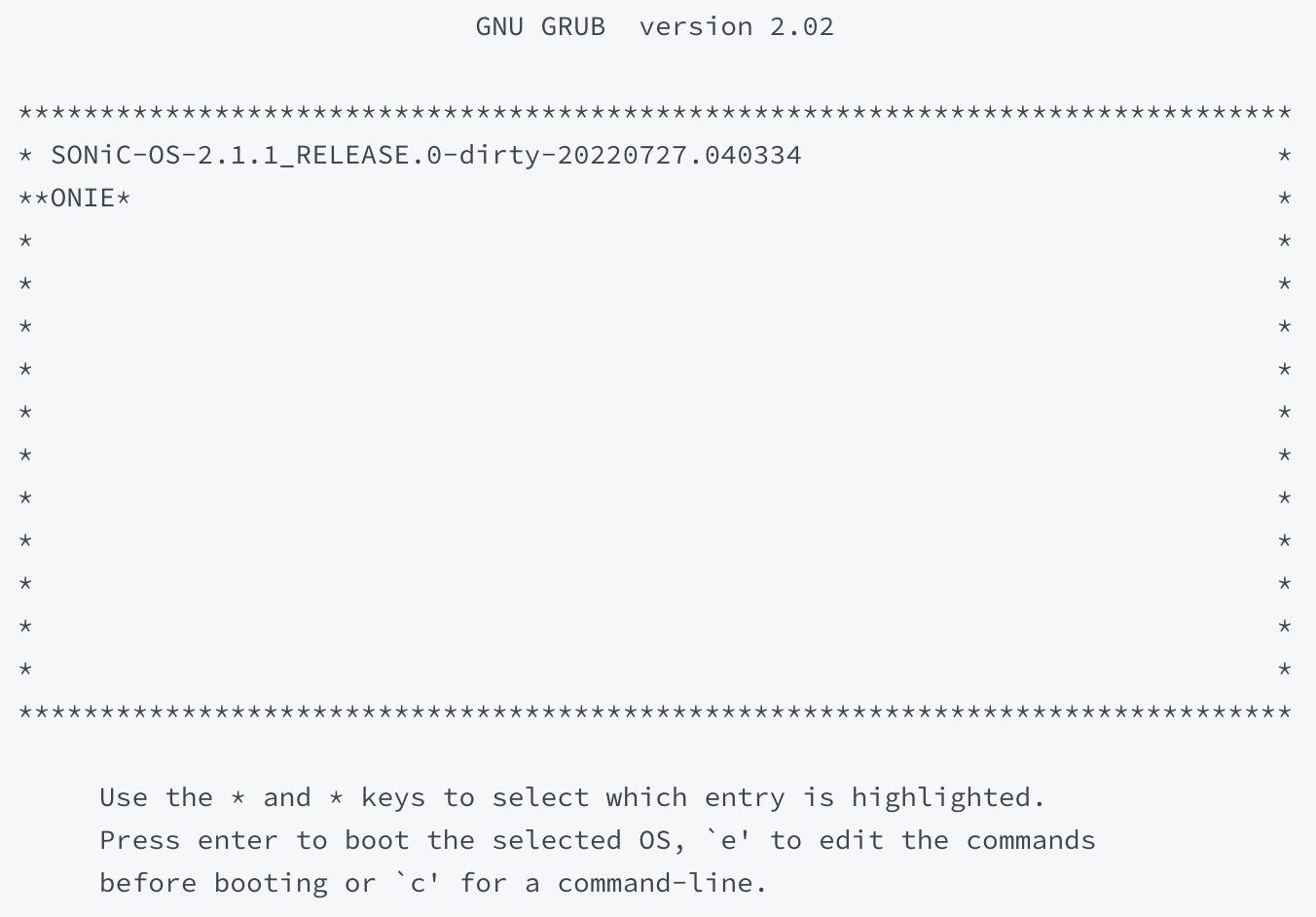
    pbnoscli# show running-config 
    configure terminal
    ntp add 162.159.200.1
    clock timezone Pacific/Tahiti
    !
    interface mgmt
    ip address 10.4.4.52/24 gateway 10.4.4.1
    !
    pbnoscli#

    Configuring TACACS

    Server Level Configurations

    You can configure the TACACS Server using the following command:

    Reference

    Example

    You can verify the configuration by using the command(s) below:

    Global TACACS Parameters

    To Configure Global TACACS parameters, use the below command:

    Reference

    Example

    You can verify the configuration by using the command(s) below:

    Configuring Flow UDF Rules

    User Defined Filtering can be considered an inspection of a packet based on offset values. An ACL can be defined with UDF matching capabilities to give granularity and flexibility when identifying traffic patterns. It is often used for deeper packet analysis. Typical use cases include finding patterns inside the inner header when packets are tunnelled.

    Using UDF, users can configure a rule to match specific bytes in the ingress packet based on a given offset to permit or deny matched packets

    • Offset for the L3 packet starts from the IP header in the packet

    • offset for the L2 packet starts from EtherType in the packet

    Note: The maximum length that can be matched is 40 characters (i.e. 20 bytes), and the minimum is 4 characters (i.e. 2 bytes), excluding the "0x" prefix. The character string must be an even number of characters.

    Before configuring flow rules, Network and Tool ports must be configured

    This feature is supported only on NVIDIA spectrum-2/3 platforms

    UDF and GTP can not be configured together on a device

    Reference

    Example

    You can verify the configuration by using the command(s) below:

    Command

    [no] tacacs-server host <ipv4 | ipv6> [timeout<value> ] [key <value> ] [auth_type (chap |

    pap | mschap | login) ] [port <value>] [priority <value> ]

    Description

    TACACS configuration

    Parameters

    IPv4 or v6 Address , timeout, key, auth_type, port, priority values

    Mode

    CONFIG

    Command

    [no] tacacs [authtype (chap | pap | mschap | login)] [passkey <value>] [timeout <value>]

    Description

    TACACS global configuration

    Parameters

    Timeout, key, auth_type, passkey values

    Mode

    CONFIG

    Command

    rule <rule-id> ((deny | permit) [description ] [udf-data udf-extraction-group (l2 | l3 [udf-extraction-point ]) udf-offset ] [counters (enable | disable )]

    no rule <ruleid>

    Description

    Rule configuration

    Parameters

    • ruleid: It should be in the range 1 to 6000

    • description: max 50 characters

    • udf-data: data bytes that need to be matched with the incoming packet

    • udf-extraction-group:

      • l2 - match from l2 header ethertype field

      • l3 - match from start of IPV4 or IPV6 header

    • udf-extraction point: (applies for only l3 extraction point) set extraction point from start of IPV4 or IPV6 header

    • udf-offset: offset from which bytes will be monitored from extraction point

    • counters: can be enabled or disabled

    Mode

    FLOW

    Interface Transceiver Information

    To get information about the Interface transceiver, use the below commands:

    pbnoscli# show interface transceiver presence
    Port            Presence        
    ------------    -----------
    Ethernet1/1     Present         
    Ethernet2/1     Present         
    Ethernet3/1     Present         
    Ethernet4/1     Not present     
    Ethernet5/1     Present         
    Ethernet6/1     Present         
    Ethernet7/1     Present         
    Ethernet8/1     Not present     
    Ethernet9/1     Not present     
    Ethernet10/1    Not present     
    Ethernet11/1    Not present     
    Ethernet12/1    Not present     
    Ethernet13/1    Present         
    Ethernet14/1    Present         
    <...>
    Ethernet62/1    Not present     
    Ethernet63/1    Present         
    Ethernet64/1    Present         
    pbnoscli# 
    pbnoscli# show interface transceiver eeprom Ethernet1/1
    Ethernet0: SFP EEPROM detected
            Application Advertisement: N/A
            Connector: CopperPigtail
            Encoding: Unspecified
            Extended Identifier: GBIC/SFP defined by twowire interface ID
            Extended RateSelect Compliance: Unspecified
            Identifier: SFP/SFP+/SFP28
            LengthOM3(UnitsOf10m): 0
            Nominal Bit Rate(100Mbs): 103
            Specification compliance:
                    SFP+CableTechnology: Passive Cable
            Vendor Date Code(YYYY-MM-DD Lot): 2016-11-24 
            Vendor Name: Volex Inc.
            Vendor OUI: 14-1b-bd
            Vendor PN: 700512588
            Vendor Rev: A
            Vendor SN: 16CN48200200
    pbnoscli#
    pbnoscli# show interface transceiver lpmode Ethernet1/1
    Port       Low-power Mode
    ---------  ----------------
    Ethernet0  On
    
    pbnoscli# show interface transceiver lpmode Ethernet3/1
    Port       Low-power Mode
    ---------  ----------------
    Ethernet8  Off
    pbnoscli#

    System Uptime

    To check system uptime, use the below command:

    pbnoscli# show uptime 
     08:33:19 up 1 day, 21:52, 16 users,  load average: 1.35, 1.30, 1.29
    pbnoscli# 
     pbnoscli(config)# tacacs-server host 10.0.0.1           
      <cr>
      auth_type             Authentication type, default pap
      key                   Add Key
      port                  TCP port range is <1...65535>, default 49
      priority              Priority <1..64>, default 1
      timeout               Transmission timeout interval <0-60>, default 5
    pbnoscli(config)# tacacs-server host 10.0.0.1 auth_type 
      chap                  chap
      login                 login
      mschap                mschap
      pap                   pap
    pbnoscli(config)# tacacs-server host 10.0.0.1 auth_type pap key key_val port 44 priority 1 timeout 60
    pbnoscli(config)#  
    pbnoscli# show tacacs-sever 10.0.0.1
    TACPLUS global auth_type pap (Default)
    TACPLUS global passkey <EMPTY_STRING> (Default)
    TACPLUS global timeout 5 (Default)
    =====================================================================================================================
    IP              Auth_type       Passkey         Tcp_port        Priority        Mgmtvrf         Timeout        
    =====================================================================================================================
    10.0.0.1        pap               key_val          44               1              N/A             60             
    pbnoscli# 
    pbnoscli# show running-config 
    configure terminal
    aaa authentication failthrough disable
    aaa authentication fallback disable
    aaa authentication login tacacs+
    tacacs-server host 10.0.0.1 auth_type pap key key_val port 44 priority 1 timeout 60
    interface mgmt
    ip address 10.4.4.52/24 gateway 10.4.4.1
    !
    pbnoscli# 
    pbnoscli(config)# tacacs 
      authtype              Configure authentication type, default : pap
      passkey               Specify TACACS server global passkey, default : <EMPTY_STRING>
      timeout               Specify TACACS server global timeout <0-60>, default : 5      
    
    //configuring authentication type
    pbnoscli(config)# tacacs authtype 
      chap                  chap
      login                 login
      mschap                mschap
      pap                   pap
    pbnoscli(config)# tacacs authtype pap 
    
    //configuring tacacs passkey
    pbnoscli(config)# tacacs passkey key_value
    
    //configuring timout value
    pbnoscli(config)# tacacs timeout 60
    pbnoscli# show tacacs-sever 
    TACPLUS global auth_type pap            
    TACPLUS global passkey key_value      
    TACPLUS global timeout 60             
    =====================================================================================================================
    IP              Auth_type       Passkey         Tcp_port        Priority        Mgmtvrf         Timeout        
    =====================================================================================================================
    10.0.0.1        pap               key_val          44               1              N/A             60             
    pbnoscli# 
    pbnoscli# show running-config 
    configure terminal
    aaa authentication failthrough disable
    aaa authentication fallback disable
    aaa authentication login tacacs+
    tacacs-server host 10.0.0.1 auth_type pap key key_val port 44 priority 1 timeout 60
    tacacs auth_type pap
    tacacs passkey key_value
    tacacs timeout 60
    interface mgmt
    ip address 10.4.4.52/24 gateway 10.4.4.1
    !
    pbnoscli# 
    pbnoscli# configure terminal 
    pbnoscli(config)# flow flow01
    pbnoscli(config-flow-flow01)# 
      !                     Exit from the current prompt
      description           Configure description for flow
      enable                Enable the flow
      end                   Exit to exec prompt
      exit                  Exit from the current prompt
      network-ports         Configure network or TAP ports
      no                    no form
      pop-vlan              Pop Vlan Tag
      push-vlan-tag         Push VLAN tag
      rule                  Configure rule
      show                  Show commands
      tool-ports            Configure network tool or analyzer ports
      top                   Exit to the configuration prompt
    pbnoscli(config-flow-flow01)# rule 1 permit description "UDF" udf-data 0xb166 udf-extraction-group l2 udf-offset 2 counters enable
    pbnoscli(config-flow-flow01)# rule 2 permit description "UDF" udf-data 0x4500 udf-extraction-group l3 udf-extraction-point ipv4 udf-offset 0 counters enable 
    pbnoscli(config-flow-flow01)# end
    pbnoscli# show flow all
    ===================================
    Flow : flow01 (CLI)
    ===================================
    Status       : enable          
    Network-Port : Ethernet1/1     
    Tool-Port    : Ethernet2/1     
    
    Rule : 1               
    ++++++++++++++++++++++++++++++++++
    Action                   : permit          
    Description              : UDF             
    UDF Data                 : 0xb166          
    UDF Extraction Group     : l2              
    UDF Offset               : 2               
    Counters                 : enable          
    
    Rule : 2               
    ++++++++++++++++++++++++++++++++++
    Action                   : permit          
    Description              : UDF             
    UDF Data                 : 0x4500          
    UDF Extraction Group     : l3              
    UDF Extraction Point     : ipv4            
    UDF Offset               : 0               
    Counters                 : enable          
    pbnoscli# 
     
    
    pbnoscli# show flow counters all
    Flow-Name       Rule-Id        ASIC-Stat-Id   Counter-Value
    =============================================================
    flow01          2               98304           503378220       
    flow01          DropRule        73728           4390145               
    flow01          1               90112           2270112825               
    pbnoscli# 
    pbnoscli# show running-config 
    configure terminal
    !
    interface ethernet Ethernet1/1
    forward-error-correction rs
    type network
    !
    interface ethernet Ethernet2/1
    forward-error-correction rs
    type tool
    !
    interface mgmt
    ip address 10.4.4.53/23 gateway 10.4.4.1
    !
    flow flow01
    network-ports Ethernet1/1
    tool-ports Ethernet2/1
    rule 1 permit description "UDF" udf-data 0xb166 udf-extraction-group l2 udf-offset 2 counters enable
    rule 2 permit description "UDF" udf-data 0x4500 udf-extraction-group l3 udf-extraction-point ipv4 udf-offset 0 counters enable 
    !
    pbnoscli# 

    Show Environment

    Use the following command to display information about your switches fan, power, and temperature:

    Display System Information

    OPBNOS provides various commands to display various types of platform information as follows:

    • System Hardware Information

    • System Services Information

    • Interface Information

    Show Platform SSD

    Use the following command to display information about device SSD:

    pbnoscli# show platform ssdhealth 
    Device Model : StorFly VSFBM4XC030G-MLX1
    Health       : 99.395%
    Temperature  : 47C
    pbnoscli#
    pbnoscli# show environment 
    tmp102-i2c-7-4a
    Adapter: i2c-1-mux (chan_id 6)
    Ambient Port Side Temp (air exhaust):  +36.4 C  (high = +160.0 C, hyst = +150.0 C)
    
    mlxsw-i2c-2-48
    Adapter: i2c-1-mux (chan_id 1)
    Ambient ASIC Temp:  +53.0 C  (highest = +53.0 C)
    front panel 001:     +0.0 C  (crit =  +0.0 C, emerg =  +0.0 C)
    front panel 002:     +0.0 C  (crit =  +0.0 C, emerg =  +0.0 C)
    front panel 003:     +0.0 C  (crit =  +0.0 C, emerg =  +0.0 C)
    front panel 004:     +0.0 C  (crit =  +0.0 C, emerg =  +0.0 C)
    front panel 005:     +0.0 C  (crit =  +0.0 C, emerg =  +0.0 C)
    front panel 006:     +0.0 C  (crit =  +0.0 C, emerg =  +0.0 C)
    front panel 007:     +0.0 C  (crit =  +0.0 C, emerg =  +0.0 C)
    front panel 008:     +0.0 C  (crit =  +0.0 C, emerg =  +0.0 C)
    front panel 009:     +0.0 C  (crit =  +0.0 C, emerg =  +0.0 C)
    front panel 010:     +0.0 C  (crit =  +0.0 C, emerg =  +0.0 C)
    front panel 011:     +0.0 C  (crit =  +0.0 C, emerg =  +0.0 C)
    front panel 012:     +0.0 C  (crit =  +0.0 C, emerg =  +0.0 C)
    front panel 013:     +0.0 C  (crit =  +0.0 C, emerg =  +0.0 C)
    front panel 014:     +0.0 C  (crit =  +0.0 C, emerg =  +0.0 C)
    front panel 015:     +0.0 C  (crit =  +0.0 C, emerg =  +0.0 C)
    front panel 016:     +0.0 C  (crit =  +0.0 C, emerg =  +0.0 C)
    front panel 017:     +0.0 C  (crit =  +0.0 C, emerg =  +0.0 C)
    front panel 018:     +0.0 C  (crit =  +0.0 C, emerg =  +0.0 C)
    front panel 019:     +0.0 C  (crit =  +0.0 C, emerg =  +0.0 C)
    front panel 020:     +0.0 C  (crit =  +0.0 C, emerg =  +0.0 C)
    front panel 021:     +0.0 C  (crit =  +0.0 C, emerg =  +0.0 C)
    front panel 022:     +0.0 C  (crit =  +0.0 C, emerg =  +0.0 C)
    front panel 023:     +0.0 C  (crit =  +0.0 C, emerg =  +0.0 C)
    front panel 024:     +0.0 C  (crit =  +0.0 C, emerg =  +0.0 C)
    front panel 025:     +0.0 C  (crit =  +0.0 C, emerg =  +0.0 C)
    front panel 026:     +0.0 C  (crit =  +0.0 C, emerg =  +0.0 C)
    front panel 027:     +0.0 C  (crit =  +0.0 C, emerg =  +0.0 C)
    front panel 028:     +0.0 C  (crit =  +0.0 C, emerg =  +0.0 C)
    front panel 029:     +0.0 C  (crit =  +0.0 C, emerg =  +0.0 C)
    front panel 030:     +0.0 C  (crit =  +0.0 C, emerg =  +0.0 C)
    front panel 031:     +0.0 C  (crit =  +0.0 C, emerg =  +0.0 C)
    front panel 032:     +0.0 C  (crit =  +0.0 C, emerg =  +0.0 C)
    
    tps53679-i2c-5-71
    Adapter: i2c-1-mux (chan_id 4)
    PMIC-2 PSU 12V Rail (in1):        +11.95 V  (crit min =  +8.50 V, crit max = +15.00 V)
    PMIC-2 PSU 12V Rail (in2):         +2.20 V  (crit min =  +1.80 V, crit max =  +2.80 V)
    PMIC-2 ASIC 3.3V Rail (out):       +2.70 V  (crit min =  +2.10 V, crit max =  +3.60 V)
    PMIC-2 Temp 1:                     +49.3 C  (high = +105.0 C, crit = +115.0 C)
    PMIC-2 Temp 2:                     +49.1 C  (high = +105.0 C, crit = +115.0 C)
    PMIC-2 ASIC 3.3V Rail Pwr (out):  218.75 mW (max = 450.00 W)
    PMIC-2 ASIC 1.8V Rail Pwr (out):    0.00 W  
    pout2:                             24.38 W  
    PMIC-2 ASIC 3.3V Rail Curr (out):  +0.04 A  (max = +32.00 A, crit max = +40.00 A)
    PMIC-2 ASIC 1.8V Rail Curr (out):  +0.00 A  (max = +64.00 A, crit max = +80.00 A)
    iout2:                             +6.77 A  (max = +76.00 A, crit max = +95.00 A)
    
    tps53679-i2c-15-58
    Adapter: i2c-1-mux (chan_id 6)
    PMIC-3 PSU 12V Rail (in1):          +12.03 V  (crit min =  +7.50 V, crit max = +17.00 V)
    PMIC-3 PSU 12V Rail (in2):           +1.80 V  (crit min =  +1.25 V, crit max =  +2.40 V)
    PMIC-3 COMEX 1.8V Rail (out):        +1.05 V  (crit min =  +0.65 V, crit max =  +1.55 V)
    PMIC-3 Temp 1:                       +59.1 C  (high = +105.0 C, crit = +115.0 C)
    PMIC-3 Temp 2:                       +59.1 C  (high = +105.0 C, crit = +115.0 C)
    PMIC-3 COMEX 1.8V Rail Pwr (out):   110.11 mW (max = 450.00 W)
    PMIC-3 COMEX 1.05V Rail Pwr (out):    5.38 W  
    pout2:                                1.09 W  
    PMIC-3 COMEX 1.8V Rail Curr (out):   +0.01 A  (max = +56.00 A, crit max = +63.50 A)
    PMIC-3 COMEX 1.05V Rail Curr (out):  +1.34 A  (max = +55.00 A, crit max = +68.00 A)
    iout2:                               +1.22 A  (max = +14.00 A, crit max = +17.00 A)
    
    dps460-i2c-4-58
    Adapter: i2c-1-mux (chan_id 3)
    PSU-2 220V Rail (in):      +118.12 V  (crit min = +75.00 V, min = +80.00 V)
                                         (max = +280.00 V, crit max = +300.00 V)
    PSU-2 12V Rail (out):      +12.04 V  (crit min =  +9.60 V, min = +10.80 V)
                                         (max = +13.80 V, crit max = +14.50 V)
    PSU-2 Fan 1:               15840 RPM
    PSU-2 Temp 1:               +26.8 C  (low  =  -0.5 C, high = +60.0 C)
                                         (crit low = -20.0 C, crit = +65.0 C)
    PSU-2 Temp 2:               +34.0 C  (low  =  -0.5 C, high = +60.0 C)
                                         (crit low = -20.0 C, crit = +65.0 C)
    PSU-2 Temp 3:               +33.0 C  (low  =  -0.5 C, high = +60.0 C)
                                         (crit low = -20.0 C, crit = +65.0 C)
    PSU-2 220V Rail Pwr (in):  115.00 W  (max =   1.59 kW)
    PSU-2 12V Rail Pwr (out):   90.75 W  (max =   1.19 kW, crit =   1.24 kW)
                                         (cap = -500.00 mW)
    PSU-2 220V Rail Curr (in):  +0.98 A  (max = +17.62 A, crit max =  -0.50 A)
    PSU-2 12V Rail Curr (out):  +7.40 A  (crit min =  -0.50 A, max = +99.00 A)
                                         (crit max = +103.50 A)
    
    coretemp-isa-0000
    Adapter: ISA adapter
    Package id 0:  +59.0 C  (high = +82.0 C, crit = +104.0 C)
    Core 0:        +59.0 C  (high = +82.0 C, crit = +104.0 C)
    Core 1:        +59.0 C  (high = +82.0 C, crit = +104.0 C)
    
    tmp102-i2c-15-49
    Adapter: i2c-1-mux (chan_id 6)
    Ambient COMEX Temp:  +48.2 C  (high = +160.0 C, hyst = +150.0 C)
    
    tmp102-i2c-7-49
    Adapter: i2c-1-mux (chan_id 6)
    Ambient Fan Side Temp (air intake):  +29.8 C  (high = +160.0 C, hyst = +150.0 C)
    
    tps53679-i2c-15-61
    Adapter: i2c-1-mux (chan_id 6)
    PMIC-4 PSU 12V Rail (in1):         +12.02 V  (crit min =  +7.50 V, crit max = +17.00 V)
    PMIC-4 PSU 12V Rail (in2):          +1.20 V  (crit min =  +0.80 V, crit max =  +1.90 V)
    PMIC-4 COMEX 1.2V Rail (out):       +0.00 V  (crit min =  +0.00 V, crit max =  +1.55 V)
    PMIC-4 Temp 1:                      +48.8 C  (high = +105.0 C, crit = +115.0 C)
    PMIC-4 Temp 2:                      +48.8 C  (high = +105.0 C, crit = +115.0 C)
    PMIC-4 COMEX 1.2V Rail Pwr (out):  330.08 mW (max = 450.00 W)
    pout2:                               0.00 W  
    PMIC-4 COMEX 1.2V Rail Curr (out):  +0.01 A  (max = +56.00 A, crit max = +63.50 A)
    iout2:                              +0.00 A  (max = +18.00 A, crit max = +22.00 A)
    
    tps53679-i2c-5-70
    Adapter: i2c-1-mux (chan_id 4)
    PMIC-1 PSU 12V Rail (in1):              +11.94 V  (crit min =  +8.50 V, crit max = +15.00 V)
    PMIC-1 PSU 12V Rail (in2):               +0.80 V  (crit min =  +0.40 V, crit max =  +1.52 V)
    PMIC-1 ASIC 0.8V VCORE Rail (out):       +1.20 V  (crit min =  +0.80 V, crit max =  +1.52 V)
    PMIC-1 Temp 1:                           +51.2 C  (high = +105.0 C, crit = +115.0 C)
    PMIC-1 Temp 2:                           +51.5 C  (high = +105.0 C, crit = +115.0 C)
    PMIC-1 ASIC 0.8V VCORE Rail Pwr (out):  364.26 mW (max = 450.00 W)
    PMIC-1 ASIC 1.2V Rail Pwr (out):         22.28 W  
    pout2:                                   10.33 W  
    PMIC-1 ASIC 0.8V VCORE Rail Curr (out):  +0.04 A  (max = +24.00 A, crit max = +32.00 A)
    PMIC-1 ASIC 1.2V Rail Curr (out):        +4.27 A  (max = +250.00 A, crit max = +312.00 A)
    iout2:                                   +8.61 A  (max = +35.00 A, crit max = +43.00 A)
    
    mlxreg_fan-isa-0000
    Adapter: ISA adapter
    Chassis Fan Drawer-1 Tach 1: 5498 RPM
    Chassis Fan Drawer-1 Tach 2: 4908 RPM
    Chassis Fan Drawer-2 Tach 1: 5453 RPM
    Chassis Fan Drawer-2 Tach 2: 4854 RPM
    Chassis Fan Drawer-3 Tach 1: 5409 RPM
    Chassis Fan Drawer-3 Tach 2: 4890 RPM
    Chassis Fan Drawer-4 Tach 1: 5476 RPM
    Chassis Fan Drawer-4 Tach 2: 4836 RPM
    
    pbnoscli# 

    Configuring sFlow

    sFlow is a multi-vendor, packet sampling technology used to monitor network devices including routers, switches, host devices and wireless access points. Flow Monitor traffic monitoring software uses the sFlow data to analyze and manage network traffic and to ensure Quality of Service.

    sFlow sampling process is performed by the switching/routing ASICs, thereby ensuring wire-speed performances. The sFlow agent then combines the interface counters, flow samples and the forwarding/routing table state associated with each packet into a UDP sFlow datagram. This is then sent to the sFlow collector for collection and analysis.

    Enable sFlow Feature

    Reference

    Example

    sFlow Collector

    Reference

    Example

    sFlow Polling-Interval

    Reference

    Example

    Enable sFLow

    Reference

    Example

    sFlow Sampling Rate

    Reference

    Example

    Show sFlow Command

    Reference

    Example

    Command

    feature sflow no feature sflow

    Description

    Enable/disable sFlow feature

    Mode

    CONFIG

    Command

    sflow collector <name> <ipaddr> no sflow collector <name> <ipaddr>

    Description

    Enable/disable sFlow collector configuration

    Mode

    CONFIG

    Command

    sflow polling-interval <interval (0..300)> no sflow collector <interval (0..300)>

    Description

    Enable/disable sFlow polling-interval

    Mode

    CONFIG

    Command

    sflow enable

    Description

    Enable/disable sFlow per interface

    Mode

    INTERFACE

    Command

    sflow sampling-rate <rate(256..8388608)>

    Description

    Enable/disable sFlow sampling rate

    Mode

    INTERFACE

    Command

    sflow ("Sflow related information") [interface ("Specific to an interface") <ifname:string interface_list()> ("Interface name")], showsflow();

    Description

    sFlow related information

    Show Platform PSU

    Use the following command to display information about device PSU:

    pbnoscli# show platform psustatus 
    ============================================================================================================================================
       PSU           Model          Serial   Hardware Revision     Voltage (V)     Current (A)       Power (W)      Status             LED
    ============================================================================================================================================
     PSU 1             N/A             N/A             N/A             N/A             N/A             N/A          NOT OK             red
     PSU 2   MTEF-PSF-AC-C    MT2042X11384              A3          12.035           7.273            88.5              OK             red
    pbnoscli# 

    Show Docker Memory

    You can display information about docker memory-usage use the following command:

    pbnoscli# show docker memory-usage 
    pbnoscli# show docker memory-usage 
    CONTAINER ID   NAME       CPU %     MEM USAGE / LIMIT     MEM %     NET I/O   BLOCK I/O         PIDS
    65f6de2cc45d   lldp       0.05%     55.61MiB / 7.669GiB   0.71%     0B / 0B   7.32MB / 127kB    11
    6113df8cd655   snmp       5.80%     91.01MiB / 7.669GiB   1.16%     0B / 0B   57.3kB / 98.3kB   10
    a6770092098b   pmon       20.78%    378.7MiB / 7.669GiB   4.82%     0B / 0B   89.4MB / 139kB    17
    29fac3d30c6c   sflow      0.04%     39.71MiB / 7.669GiB   0.51%     0B / 0B   2.7MB / 69.6kB    9
    a1ba99baa6bb   nagr       48.85%    278.2MiB / 7.669GiB   3.54%     0B / 0B   47.8MB / 139kB    15
    c1b2207591a6   syncd      2.23%     1.204GiB / 7.669GiB   15.70%    0B / 0B   110MB / 34.8MB    48
    96d750ff6689   swss       0.14%     64.02MiB / 7.669GiB   0.82%     0B / 0B   22.9MB / 270kB    40
    2c4c2b3c37cc   database   5.71%     113.8MiB / 7.669GiB   1.45%     0B / 0B   42.3MB / 65.5kB   11
    pbnoscli#
    pbnoscli(config)# feature sflow 
    pbnoscli(config)# no feature sflow coll
    pbnoscli(config)# sflow collector Collector1 10.2.2.7
    pbnoscli(config)# no sflow collector Collector1 10.2.2.7
    pbnoscli(config)# sflow polling-interval 20
    pbnoscli(config)# no sflow polling-interval 20
    pbnoscli(config-if)# sflow enable
    pbnoscli(config-if)# no sflow enable
    pbnoscli(config-if)# sflow sampling-rate 256
    pbnoscli(config-if)# no sflow sampling-rate 256
    pbnoscli# show sflow
    sFlow Admin State: up
    sFlow polling-interval: 20
    Collector name: Collector1
    sFlow collector-ip: 10.2.2.7
    sFlow collector-port: 6343
    
    Interface     State     Sampling Rate
    =====================================
    Ethernet116       up      256
    Ethernet128       up      256
    pbnoscli#

    Show Platform Syseeprom

    Use the following command to display information about syseeprom:

    pbnoscli# show platform syseeprom 
    TlvInfo Header:
    	Id String:	TlvInfo
    	Version:	1
    	Total Length:	629
    
    ==========================================================================
            TLV Name            Code             LEN                   VALUE
    ==========================================================================
      Device Version            0x26               1                       1
        Product Name            0x21              64                MSN3700C
    Vendor Extension            0xfd              36                        
    Vendor Extension            0xfd             164                        
    Vendor Extension            0xfd              36                        
    Vendor Extension            0xfd              36                        
    Vendor Extension            0xfd              36                        
    Vendor Extension            0xfd              52                        
    Manufacture Date            0x25              19     10/25/2020 20:33:38
        ONIE Version            0x29              23 2019.11-5.2.0020-115200
    Base MAC Address            0x24               6       1C:34:DA:24:DE:00
              CRC-32            0xfe               4              0xA358E6B0
         Part Number            0x22              20           MSN3700-CS2FC
        Manufacturer            0x2b               8                Mellanox
       Platform Name            0x28              64 x86_64-mlnx_msn3700C-r0
       Serial Number            0x23              24            MT2043X14695
       MAC Addresses            0x2a               2                     254
    pbnoscli# 

    Show Platform Fan

    Use the following command to display information about system fans:

    pbnoscli# show platform fan 
    =====================================================================================================================================
    ID    DRAWER             FAN          SPEED%       DIRECTION        PRESENCE          STATUS             LED          TIME STAMP
    =====================================================================================================================================
     1   drawer1            fan1              21          intake            True              OK           green      20220926 09:17:26
     2   drawer1            fan2              19          intake            True              OK           green      20220926 09:17:26
     3   drawer2            fan3              21          intake            True              OK           green      20220926 09:17:26
     4   drawer2            fan4              19          intake            True              OK           green      20220926 09:17:26
     5   drawer3            fan5              21          intake            True              OK           green      20220926 09:17:26
     6   drawer3            fan6              19          intake            True              OK           green      20220926 09:17:26
     7   drawer4            fan7              21          intake            True              OK           green      20220926 09:17:26
     8   drawer4            fan8              18          intake            True              OK           green      20220926 09:17:26
     9       N/A       psu1_fan1             N/A             N/A             N/A              N/A            N/A      20220926 09:17:26
    10       N/A       psu2_fan1              63             N/A            True              OK             red      20220926 09:17:26
    pbnoscli# 

    Display Interface Information

    Port counters provide visibility into the traffic flowing on the device. OPBNOS provides commands to get counters by using the following commands

    pbnoscli# show interface counters 
    ========================================================================================================================================================================================
    Port                           InOctets       InUcastPackets       InMcastPackets       InBcastPackets            OutOctets      OutUcastPackets      OutMcastPackets      OutBcastPackets
    ========================================================================================================================================================================================
    Ethernet1/1                       69386                    0                  259                    0                72046                  100                  283                    0
    Ethernet2/1                       55424                    0                  202                    0                64313                  200                  220                    0
    Ethernet3/1                           0                    0                    0                    0                    0                    0                    0                    0
    <..>
    Ethernet64/1                     978170                    0                 1615                 2466              1376464                    0                 5798                    0
    pbnoscli# 
    pbnoscli# show queue counters Ethernet64/1
            PORT    TxQ    Counter/pkts    Counter/bytes    Drop/pkts    Drop/bytes
    ------------  -----  --------------  ---------------  -----------  ------------
    Ethernet64/1    UC0          200004         14800904            0           N/A
    Ethernet64/1    UC1               0                0            0           N/A
    Ethernet64/1    UC2               0                0            0           N/A
    Ethernet64/1    UC3               0                0            0           N/A
    Ethernet64/1    UC4               0                0            0           N/A
    Ethernet64/1    UC5               0                0            0           N/A
    Ethernet64/1    UC6               0                0            0           N/A
    Ethernet64/1    UC7            1373           352035            0           N/A
    Ethernet64/1    MC8             N/A              N/A          N/A           N/A
    Ethernet64/1    MC9             N/A              N/A          N/A           N/A
    Ethernet64/1   MC10             N/A              N/A          N/A           N/A
    Ethernet64/1   MC11             N/A              N/A          N/A           N/A
    Ethernet64/1   MC12             N/A              N/A          N/A           N/A
    Ethernet64/1   MC13             N/A              N/A          N/A           N/A
    Ethernet64/1   MC14             N/A              N/A          N/A           N/A
    Ethernet64/1   MC15             N/A              N/A          N/A           N/A
    pbnoscli#  

    Clear Counters

    To clear the interface counters, use the following command:

    Reboot Cause

    Use the following command to display information about system-reboot:

    pbnoscli# show reboot-cause
    Hardware - Other (Reset caused by hotswap or halt)
    pbnoscli# 
    
    pbnoscli# show reboot-cause 
    User issued 'reboot' command [User: admin, Time: Tue 02 Aug 2022 03:01:03 AM UTC]
    pbnoscli# 

    Show System Memory

    You can display information about system memory information using the following command:

    pbnoscli# show system-memory
                   total        used        free      shared  buff/cache   available
    Mem:           7.7Gi       3.5Gi       2.8Gi       124Mi       1.3Gi       3.8Gi
    Swap:             0B          0B          0B
    pbnoscli# 

    Show platform pcieinfo

    Use the following command to display information about pcie-info:

    Show Services

    Use the following command to display information about running services on the device:

    pbnoscli# show interface counters detailed Ethernet1/1
    Packets Received 64 Octets..................... 0
    Packets Received 65-127 Octets................. 0
    Packets Received 128-255 Octets................ 1,220
    Packets Received 256-511 Octets................ 0
    Packets Received 512-1023 Octets............... 0
    Packets Received 1024-1518 Octets.............. 0
    Packets Received 1519-2047 Octets.............. 0
    Packets Received 2048-4095 Octets.............. 0
    Packets Received 4096-9216 Octets.............. 0
    Packets Received 9217-16383 Octets............. N/A
    Total Packets Received Without Errors.......... 1,220
    Unicast Packets Received....................... 0
    Multicast Packets Received..................... 1,220
    Broadcast Packets Received..................... 0
    Jabbers Received............................... 0
    Fragments Received............................. 0
    Undersize Received............................. 0
    Overruns Received.............................. N/A
    Packets Transmitted 64 Octets.................. 1
    Packets Transmitted 65-127 Octets.............. 77
    Packets Transmitted 128-255 Octets............. 1,222
    Packets Transmitted 256-511 Octets............. 3,777,694,387
    Packets Transmitted 512-1023 Octets............ 0
    Packets Transmitted 1024-1518 Octets........... 0
    Packets Transmitted 1519-2047 Octets........... 0
    Packets Transmitted 2048-4095 Octets........... 0
    Packets Transmitted 4096-9216 Octets........... 0
    Packets Transmitted 9217-16383 Octets.......... N/A
    Total Packets Transmitted Successfully......... 3,777,695,687
    Unicast Packets Transmitted.................... 3,777,694,387
    Multicast Packets Transmitted.................. 1,300
    Broadcast Packets Transmitted.................. 0
    Time Since Counters Last Cleared............... None
    pbnoscli#
    pbnoscli# show interface counters rate 
          IFACE    STATE    RX_OK     RX_BPS    RX_UTIL    RX_ERR    RX_DRP    RX_OVR    TX_OK    TX_BPS    TX_UTIL    TX_ERR    TX_DRP    TX_OVR
    -----------  -------  -------  ---------  ---------  --------  --------  --------  -------  --------  ---------  --------  --------  --------
    Ethernet1/1        D       21   0.00 B/s      0.00%         0         0         0       27  0.00 B/s      0.00%         0         0         0
    Ethernet2/1        D       21   0.00 B/s      0.00%         0         0         0       27  0.00 B/s      0.00%         0         0         0
    Ethernet3/1        D       21   0.00 B/s      0.00%         0         0         0       28  0.00 B/s      0.00%         0         0         0
    Ethernet4/1        D        0   0.00 B/s      0.00%         0         0         0        0  0.00 B/s      0.00%         0         0         0
    Ethernet5/1        D        0   0.00 B/s      0.00%         0         0         0        0  0.00 B/s      0.00%         0         0         0
    Ethernet6/1        D        0   0.00 B/s      0.00%         0         0         0        0  0.00 B/s      0.00%         0         0         0
    Ethernet7/1        D        0   0.00 B/s      0.00%         0         0         0        0  0.00 B/s      0.00%         0         0         0
    Ethernet8/1        D        0   0.00 B/s      0.00%         0         0         0        0  0.00 B/s      0.00%         0         0         0
    Ethernet9/1        D        0   0.00 B/s      0.00%         0         0         0        0  0.00 B/s      0.00%         0         0         0
    Ethernet10/1       D        0   0.00 B/s      0.00%         0         0         0        0  0.00 B/s      0.00%         0         0         0
    Ethernet11/1       D        0   0.00 B/s      0.00%         0         0         0        0  0.00 B/s      0.00%         0         0         0
    Ethernet12/1       D        0   0.00 B/s      0.00%         0         0         0        0  0.00 B/s      0.00%         0         0         0
    Ethernet13/1       U      101  20.97 B/s      0.00%         0         0         0      107  0.15 B/s      0.00%         0         0         0
    Ethernet14/1       U      101  25.57 B/s      0.00%         0         0         0      107  0.15 B/s      0.00%         0         0         0
    Ethernet15/1       U      102  25.57 B/s      0.00%         0         0         0      108  0.15 B/s      0.00%         0         0         0
    <...>
    Ethernet62/1       D        0   0.00 B/s      0.00%         0         0         0        0  0.00 B/s      0.00%         0         0         0
    Ethernet63/1       D        0   0.00 B/s      0.00%         0         0         0        0  0.00 B/s      0.00%         0         0         0
    Ethernet64/1       D        0   0.00 B/s      0.00%         0         0         0        0  0.00 B/s      0.00%         0         0         0
    pbnoscli# 
    pbnoscli# show interface counters discard-details
    ========================================================================================================================================================================================
    Port                       InDiscards             InErrors     InDroppedPackets        InPauseFrames          OutDiscards            OutErrors    OutDroppedPackets       OutPauseFrames
    ========================================================================================================================================================================================
    Ethernet1/1                         0                    0                    0                    0                    0                    0                    0                    0
    Ethernet2/1                         0                    0                    0                    0                    0                    0                    0                    0
    Ethernet3/1                         0                    0                    0                    0                    0                    0                    0                    0
    Ethernet4/1                         0                    0                    0                    0                    0                    0                    0                    0
    Ethernet5/1                         0                    0                    0                    0                    0                    0                    0                    0
    Ethernet6/1                         0                    0                    0                    0                    0                    0                    0                    0
    Ethernet7/1                         0                    0                    0                    0                    0                    0                    0                    0
    Ethernet8/1                         0                    0                    0                    0                    0                    0                    0                    0
    Ethernet9/1                         0                    0                    0                    0                    0                    0                    0                    0
    Ethernet10/1                        0                    0                    0                    0                    0                    0                    0                    0
    Ethernet11/1                        0                    0                    0                    0                    0                    0                    0                    0
    Ethernet12/1                        0                    0                    0                    0                    0                    0                    0                    0
    Ethernet13/1                        0                    0                    0                    0                    0                    0                    0                    0
    Ethernet14/1                        0                    0                    0                    0                    0                    0                    0                    0
    Ethernet15/1                        0                    0                    0                    0                    0                    0                    0                    0
    Ethernet16/1                        0                    0                    0                    0                    0                    0                    0                    0
    Ethernet17/1                        0                    0                    0                    0                    0                    0                    0                    0
    Ethernet18/1                        0                    0                    0                    0                    0                    0                    0                    0
    Ethernet19/1                        0                    0                    0                    0                    0                    0                    0                    0
    Ethernet20/1                        0                    0                    0                    0                    0                    0                    0                    0
    Ethernet21/1                        0                    0                    0                    0                    0                    0                    0                    0
    Ethernet22/1                        0                    0                    0                    0                    0                    0                    0                    0
    Ethernet23/1                        0                    0                    0                    0                    0                    0                    0                    0
    Ethernet24/1                        0                    0                    0                    0                    0                    0                    0                    0
    Ethernet25/1                        0                    0                    0                    0                    0                    0                    0                    0
    Ethernet26/1                        0                    0                    0                    0                    0                    0                    0                    0
    Ethernet27/1                        0                    0                    0                    0                    0                    0                    0                    0
    Ethernet28/1                        0                    0                    0                    0                    0                    0                    0                    0
    Ethernet29/1                        0                    0                    0                    0                    0                    0                    0                    0
    Ethernet30/1                        0                    0                    0                    0                    0                    0                    0                    0
    Ethernet31/1                        0                    0                    0                    0                    0                    0                    0                    0
    Ethernet32/1                        0                    0                    0                    0                    0                    0                    0                    0
    pbnoscli# clear counters
    pbnoscli# show platform pcieinfo 
    ==============================Display PCIe Device===============================
    bus:dev.fn 00:00.0 - dev_id=0x6f00, Host bridge: Intel Corporation Xeon E7 v4/Xeon E5 v4/Xeon E3 v4/Xeon D DMI2 (rev 03)
    bus:dev.fn 00:01.0 - dev_id=0x6f02, PCI bridge: Intel Corporation Xeon E7 v4/Xeon E5 v4/Xeon E3 v4/Xeon D PCI Express Root Port 1 (rev 03)
    bus:dev.fn 00:01.1 - dev_id=0x6f03, PCI bridge: Intel Corporation Xeon E7 v4/Xeon E5 v4/Xeon E3 v4/Xeon D PCI Express Root Port 1 (rev 03)
    bus:dev.fn 00:02.0 - dev_id=0x6f04, PCI bridge: Intel Corporation Xeon E7 v4/Xeon E5 v4/Xeon E3 v4/Xeon D PCI Express Root Port 2 (rev 03)
    bus:dev.fn 00:02.2 - dev_id=0x6f06, PCI bridge: Intel Corporation Xeon E7 v4/Xeon E5 v4/Xeon E3 v4/Xeon D PCI Express Root Port 2 (rev 03)
    bus:dev.fn 00:03.0 - dev_id=0x6f08, PCI bridge: Intel Corporation Xeon E7 v4/Xeon E5 v4/Xeon E3 v4/Xeon D PCI Express Root Port 3 (rev 03)
    bus:dev.fn 00:03.2 - dev_id=0x6f0a, PCI bridge: Intel Corporation Xeon E7 v4/Xeon E5 v4/Xeon E3 v4/Xeon D PCI Express Root Port 3 (rev 03)
    bus:dev.fn 00:05.0 - dev_id=0x6f28, System peripheral: Intel Corporation Xeon E7 v4/Xeon E5 v4/Xeon E3 v4/Xeon D Map/VTd_Misc/System Management (rev 03)
    bus:dev.fn 00:05.1 - dev_id=0x6f29, System peripheral: Intel Corporation Xeon E7 v4/Xeon E5 v4/Xeon E3 v4/Xeon D IIO Hot Plug (rev 03)
    bus:dev.fn 00:05.2 - dev_id=0x6f2a, System peripheral: Intel Corporation Xeon E7 v4/Xeon E5 v4/Xeon E3 v4/Xeon D IIO RAS/Control Status/Global Errors (rev 03)
    bus:dev.fn 00:05.4 - dev_id=0x6f2c, PIC: Intel Corporation Xeon E7 v4/Xeon E5 v4/Xeon E3 v4/Xeon D I/O APIC (rev 03)
    bus:dev.fn 00:14.0 - dev_id=0x8c31, USB controller: Intel Corporation 8 Series/C220 Series Chipset Family USB xHCI (rev 05)
    bus:dev.fn 00:1c.0 - dev_id=0x8c10, PCI bridge: Intel Corporation 8 Series/C220 Series Chipset Family PCI Express Root Port #1 (rev d5)
    bus:dev.fn 00:1c.7 - dev_id=0x8c1e, PCI bridge: Intel Corporation 8 Series/C220 Series Chipset Family PCI Express Root Port #8 (rev d5)
    bus:dev.fn 00:1d.0 - dev_id=0x8c26, USB controller: Intel Corporation 8 Series/C220 Series Chipset Family USB EHCI #1 (rev 05)
    bus:dev.fn 00:1f.0 - dev_id=0x8c54, ISA bridge: Intel Corporation C224 Series Chipset Family Server Standard SKU LPC Controller (rev 05)
    bus:dev.fn 00:1f.2 - dev_id=0x8c02, SATA controller: Intel Corporation 8 Series/C220 Series Chipset Family 6-port SATA Controller 1 [AHCI mode] (rev 05)
    bus:dev.fn 00:1f.3 - dev_id=0x8c22, SMBus: Intel Corporation 8 Series/C220 Series Chipset Family SMBus Controller (rev 05)
    bus:dev.fn 03:00.0 - dev_id=0x6f50, System peripheral: Intel Corporation Xeon Processor D Family QuickData Technology Register DMA Channel 0
    bus:dev.fn 03:00.1 - dev_id=0x6f51, System peripheral: Intel Corporation Xeon Processor D Family QuickData Technology Register DMA Channel 1
    bus:dev.fn 03:00.2 - dev_id=0x6f52, System peripheral: Intel Corporation Xeon Processor D Family QuickData Technology Register DMA Channel 2
    bus:dev.fn 03:00.3 - dev_id=0x6f53, System peripheral: Intel Corporation Xeon Processor D Family QuickData Technology Register DMA Channel 3
    bus:dev.fn 06:00.0 - dev_id=0xcf6c, Ethernet controller: Mellanox Technologies MT53100 [Spectrum-2]
    bus:dev.fn 08:00.0 - dev_id=0x1533, Ethernet controller: Intel Corporation I210 Gigabit Network Connection (rev 03)
    bus:dev.fn ff:0b.0 - dev_id=0x6f81, System peripheral: Intel Corporation Xeon E7 v4/Xeon E5 v4/Xeon E3 v4/Xeon D R3 QPI Link 0/1 (rev 03)
    bus:dev.fn ff:0b.1 - dev_id=0x6f36, Performance counters: Intel Corporation Xeon E7 v4/Xeon E5 v4/Xeon E3 v4/Xeon D R3 QPI Link 0/1 (rev 03)
    bus:dev.fn ff:0b.2 - dev_id=0x6f37, Performance counters: Intel Corporation Xeon E7 v4/Xeon E5 v4/Xeon E3 v4/Xeon D R3 QPI Link 0/1 (rev 03)
    bus:dev.fn ff:0b.3 - dev_id=0x6f76, System peripheral: Intel Corporation Xeon E7 v4/Xeon E5 v4/Xeon E3 v4/Xeon D R3 QPI Link Debug (rev 03)
    bus:dev.fn ff:0c.0 - dev_id=0x6fe0, System peripheral: Intel Corporation Xeon E7 v4/Xeon E5 v4/Xeon E3 v4/Xeon D Caching Agent (rev 03)
    bus:dev.fn ff:0c.1 - dev_id=0x6fe1, System peripheral: Intel Corporation Xeon E7 v4/Xeon E5 v4/Xeon E3 v4/Xeon D Caching Agent (rev 03)
    bus:dev.fn ff:0f.0 - dev_id=0x6ff8, System peripheral: Intel Corporation Xeon E7 v4/Xeon E5 v4/Xeon E3 v4/Xeon D Caching Agent (rev 03)
    bus:dev.fn ff:0f.4 - dev_id=0x6ffc, System peripheral: Intel Corporation Xeon E7 v4/Xeon E5 v4/Xeon E3 v4/Xeon D Caching Agent (rev 03)
    bus:dev.fn ff:0f.5 - dev_id=0x6ffd, System peripheral: Intel Corporation Xeon E7 v4/Xeon E5 v4/Xeon E3 v4/Xeon D Caching Agent (rev 03)
    bus:dev.fn ff:0f.6 - dev_id=0x6ffe, System peripheral: Intel Corporation Xeon E7 v4/Xeon E5 v4/Xeon E3 v4/Xeon D Caching Agent (rev 03)
    bus:dev.fn ff:10.0 - dev_id=0x6f1d, System peripheral: Intel Corporation Xeon E7 v4/Xeon E5 v4/Xeon E3 v4/Xeon D R2PCIe Agent (rev 03)
    bus:dev.fn ff:10.1 - dev_id=0x6f34, Performance counters: Intel Corporation Xeon E7 v4/Xeon E5 v4/Xeon E3 v4/Xeon D R2PCIe Agent (rev 03)
    bus:dev.fn ff:10.5 - dev_id=0x6f1e, System peripheral: Intel Corporation Xeon E7 v4/Xeon E5 v4/Xeon E3 v4/Xeon D Ubox (rev 03)
    bus:dev.fn ff:10.6 - dev_id=0x6f7d, Performance counters: Intel Corporation Xeon E7 v4/Xeon E5 v4/Xeon E3 v4/Xeon D Ubox (rev 03)
    bus:dev.fn ff:10.7 - dev_id=0x6f1f, System peripheral: Intel Corporation Xeon E7 v4/Xeon E5 v4/Xeon E3 v4/Xeon D Ubox (rev 03)
    bus:dev.fn ff:12.0 - dev_id=0x6fa0, System peripheral: Intel Corporation Xeon E7 v4/Xeon E5 v4/Xeon E3 v4/Xeon D Home Agent 0 (rev 03)
    bus:dev.fn ff:12.1 - dev_id=0x6f30, Performance counters: Intel Corporation Xeon E7 v4/Xeon E5 v4/Xeon E3 v4/Xeon D Home Agent 0 (rev 03)
    bus:dev.fn ff:13.0 - dev_id=0x6fa8, System peripheral: Intel Corporation Xeon E7 v4/Xeon E5 v4/Xeon E3 v4/Xeon D Memory Controller 0 - Target Address/Thermal/RAS (rev 03)
    bus:dev.fn ff:13.1 - dev_id=0x6f71, System peripheral: Intel Corporation Xeon E7 v4/Xeon E5 v4/Xeon E3 v4/Xeon D Memory Controller 0 - Target Address/Thermal/RAS (rev 03)
    bus:dev.fn ff:13.2 - dev_id=0x6faa, System peripheral: Intel Corporation Xeon E7 v4/Xeon E5 v4/Xeon E3 v4/Xeon D Memory Controller 0 - Channel Target Address Decoder (rev 03)
    bus:dev.fn ff:13.3 - dev_id=0x6fab, System peripheral: Intel Corporation Xeon E7 v4/Xeon E5 v4/Xeon E3 v4/Xeon D Memory Controller 0 - Channel Target Address Decoder (rev 03)
    bus:dev.fn ff:13.4 - dev_id=0x6fac, System peripheral: Intel Corporation Xeon E7 v4/Xeon E5 v4/Xeon E3 v4/Xeon D Memory Controller 0 - Channel Target Address Decoder (rev 03)
    bus:dev.fn ff:13.5 - dev_id=0x6fad, System peripheral: Intel Corporation Xeon E7 v4/Xeon E5 v4/Xeon E3 v4/Xeon D Memory Controller 0 - Channel Target Address Decoder (rev 03)
    bus:dev.fn ff:13.6 - dev_id=0x6fae, System peripheral: Intel Corporation Xeon E7 v4/Xeon E5 v4/Xeon E3 v4/Xeon D DDRIO Channel 0/1 Broadcast (rev 03)
    bus:dev.fn ff:13.7 - dev_id=0x6faf, System peripheral: Intel Corporation Xeon E7 v4/Xeon E5 v4/Xeon E3 v4/Xeon D DDRIO Global Broadcast (rev 03)
    bus:dev.fn ff:14.0 - dev_id=0x6fb0, System peripheral: Intel Corporation Xeon E7 v4/Xeon E5 v4/Xeon E3 v4/Xeon D Memory Controller 0 - Channel 0 Thermal Control (rev 03)
    bus:dev.fn ff:14.1 - dev_id=0x6fb1, System peripheral: Intel Corporation Xeon E7 v4/Xeon E5 v4/Xeon E3 v4/Xeon D Memory Controller 0 - Channel 1 Thermal Control (rev 03)
    bus:dev.fn ff:14.2 - dev_id=0x6fb2, System peripheral: Intel Corporation Xeon E7 v4/Xeon E5 v4/Xeon E3 v4/Xeon D Memory Controller 0 - Channel 0 Error (rev 03)
    bus:dev.fn ff:14.3 - dev_id=0x6fb3, System peripheral: Intel Corporation Xeon E7 v4/Xeon E5 v4/Xeon E3 v4/Xeon D Memory Controller 0 - Channel 1 Error (rev 03)
    bus:dev.fn ff:14.4 - dev_id=0x6fbc, System peripheral: Intel Corporation Xeon E7 v4/Xeon E5 v4/Xeon E3 v4/Xeon D DDRIO Channel 0/1 Interface (rev 03)
    bus:dev.fn ff:14.5 - dev_id=0x6fbd, System peripheral: Intel Corporation Xeon E7 v4/Xeon E5 v4/Xeon E3 v4/Xeon D DDRIO Channel 0/1 Interface (rev 03)
    bus:dev.fn ff:14.6 - dev_id=0x6fbe, System peripheral: Intel Corporation Xeon E7 v4/Xeon E5 v4/Xeon E3 v4/Xeon D DDRIO Channel 0/1 Interface (rev 03)
    bus:dev.fn ff:14.7 - dev_id=0x6fbf, System peripheral: Intel Corporation Xeon E7 v4/Xeon E5 v4/Xeon E3 v4/Xeon D DDRIO Channel 0/1 Interface (rev 03)
    bus:dev.fn ff:15.0 - dev_id=0x6fb4, System peripheral: Intel Corporation Xeon E7 v4/Xeon E5 v4/Xeon E3 v4/Xeon D Memory Controller 0 - Channel 2 Thermal Control (rev 03)
    bus:dev.fn ff:15.1 - dev_id=0x6fb5, System peripheral: Intel Corporation Xeon E7 v4/Xeon E5 v4/Xeon E3 v4/Xeon D Memory Controller 0 - Channel 3 Thermal Control (rev 03)
    bus:dev.fn ff:15.2 - dev_id=0x6fb6, System peripheral: Intel Corporation Xeon E7 v4/Xeon E5 v4/Xeon E3 v4/Xeon D Memory Controller 0 - Channel 2 Error (rev 03)
    bus:dev.fn ff:15.3 - dev_id=0x6fb7, System peripheral: Intel Corporation Xeon E7 v4/Xeon E5 v4/Xeon E3 v4/Xeon D Memory Controller 0 - Channel 3 Error (rev 03)
    bus:dev.fn ff:1e.0 - dev_id=0x6f98, System peripheral: Intel Corporation Xeon E7 v4/Xeon E5 v4/Xeon E3 v4/Xeon D Power Control Unit (rev 03)
    bus:dev.fn ff:1e.1 - dev_id=0x6f99, System peripheral: Intel Corporation Xeon E7 v4/Xeon E5 v4/Xeon E3 v4/Xeon D Power Control Unit (rev 03)
    bus:dev.fn ff:1e.2 - dev_id=0x6f9a, System peripheral: Intel Corporation Xeon E7 v4/Xeon E5 v4/Xeon E3 v4/Xeon D Power Control Unit (rev 03)
    bus:dev.fn ff:1e.3 - dev_id=0x6fc0, System peripheral: Intel Corporation Xeon E7 v4/Xeon E5 v4/Xeon E3 v4/Xeon D Power Control Unit (rev 03)
    bus:dev.fn ff:1e.4 - dev_id=0x6f9c, System peripheral: Intel Corporation Xeon E7 v4/Xeon E5 v4/Xeon E3 v4/Xeon D Power Control Unit (rev 03)
    bus:dev.fn ff:1f.0 - dev_id=0x6f88, System peripheral: Intel Corporation Xeon E7 v4/Xeon E5 v4/Xeon E3 v4/Xeon D Power Control Unit (rev 03)
    bus:dev.fn ff:1f.2 - dev_id=0x6f8a, System peripheral: Intel Corporation Xeon E7 v4/Xeon E5 v4/Xeon E3 v4/Xeon D Power Control Unit (rev 03)
    pbnoscli# 
    pbnoscli# show services 
    lldp	docker
    ---------------------------
    USER         PID %CPU %MEM    VSZ   RSS TTY      STAT START   TIME COMMAND
    root           1  0.0  0.3  30388 24176 pts/0    Ss+  08:09   0:02 /usr/bin/python3 /usr/local/bin/supervisord
    root          12  0.0  0.2  25616 19104 pts/0    S    08:09   0:00 python3 /usr/bin/supervisor-proc-exit-listener --container-name lldp
    root          15  0.0  0.0 223808  5616 pts/0    Sl   08:09   0:00 /usr/sbin/rsyslogd -n -iNONE
    _lldpd        23  0.0  0.0  28364  7692 pts/0    S    08:09   0:00 lldpd: monitor. 
    _lldpd        25  0.0  0.0  28612  3820 pts/0    S    08:09   0:01 lldpd: 2 neighbors.
    root          32  0.0  0.2 105268 21700 pts/0    Sl   08:09   0:03 python3 -m lldp_syncd
    root          36  0.0  0.2  34608 22280 pts/0    S    08:09   0:00 python3 /usr/bin/lldpmgrd
    
    snmp	docker
    ---------------------------
    USER         PID %CPU %MEM    VSZ   RSS TTY      STAT START   TIME COMMAND
    root           1  0.0  0.3  33644 24436 pts/0    Ss+  08:12   0:01 /usr/bin/python3 /usr/local/bin/supervisord
    root          10  0.0  0.2  31100 19440 pts/0    S    08:12   0:00 python3 /usr/bin/supervisor-proc-exit-listener --container-name snmp
    root          18  0.0  0.0 223808  5616 pts/0    Sl   08:12   0:00 /usr/sbin/rsyslogd -n -iNONE
    Debian-+      22  0.9  0.2  37484 19024 pts/0    S    08:12   0:35 /usr/sbin/snmpd -f -LS4d -Lf /var/log/snmpd.log -u Debian-snmp -g Debian-snmp -I -smux -p /run/snmpd.pid
    root          23  4.0  0.4 348084 36636 pts/0    Sl   08:12   2:34 python3 -m sonic_ax_impl
    
    pmon	docker
    ---------------------------
    USER         PID %CPU %MEM    VSZ   RSS TTY      STAT START   TIME COMMAND
    root           1  0.0  0.3  30700 24312 pts/0    Ss+  08:08   0:02 /usr/bin/python3 /usr/local/bin/supervisord
    root          47  0.0  0.2  25636 19068 pts/0    S    08:08   0:00 python3 /usr/bin/supervisor-proc-exit-listener --container-name pmon
    root          50  0.0  0.0 223808  3632 pts/0    Sl   08:08   0:00 /usr/sbin/rsyslogd -n -iNONE
    root          56  0.3  1.0 213980 86084 pts/0    Sl   08:08   0:13 python3 /usr/local/bin/xcvrd
    root          58  0.3  1.0 137540 82448 pts/0    S    08:08   0:13 python3 /usr/local/bin/psud
    root          60  0.0  1.0 138596 83760 pts/0    S    08:08   0:00 python3 /usr/local/bin/syseepromd
    root          61  0.2  1.0 138960 84516 pts/0    S    08:08   0:10 python3 /usr/local/bin/thermalctld
    root          63  0.1  1.0 138840 84440 pts/0    S    08:08   0:06 python3 /usr/local/bin/pcied
    root          64  0.1  0.7 138960 64100 pts/0    S    08:08   0:05 python3 /usr/local/bin/thermalctld
    root          70  0.0  0.0  59092  1076 ?        Ss   08:08   0:00 /usr/sbin/sensord -f daemon
    root         408  0.0  0.8 214556 71224 pts/0    S    08:09   0:00 python3 /usr/local/bin/xcvrd
    
    sflow	docker
    ---------------------------
    USER         PID %CPU %MEM    VSZ   RSS TTY      STAT START   TIME COMMAND
    root           1  0.0  0.2  30256 23992 pts/0    Ss+  08:08   0:01 /usr/bin/python3 /usr/local/bin/supervisord
    root          10  0.0  0.2  25612 19032 pts/0    S    08:08   0:00 python3 /usr/bin/supervisor-proc-exit-listener --container-name sflow
    root          13  0.0  0.0 223808  5424 pts/0    Sl   08:08   0:00 /usr/sbin/rsyslogd -n -iNONE
    root          17  0.0  0.1  88328  8124 pts/0    Sl   08:08   0:00 /usr/bin/sflowmgrd
    root          18  0.0  0.2  30752 20532 pts/0    S    08:08   0:00 python3 /usr/bin/port_index_mapper.py
    
    nagr	docker
    ---------------------------
    USER         PID %CPU %MEM    VSZ   RSS TTY      STAT START   TIME COMMAND
    root           1  0.0  0.2  59008 21160 pts/0    Ss+  08:08   0:02 /usr/bin/python /usr/local/bin/supervisord
    root          10  4.9  1.2 486580 103668 pts/0   Sl   08:08   3:22 /usr/bin/python3 /gemini/NTPRest/naggc.py
    root          11  0.0  0.2  60380 18508 pts/0    S    08:08   0:00 /usr/bin/python3 /usr/bin/lag.py
    root          12  0.0  0.2  60360 18652 pts/0    S    08:08   0:00 /usr/bin/python3 /usr/bin/netlink_route.py
    root          13  0.0  0.2 206576 17192 pts/0    Sl   08:08   0:00 /usr/bin/python3 /usr/bin/toolhc.py
    root          14  0.0  0.2  60356 18240 pts/0    S    08:08   0:00 /usr/bin/python3 /usr/bin/netlink_poll.py
    root          21  0.0  0.0 262992  3420 pts/0    Sl   08:08   0:00 /usr/sbin/rsyslogd -n
    
    syncd	docker
    ---------------------------
    USER         PID %CPU %MEM    VSZ   RSS TTY      STAT START   TIME COMMAND
    root           1  0.0  0.3  30568 24232 pts/0    Ss+  08:08   0:01 /usr/bin/python3 /usr/local/bin/supervisord
    root          10  0.0  0.2  25704 19316 pts/0    S    08:08   0:00 python3 /usr/bin/supervisor-proc-exit-listener --container-name syncd
    root          14  0.0  0.0 223808  5576 pts/0    Sl   08:08   0:00 /usr/sbin/rsyslogd -n -iNONE
    root          19  1.7  1.5 1784640 128056 pts/0  Sl   08:08   1:09 /usr/bin/syncd -u -s -p /tmp/sai.profile
    root          44  5.6 11.1 1365284 895996 pts/0  Sl   08:08   3:49 sx_sdk --logger libsai.so
    root          66  0.0  1.9 343036 155164 pts/0   Sl   08:08   0:01 /usr/bin/python3 /usr/bin/mellanox_nagg_asic.py
    
    swss	docker
    ---------------------------
    USER         PID %CPU %MEM    VSZ   RSS TTY      STAT START   TIME COMMAND
    root           1  0.1  0.3  30652 24500 pts/0    Ss+  08:07   0:05 /usr/bin/python3 /usr/local/bin/supervisord
    root          26  0.0  0.2  25620 19040 pts/0    S    08:07   0:00 python3 /usr/bin/supervisor-proc-exit-listener --container-name swss
    root          29  0.0  0.0 223808  3596 pts/0    Sl   08:07   0:00 /usr/sbin/rsyslogd -n -iNONE
    root          34  0.0  0.0  81260  4960 pts/0    Sl   08:07   0:00 /usr/bin/portsyncd
    root          39  0.0  0.2 403316 22456 pts/0    Sl   08:08   0:03 /usr/bin/orchagent -d /var/log/swss -b 8192 -s
    root          64  0.0  0.1  88384  8176 pts/0    Sl   08:08   0:00 /usr/bin/coppmgrd
    root          76  0.0  0.0   3964  2928 pts/0    S    08:08   0:00 /bin/bash /usr/bin/arp_update
    root          77  0.0  0.0  81132  4404 pts/0    Sl   08:08   0:00 /usr/bin/neighsyncd
    root          79  0.0  0.1  88448  8548 pts/0    Sl   08:08   0:00 /usr/bin/vlanmgrd
    root          81  0.0  0.1  88472  8564 pts/0    Sl   08:08   0:00 /usr/bin/intfmgrd
    root          83  0.0  0.1  88412  8332 pts/0    Sl   08:08   0:00 /usr/bin/portmgrd
    root          85  0.0  0.1  88508 10240 pts/0    Sl   08:08   0:00 /usr/bin/buffermgrd -l /usr/share/sonic/hwsku/pg_profile_lookup.ini
    root          98  0.0  0.1  88444  8420 pts/0    Sl   08:08   0:00 /usr/bin/vrfmgrd
    root         104  0.0  0.1  88344  8248 pts/0    Sl   08:08   0:00 /usr/bin/nbrmgrd
    root         112  0.0  0.1  88472  8332 pts/0    Sl   08:08   0:00 /usr/bin/vxlanmgrd
    root         117  0.0  0.0  81176  4796 pts/0    Sl   08:08   0:00 /usr/bin/fdbsyncd
    root         122  0.0  0.1  88416  8244 pts/0    Sl   08:08   0:00 /usr/bin/tunnelmgrd
    root         153  0.0  0.0   5668  1684 pts/0    S    08:08   0:00 /usr/sbin/ndppd
    root        6652  0.0  0.0   2524   744 pts/0    S    09:13   0:00 sleep 300
    
    database	docker
    ---------------------------
    USER         PID %CPU %MEM    VSZ   RSS TTY      STAT START   TIME COMMAND
    root           1  0.0  0.2  30248 23700 pts/0    Ss+  08:07   0:01 /usr/bin/python3 /usr/local/bin/supervisord
    root          38  0.0  0.2  25612 19032 pts/0    S    08:07   0:00 python3 /usr/bin/supervisor-proc-exit-listener --container-name database
    root          39  0.0  0.0 223808  5616 pts/0    Sl   08:07   0:00 /usr/sbin/rsyslogd -n -iNONE
    root          40  4.0  0.7 110832 59672 pts/0    Sl   08:07   2:46 /usr/bin/redis-server 127.0.0.1:6379
    
    pbnoscli# 

    Configuration Management

    OPBNOS supports copying running and startup configuration file to and from the switch over the network.

    The following topics provide you with more information on configuration management:

    Copying Running and Startup ConfigurationSaving ConfigurationDisplay ConfigurationClearing Startup configurationConfiguring Hostname

    Saving Configuration

    You can save running configuration using the below command:

    pbnoscli# save
    Saving Configuration
    pbnoscli# 

    Show Platform Temperature

    Use the following command to display information about device temperature sensors:

    pbnoscli# show platform temperature 
    =============================================================================================================================================
                    Sensor   Temperature       Warning       High TH        Low TH    Critical High TH     Critical Low TH             Timestamp
    =============================================================================================================================================
        xSFP module 3 Temp           N/A         False           N/A           N/A                 N/A                 N/A     20220926 09:22:26
        xSFP module 7 Temp           N/A         False           N/A           N/A                 N/A                 N/A     20220926 09:22:26
       xSFP module 27 Temp           N/A         False           N/A           N/A                 N/A                 N/A     20220926 09:22:27
           CPU Core 0 Temp          58.0         False          82.0           N/A               104.0                 N/A     20220926 09:22:26
        xSFP module 9 Temp           N/A         False           N/A           N/A                 N/A                 N/A     20220926 09:22:26
       xSFP module 14 Temp           N/A         False           N/A           N/A                 N/A                 N/A     20220926 09:22:26
       xSFP module 19 Temp           N/A         False           N/A           N/A                 N/A                 N/A     20220926 09:22:26
       xSFP module 23 Temp           N/A         False           N/A           N/A                 N/A                 N/A     20220926 09:22:27
       xSFP module 30 Temp           N/A         False           N/A           N/A                 N/A                 N/A     20220926 09:22:27
       xSFP module 15 Temp           N/A         False           N/A           N/A                 N/A                 N/A     20220926 09:22:26
                      ASIC          53.0         False         105.0           N/A               120.0                 N/A     20220926 09:22:26
           CPU Core 1 Temp          59.0         False          82.0           N/A               104.0                 N/A     20220926 09:22:26
     Ambient Fan Side Temp        29.812         False           N/A           N/A                 N/A                 N/A     20220926 09:22:26
        xSFP module 4 Temp           N/A         False           N/A           N/A                 N/A                 N/A     20220926 09:22:26
       xSFP module 26 Temp           N/A         False           N/A           N/A                 N/A                 N/A     20220926 09:22:27
       xSFP module 12 Temp           N/A         False           N/A           N/A                 N/A                 N/A     20220926 09:22:26
        xSFP module 5 Temp           N/A         False           N/A           N/A                 N/A                 N/A     20220926 09:22:26
                PSU-2 Temp         26.75         False          60.0           N/A                 N/A                 N/A     20220926 09:22:26
       xSFP module 24 Temp           N/A         False           N/A           N/A                 N/A                 N/A     20220926 09:22:27
             CPU Pack Temp          59.0         False          82.0           N/A               104.0                 N/A     20220926 09:22:26
       xSFP module 10 Temp           N/A         False           N/A           N/A                 N/A                 N/A     20220926 09:22:26
    Ambient Port Side Temp        36.437         False           N/A           N/A                 N/A                 N/A     20220926 09:22:26
       xSFP module 17 Temp           N/A         False           N/A           N/A                 N/A                 N/A     20220926 09:22:26
        xSFP module 1 Temp           N/A         False           N/A           N/A                 N/A                 N/A     20220926 09:22:26
       xSFP module 21 Temp           N/A         False           N/A           N/A                 N/A                 N/A     20220926 09:22:26
       xSFP module 31 Temp           N/A         False           N/A           N/A                 N/A                 N/A     20220926 09:22:27
       xSFP module 11 Temp           N/A         False           N/A           N/A                 N/A                 N/A     20220926 09:22:26
                PSU-1 Temp           N/A         False           N/A           N/A                 N/A                 N/A     20220926 09:22:26
        xSFP module 8 Temp           N/A         False           N/A           N/A                 N/A                 N/A     20220926 09:22:26
       xSFP module 18 Temp           N/A         False           N/A           N/A                 N/A                 N/A     20220926 09:22:26
       xSFP module 29 Temp           N/A         False           N/A           N/A                 N/A                 N/A     20220926 09:22:27
       xSFP module 32 Temp           N/A         False           N/A           N/A                 N/A                 N/A     20220926 09:22:27
        Ambient COMEX Temp        48.125         False           N/A           N/A                 N/A                 N/A     20220926 09:22:26
       xSFP module 28 Temp           N/A         False           N/A           N/A                 N/A                 N/A     20220926 09:22:27
        xSFP module 2 Temp           N/A         False           N/A           N/A                 N/A                 N/A     20220926 09:22:26
       xSFP module 20 Temp           N/A         False           N/A           N/A                 N/A                 N/A     20220926 09:22:26
       xSFP module 16 Temp           N/A         False           N/A           N/A                 N/A                 N/A     20220926 09:22:26
       xSFP module 13 Temp           N/A         False           N/A           N/A                 N/A                 N/A     20220926 09:22:26
       xSFP module 25 Temp           N/A         False           N/A           N/A                 N/A                 N/A     20220926 09:22:27
        xSFP module 6 Temp           N/A         False           N/A           N/A                 N/A                 N/A     20220926 09:22:26
       xSFP module 22 Temp           N/A         False           N/A           N/A                 N/A                 N/A     20220926 09:22:27
    pbnoscli# 

    Show Platform Summary

    Use the following command to display information about platform version:

    pbnoscli# show platform summary  
     Platform: x86_64-mlnx_msn3700c-r0
     HwSKU: ACS-MSN3700C
     ASIC: mellanox
     ASIC Count: 1
     Serial Number: MT2043X14695
     Model Number: MSN3700-CS2FC
     Hardware Revision: A4
    pbnoscli# 

    Copying Running and Startup Configuration

    Copy startup configuration to running configuration and vice-versa

    You can copy running and startup configuration using the copy command

    Reference

    Command

    copy { running-config | startup-config } { running-config | startup-config }

    Description

    CLI Example

    Zero Touch Provisioning

    Zero Touch Provisioning (ZTP) enables a switch to automatically provision itself using the resources available on the network without manual intervention. ZTP is triggered only when it is force-enabled from ISCLI. When OPBNOS with ZTP enabled starts up, it locates a DHCP server which provides the switch with an IPv4 management IP address and a gateway IP address. The switch then obtains the IP address of a TFTP (or HTTP) server from which it downloads the necessary boot file. The switch then runs the boot file.

    During the boot process, if the ZTP is enabled, the switch enters ZTP mode. The switch searches for available DHCP servers and requests them to acquire an interface address, a gateway address, the TFTP server address, and the boot file name. After the information from the DHCP server is obtained, ZTP downloads and runs the boot file, and then executes the ZTP process according to the boot file. ZTP automatically handles the process of upgrading the switch firmware image and installing configuration files.

    ZTP handles firmware upgrades from ONIE to OPBNOS and OPBNOS to OPBNOS

    • If ZTP was force enabled and no DHCP server was found during the ZTP process, the switch will remove any management IP that may have been configured previously

    • Important ZTP events are logged by the switch and are available for display from a console

    The following topics provide you with more information on Zero Touch Provisioning(ZTP)

    Copying Configuration from Switch

    To copy files from the remote server, use the following command:

    Reference

    Command

    copy scp {running-config | startup-config} <server_url> [timeout <interval> ]

    Description

    Copy the ISCLI config file from the Switch to a remote server

    CLI Example

    Configuring Flow Rules (Broadcom)

    Broadcom ASIC

    You can configure a rule with certain qualifiers to aggregate and filter traffic from network port(s) to tool port(s) for monitoring.

    Before configuring flow rules, Network and Tool ports must be configured

    Reference

    DHCP Discovery
    ZTP Boot File
    Enable ZTP

    Change the running-config and startup-config on the switch and vice-versa

    Parameters

    running-config Copies to the running configuration

    startup-config Copies to the startup configuration

    Mode

    EXEC

    //to copy startup config to running config
    pbnoscli# copy startup-config running-config
    pbnoscli# 
     
    //to copy running config to startup config 
    pbnoscli# copy running-config startup-config 
    pbnoscli# 

    Parameters

    server_url username@ipaddress:filepathandname

    timeout timeout

    interval Specifies the maximum time (in seconds) to wait for the server to reply to the connection request. The timeout interval is from 1 to 100 seconds running-config Copies the running configuration startup-config Copies the startup configuration

    Mode

    EXEC

    //copying running-config from remote server
    pbnoscli# copy running-config scp <user>@<IP>:/<file.cfg>
    
    //Example - copy running-config scp aviz@10.2.2.10:/rsw.cfg
    //copying startup-config from remote server
    pbnoscli# copy startup-config scp <user>@<IP>:/<file.cfg>
    
    //Example - copy startup-config scp aviz@10.2.2.10:/ssw.cfg

    Command

    rule <ruleid> [ipv6] (deny | permit ) [description <cstring>] ([ethertype <etype>] [vlan <vid>] [src-ip (<ipv4> | <ipv6 > src-netmask <ipv6 >)] [dest-ip (<ipv4> | <ipv6 > dest-netmask <ipv6 >)] [protocol (tcp | udp | <ptype >)] [l4portsrc <sport>] [l4portdst <dport>] [tosval <sval >] [dscp <dval>] [ttl <tval>] [tcpctl <flags > tcpctlmask <tcpmask >] | match_all [ipv6]) [counters (enable | disable)]

    no rule <ruleid>

    Description

    Rule configuration

    Parameters

    • ruleid: It should be in the range 1 to 6000

    • ipv6: used to specify an ipv6 rule

    • description: max 50 characters

    Mode

    FLOW

    Example

    You can verify the configuration by using the command(s) below:

    pbnoscli# configure terminal 
    pbnoscli(config)# flow flow01
    pbnoscli(config-flow-flow01)# 
      !                     Exit from the current prompt
      description           Configure description for flow
      enable                Enable the flow
      end                   Exit to exec prompt
      exit                  Exit from the current prompt
      network-ports         Configure network or TAP ports
      no                    no form
      rule                  Configure rule
      show                  Show commands
      tool-ports            Configure network tool or analyzer ports
      top                   Exit to the configuration prompt
    pbnoscli(config-flow-flow01)# rule 1 
      action                Add rule specific action
      deny                  Deny traffic
      ipv6                  IPv6 Rule
      permit                Permit traffic
    pbnoscli(config-flow-flow01)# rule 1 ipv6   
      deny                  Deny traffic
      permit                Permit traffic
    pbnoscli(config-flow-flow01)# rule 1 ipv6 
    pbnoscli(config-flow-flow01)# rule 1 permit 
      <cr>
      counters              Enable counters
      description           Add description within double quotes
      dest-ip               Destination IP address
      dscp                  Differentiated services code point
      ethertype             ethernet type, 0x800, 0x8100
      l4portdst             L4 destination port
      l4portsrc             L4 source port
      match-all             Match all
      protocol              IP protocol
      src-ip                Source IP address
      tcpctl                TCP Control Flags
      tosval                Type of Service
      ttl                   Time-to-live
      vlan                  Vlan Identifier
    pbnoscli(config-flow-flow01)# rule 1 permit src-ip 10.10.0.0/24 dest-ip 20.0.20.0/24 counters enable 
    
    //to remove a rule
    pbnoscli(config-flow-flow01)# no rule 1
    pbnoscli(config-flow-flow01)#
    pbnoscli# show flow summary 
    Flow-Name       Rule-Id        Status      Counter-Value
    =========================================================
    flow01          1             Active          1671               
    
    pbnoscli# show flow flow01
    
    ===================================
    Flow : flow01 (CLI)
    ===================================
    Status       : enable          
    Network-Port : Ethernet1/1,Ethernet2/1
    Tool-Port    : port-channel1,Ethernet8/1
    
    Rule : 1               
    ++++++++++++++++++++++++++++++++++
    Action                   : permit          
    Source IP                : 10.10.0.0       
    Source Mask              : 255.255.255.0   
    Destination IP           : 20.0.20.0       
    Destination Mask         : 255.255.255.0   
    Counters                 : enable          
    pbnoscli# 
    \\Configuring IPv4 rules
    pbnoscli# show running-config 
    configure terminal
    port-channel 1 ports Ethernet63/1,Ethernet64/1
    !
    interface ethernet Ethernet1/1
    forward-error-correction rs
    type network
    !
    interface ethernet Ethernet2/1
    forward-error-correction rs
    type network
    !
    interface mgmt
    ip address 10.4.4.53/23 gateway 10.4.4.1
    !
    flow flow01
    description "--Flow Description--"
    network-ports Ethernet1/1,Ethernet2/1
    tool-ports port-channel1,Ethernet8/1
    rule 1 permit src-ip 10.10.0.0/24 dest-ip 20.0.20.0/24 counters enable
    !
    pbnoscli# 
    \\Configuring IPv6 rules
    pbnoscli# show running-config 
    configure terminal
    port-channel 1 ports Ethernet63/1,Ethernet64/1
    !
    interface ethernet Ethernet1/1
    forward-error-correction rs
    type network
    !
    interface ethernet Ethernet2/1
    forward-error-correction rs
    type network
    !
    interface mgmt
    ip address 10.4.4.53/23 gateway 10.4.4.1
    !
    flow flow01
    description "--Flow Description--"
    network-ports Ethernet1/1,Ethernet2/1
    tool-ports port-channel1,Ethernet8/1
    rule 1 ipv6 permit src-ip 2401::1 src-netmask f::f dest-ip 2401::2 dest-netmask f::f counters enable
    !
    pbnoscli# 
    ethertype: hexadecimal value prefix with 0x. max 4 characters.
  • vlan: VLAN id 2 to 4094

  • src-ip: source IP address

  • dest-ip: Destination IP address

  • protocol: L3 Protocol

  • l4portsrc: L4 source port for TCP or UDP

  • l4portdst: L4 source port for TCP or UDP

  • tossval: Type of Service

  • dscp: Differentiated services code point.

  • ttl: Time-to-live

  • tcpctl: TCP control flags

  • DHCP Discovery

    After entering ZTP mode, the switch sends a DHCP discovery message on its management interface, requesting DHCP offers from the DHCP servers present on the network. The DHCP server replies with a DHCP offer message. When the switch receives the DHCP offer message, it will look for following information in the offer:

    • An interface IPv4 address

    • A gateway IPv4 address

    • A TFTP or HTTP server IP address (using option 66)

    • Boot file name (using option 67)

    The switch completes the DHCP negotiation process (request and acknowledgement) with the DHCP server, which assigns the switch with an IPv4 management address. The switch then uses the acquired TFTP or HTTP server IP address to contact that server to get the boot file, The option 67 contains the complete file path of the boot file on the remote server. The switch then downloads the boot file.

    If no DHCP servers reply is received after DHCP discovery message or if the DHCP offer does not meets the ZTP requirements, the switch won't be able to complete the DHCP negotiation and the switch exits ZTP mode and continues the normal boot process.

    • The interface IPv4 address obtained from the DHCP server is kept and used as management address even after the ZTP process completes

    • DHCP servers must be configured with options 66 and 67 to ensure that the switch always obtains the TFTP server hostname and the boot file name during the ZTP process. DHCP options 66 and 67 are enabled by default on the OPBNOS. If either of them is disabled, the ZTP process results in a failure.

    Clearing Startup configuration

    To remove/clear startup-config use below command:

    clearing startup-config will trigger a system reboot.

    pbnoscli# clear startup-config 
    
    This command requires a system reboot. Do you wish to continue [y/n]: y

    Display Configuration

    You can display running and start configuration using below command:

    //to show running config
    pbnoscli# show running-config 
    show running-config
    configure terminal
    <..>
    pbnoscli#
    //to show startup config
    pbnoscli# show startup-config 
    show running-config
    configure terminal
    port-group 1 ports Ethernet8
    <..>
    pbnoscli#
    https://support.aviznetworks.com/hc/en-us/articles/6940420122637-SNMP-Overview-and-Traps-Implemented-in-OPB-REL-2-1-0support.aviznetworks.com
    Aviz SNMP support